


Antique Putti Mirror
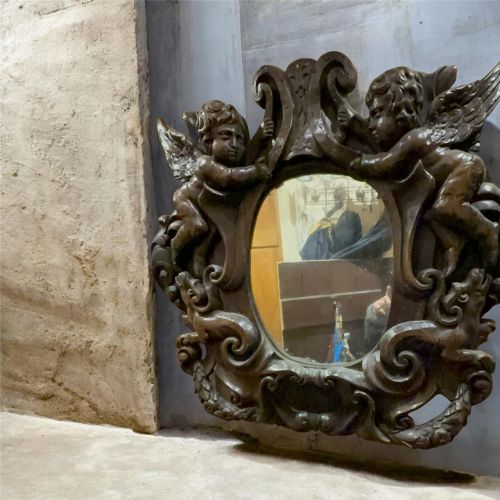
These antique putti mirror pieces bring sculpted winged figures and carved cherubs into domestic spaces with dramatic period presence.
Antique Putti Mirror
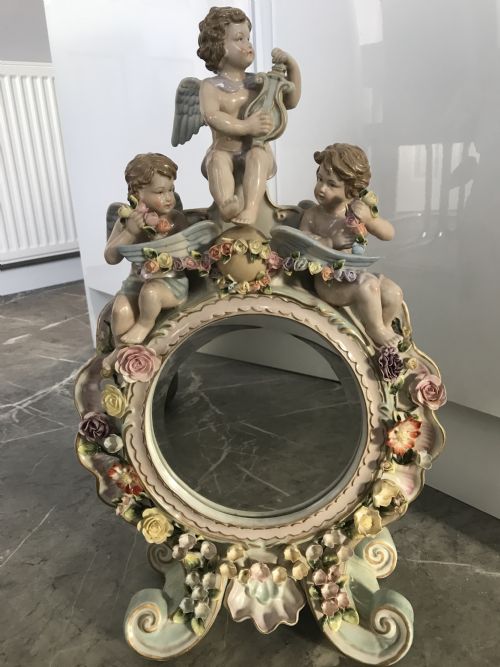
An antique putti mirror incorporates carved, moulded or cast representations of cherubs, putti or winged figures into its frame design. These decorative elements appear across wall mirrors, overmantels, dressing table mirrors and vanity mirrors from various periods.
The pieces on this page span the eighteenth, nineteenth and early twentieth centuries, drawing on styles such as Rococo Revival, Baroque, Victorian, French Chateau and Italianate. Buyers most frequently encounter nineteenth-century giltwood, gesso and porcelain examples featuring sculptural putto crestings or frames.
How they were made
Craftsmen built the structural frames using timbers like oak and walnut, or constructed them from cast metals including bronze, ormolu, brass and iron. Wood frames often received layers of gesso before being finished with gold leaf or gilt paint to create a reflective metallic sheen.
Porcelain elements and figural mounts were shaped in continental factories, incorporating delicate details like flowers and hand-painted finishes. Carvers also worked directly in wood and stone, shaping intricate relief work around mirror glass plates.
Listings feature materials spanning porcelain, gesso, giltwood, bronze, cast iron and carved oak across multiple centuries.
What varies in quality
The integrity of the surface finishing dictates the visual authority of the piece. Hand-applied gold leaf, well-preserved gesso relief work, and high-grade cast bronze elements maintain their character far better than hurried secondary gilding or coarse factory castings.
The Antique Putti Mirror Glossary
- Putto
- A figure of a small chubby boy, often winged, found in classical and revival art. These figures appear perched on mirror crests or framing the glass.
- Gesso
- A plaster-like mixture applied to wood frames to create a smooth surface for gilding. It allows craftsmen to model intricate low-relief ornamentation.
- Giltwood
- Timber that has been coated with gold leaf or gold paint. This finish catches candlelight and natural illumination in period rooms.
- Overmantle mirror
- A large wall glass designed to hang specifically above a fireplace mantelpiece. They often feature decorative pediments and figural cresting.
- Ormolu
- Finely chased and gilt bronze mounted on decorative objects and furniture. The technique was widely used in French empire and nineteenth-century pieces.
Antique Putti Mirror: Frequently Asked Questions
Where should I hang an antique putti mirror?
These mirrors work effectively above mantelpieces, console tables or dressing desks where their sculptural frames can catch the light. Their decorative weight makes them natural focal points in reception rooms and hallways.
Ensure the wall fixings match the substantial weight of carved wood, cast iron or porcelain frames. Placing them opposite a window will also maximise the reflection in the room.
How do I identify the period of a putti mirror?
Examine the materials, backboards, assembly techniques and stylistic revival cues to date the piece. Nineteenth-century examples frequently employ Rococo Revival or Baroque motifs applied to gessoed timber.
Archival records show pieces ranging from eighteenth-century oak frames to early twentieth-century continental porcelain and giltwood designs. Comparing the specific putti styling against known Victorian or French regional outputs helps narrow the exact decade.
Were these mirrors used in bedrooms?
Many smaller examples served as dressing table mirrors, toilet mirrors or vanity mirrors in private chambers. They provided both a functional reflective surface and an ornate decorative accent for personal grooming spaces.
Larger variations stayed in public rooms like parlours and drawing rooms as status symbols. Tabletop easel versions allowed owners to move them easily across furniture surfaces.
How do I clean an antique giltwood frame?
Dust the carved putti and frame gently with a soft, dry brush to prevent particulate buildup in the recessed gesso work. Avoid applying liquid cleaners or chemical agents directly to giltwood or gold leaf surfaces.
Leave fragile porcelain elements and aged mirror glass undisturbed to preserve their original patina. Professional conservators should handle any structural repairs to the carved wooden elements.