


Antique Pub Dining Table
An antique pub dining table brings hard-wearing timber and honest industrial metal straight from historical taverns into domestic spaces.
Antique Pub Dining Table
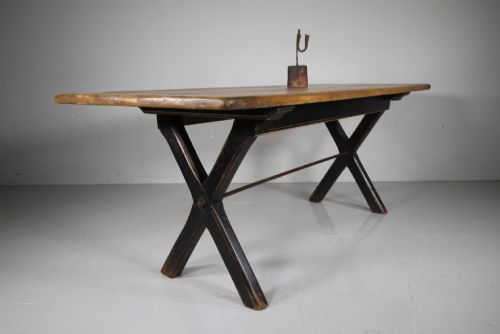
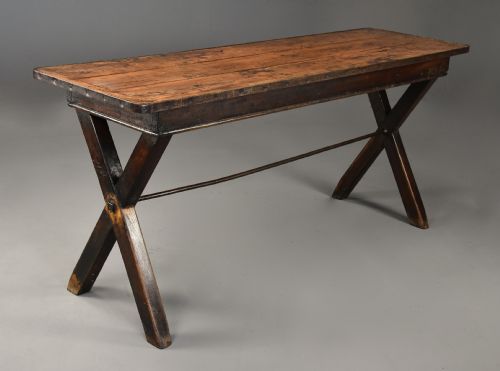
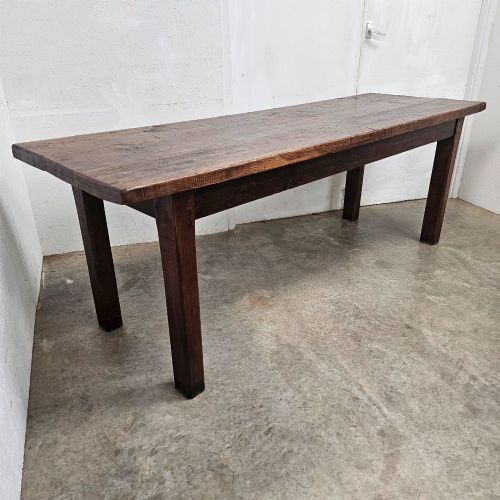
An antique pub dining table covers robust tavern, bistro, and cafe seating pieces designed for commercial hospitality settings. When searching for an antique pub dining table, buyers encounter sturdy communal boards and smaller refreshment tables originating primarily from the nineteenth century. These sturdy boards range from vernacular pine trestles to substantial oak and mahogany dining surfaces.
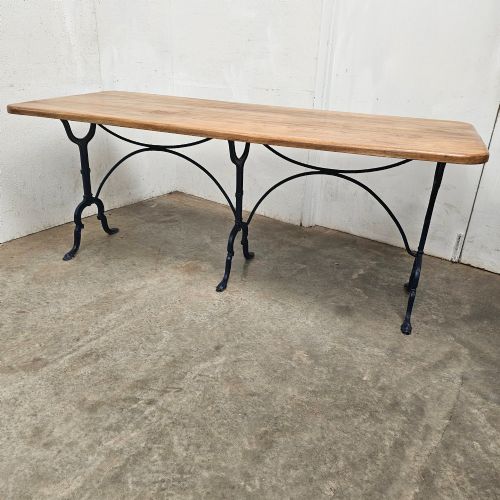
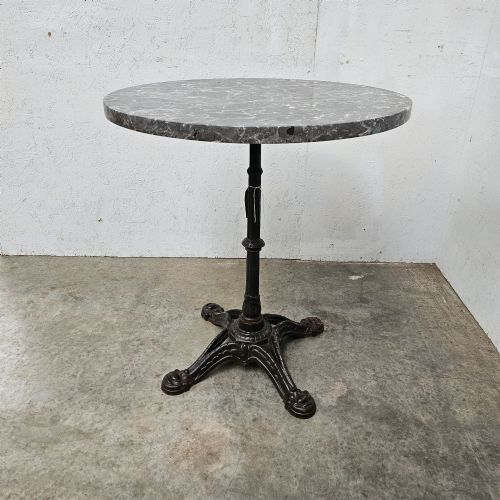
The versions most commonly met on this page combine thick wooden tops with heavy bases built to withstand constant public use. Surviving examples often display the marks of hard everyday service, including mellow patinas and historical paint finishes. Forms extend from long refectory-style boards to smaller round cafe pieces supported by heavy metal columns.
Origins span English and Welsh workshops alongside French establishments, reflecting the diverse styles of European hostelries. Buyers find everything from simple country elm boards to sophisticated Victorian pieces featuring cast iron mechanisms and ships table fittings.
Materials and construction methods
Makers utilised dense native timbers including oak, elm, pine, sycamore, and mahogany for the thick working surfaces. These substantial boards were selected for resilience and frequently joined to robust trestle or X-frame supports.
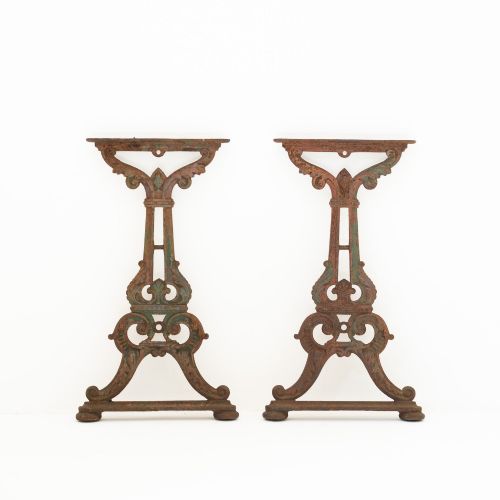
Cast iron and iron components emerged strongly in nineteenth-century designs, forming durable table bases and cafe supports that anchored the timber tops. Original paint finishes, such as red lead or decorative coatings, often survive directly beneath layers of subsequent wear.
Listings feature pieces spanning the Georgian period, the nineteenth century, and the early twentieth century up to nineteen-ten.
Factors determining quality
Quality rests in the integrity of the timber top and the originality of the structural base. Thick, single-board table tops of oak, elm, or mahogany command attention for their durability and untouched surfaces.
The presence of original painted finishes or authentic cast iron frames elevates an example above altered pieces. Finer specimens display harmonious proportions, tactile patinas, and construction details that reflect genuine commercial origins rather than later assembly.
The Antique Pub Dining Table Glossary
- Patina
- The surface sheen and colour developed through years of handling, polishing, and environmental exposure. This gradual ageing process distinguishes authentic antique timber from recent treatments.
- Trestle
- A structural support consisting of a horizontal beam fixed to two splayed legs or frames. This framing method allows maximum legroom beneath long dining surfaces.
- Cast iron
- A strong, heavy alloy poured into moulds to create rigid, decorative table bases. It provided the necessary weight to keep commercial pub furniture stable.
- Veneer
- A thin layer of superior wood applied to a secondary timber base. It appears on select refined tables rather than standard utilitarian tavern boards.
Antique Pub Dining Table: Frequently Asked Questions
What defines an antique pub dining table?
An antique pub dining table is a heavy-duty commercial table originally built for taverns, inns, or cafes during the Georgian and Victorian eras. These pieces prioritise robust construction over delicate decoration.
They typically combine thick timber tops in oak, elm, or pine with structural supports made from timber trestles, X-frames, or heavy cast iron bases.
How do I choose the right size?
Consider both the available floor space in your dining room and the daily seating requirements of your household. Long tavern boards suit spacious rooms, while round bistro or cafe tables function well in compact layouts.
Allow adequate clearance around the heavy bases, which often feature wider footprints than standard domestic dining furniture.
Can I use these tables daily?
These tables were constructed for demanding commercial hospitality environments, making them exceptionally well-suited for everyday family dining. Their thick timber surfaces readily absorb the daily demands of meals and gatherings.
Routine maintenance involves simple cleaning that respects the historical patina and protective wax finishes built up over generations.
How do I identify the period?
Dating relies on examining the timber species, joinery techniques, and structural hardware. Nineteenth-century examples frequently incorporate heavy cast iron bases alongside traditional pine, oak, or mahogany tops.
Earlier Georgian and early nineteenth-century pieces generally rely entirely on timber frames like sycamore trestles or elm understructures.