



Antique Pottery Plates
Antique pottery plates span centuries of global craft, offering functional serving pieces and decorative chargers shaped from earthenware, stoneware, and porcelain.
Antique Pottery Plates
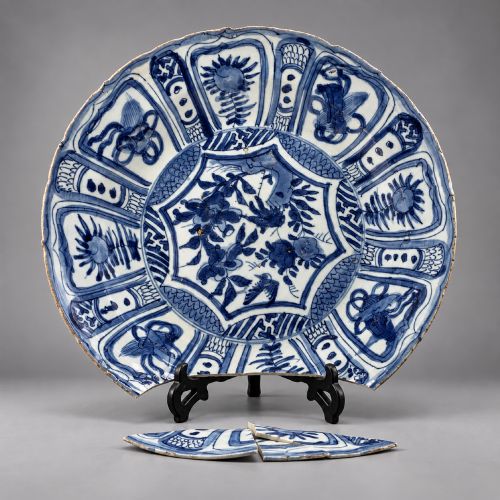
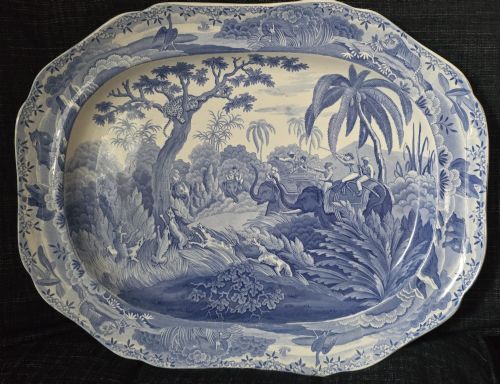
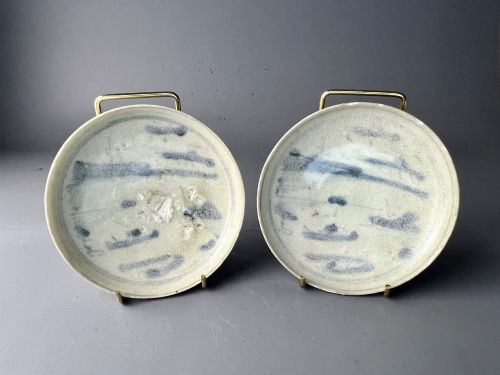
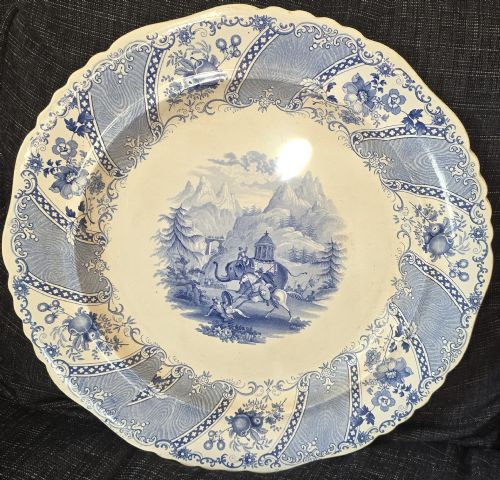
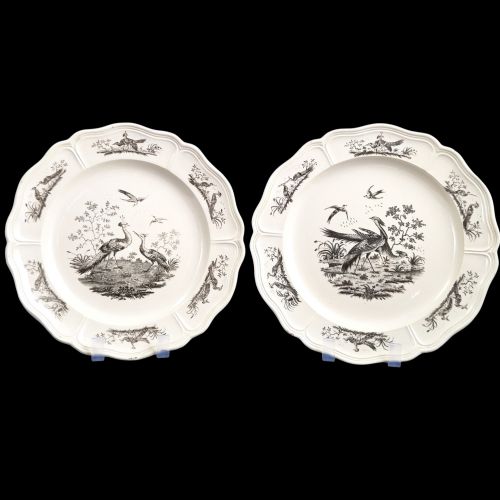
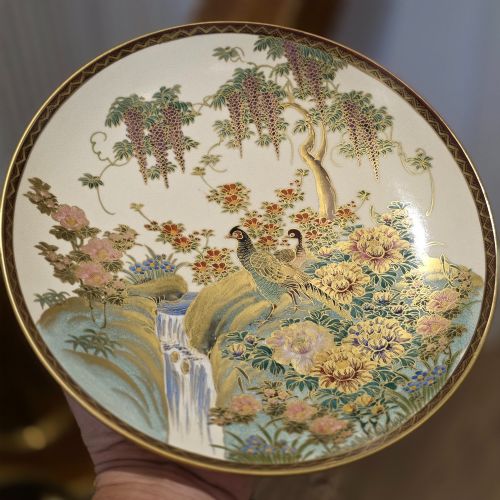
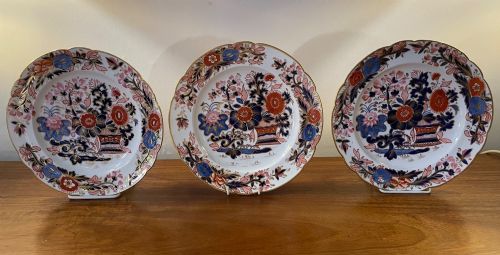
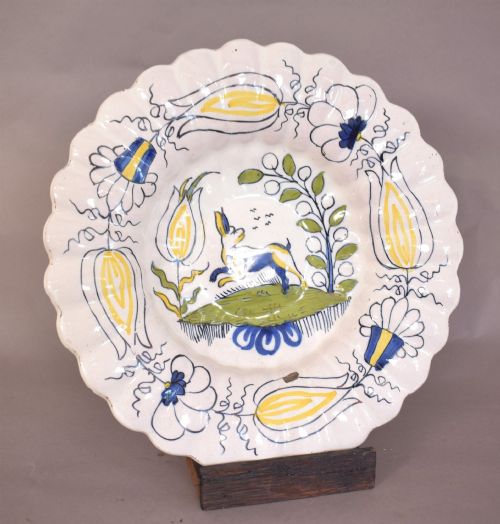
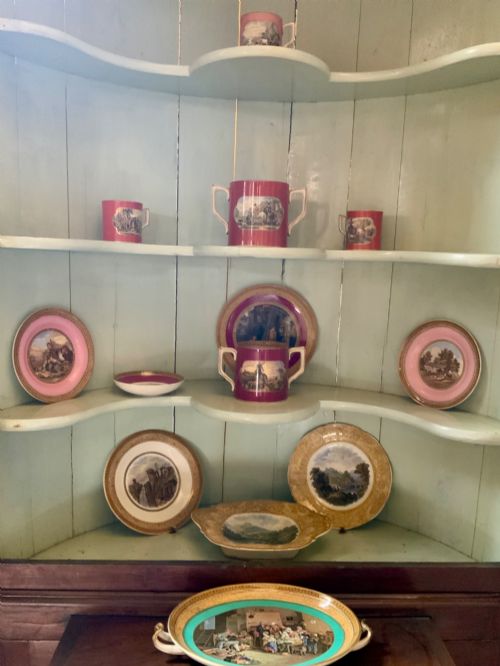
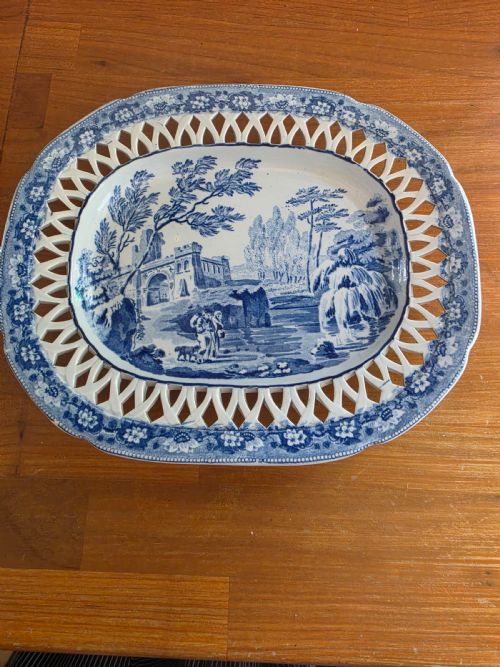
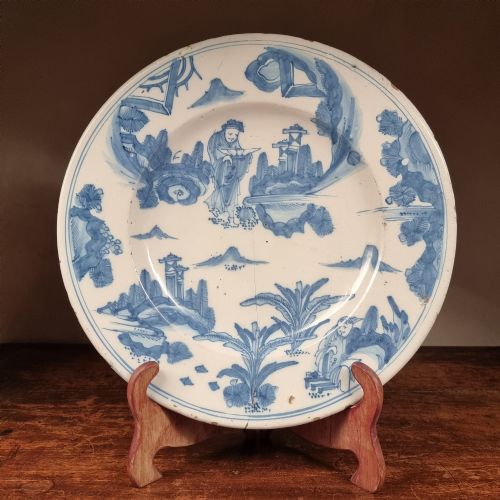
Antique pottery plates encompass a diverse range of flatware and display pieces, including large chargers, meat dishes, serving platters, and dessert services. You will frequently encounter blue and white transferware, tin-glazed earthenware, and Imari porcelain pieces originating from English, European, and Asian kilns.
The selections span from seventeenth-century Delftware and eighteenth-century creamware to nineteenth-century transfer-printed earthenware and Aesthetic Movement porcelain. Forms range from heavy chargers designed for wall display or sideboard presentation to smaller plates created for dining and dessert services.
How they were made
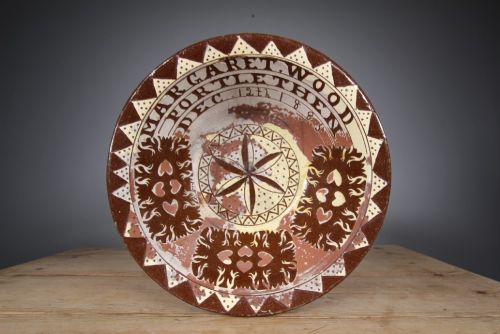
Potters shaped these objects using local clays, refined earthenware bodies, and porcelain pastes, often applying tin glazes, enamel colours, or slip decoration before firing. Transfer printing allowed intricate pictorial scenes to be applied mechanically to earthenware surfaces, while hand-painting utilised cobalt blue, gold leaf, and polychrome pigments.
Specialised techniques such as salt glazing, majolica glazing, and craquelure finishes defined regional workshops, from Staffordshire potteries to Japanese kilns and continental faience centres.
Nineteenth-century Staffordshire plates sometimes recorded unexpected local events, preserving forgotten shipwrecks and bear-baiting incidents forever in cobalt blue.
What varies in quality
Quality rests in the crispness of the transfer print or the brushwork fluidity of hand-painted motifs, alongside the purity of the ceramic body and the stability of the glaze. Earlier pieces often display kiln stilt marks, minor warping, and pooling glaze, which reflect period firing methods rather than simple defects.
The sophistication of the palette, the ambition of the pictorial subject - such as detailed topographical views or figurative scenes - and the reputation of the maker elevate standard tableware into collectible art.
Spode·William Smith And Co·Leeds Pottery·Doulton Lambeth·Seaton Pottery·Davenport·J W R·Minton·John Rogers And Son·Stubbs·Copeland·William Yale
The Antique Pottery Plates Glossary
- Transferware
- Earthenware or porcelain decorated by applying a printed design from a copper plate onto the ceramic surface using tissue paper. This technique became widespread in English potteries during the nineteenth century to produce repeatable pictorial scenes.
- Charger
- A large decorative plate or shallow basin used primarily for display on sideboards or walls rather than for dining. These pieces often feature elaborate polychrome painting or blue and white designs.
- Tin-Glazed Earthenware
- Pottery covered with an opaque white glaze containing tin oxide, providing a smooth canvas for painted enamel decoration. Examples include English Delftware, French faience, and Dutch majolica.
- Creamware
- A refined, light-coloured earthenware developed in eighteenth-century England, notably by Leeds Pottery. It is characterised by a pale yellowish lead glaze over a cream body.
- Imari
- Japanese porcelain decorated in underglaze blue, iron red, and gilt, imitating traditional export wares. The style was widely emulated by European factories during the eighteenth and nineteenth centuries.
Antique Pottery Plates: Frequently Asked Questions
Can antique pottery plates still be used for dining?
While many nineteenth-century plates are structurally sound, older earthenware and tin-glazed pieces often feature softer bodies and crazed glazes that absorb liquids. Using them for display or careful service preserves their historical surfaces.
Modern dishwashing and microwave heating should be strictly avoided to protect fragile ceramic bodies, old repairs, and delicate overglaze gilding.
How do I distinguish earthenware from porcelain?
Earthenware is opaque, porous, and fired at lower temperatures, often feeling heavier and showing thicker walls. Porcelain is denser, vitrified, and rings when tapped gently.
Porcelain will not absorb moisture through unglazed foot rings, whereas earthenware chips reveal a more porous, coarser clay body beneath the glaze.
What is the difference between a plate and a charger?
Chargers are significantly larger than standard dining plates, typically measuring over thirty centimetres across. They were historically placed under smaller service dishes or displayed upright on sideboards.
Because of their scale, chargers usually carry more ambitious pictorial scenes or complex border patterns than companion tableware pieces.
How can I tell the period of a blue and white transferware plate?
Dating relies on maker marks, impressed registry diamonds, and the specific tone of the blue transfer. Earlier nineteenth-century prints tend to have a deeper, richer cobalt hue, while body weight and paste composition also shift over time.
Subject matter often points to specific historical events or popular literary themes that can be cross-referenced with active factory dates.