



Antique Pottery Caddy
An antique pottery caddy offers a tactile slice of domestic history, storing fine leaves or biscuits in earthenware and stoneware crafted to last.
Antique Pottery Caddy
An antique pottery caddy represents the vessels designed to hold tea leaves or biscuits safely away from moisture in homes of the past. These objects emerge in various forms across the listings, spanning tea canisters and larger biscuit barrels intended for the parlour.
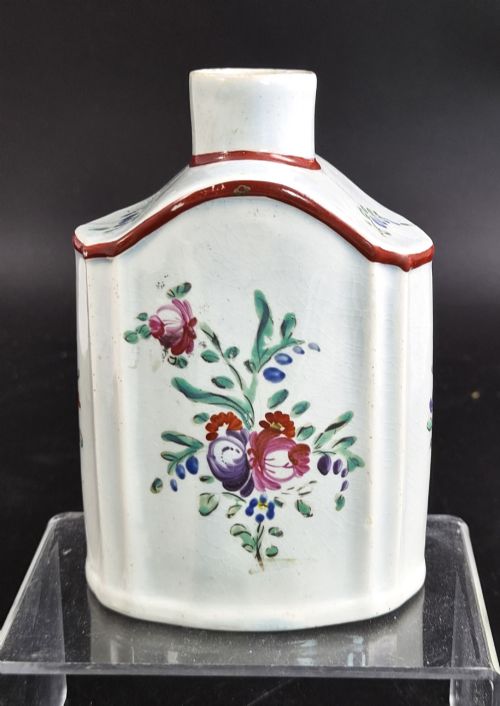
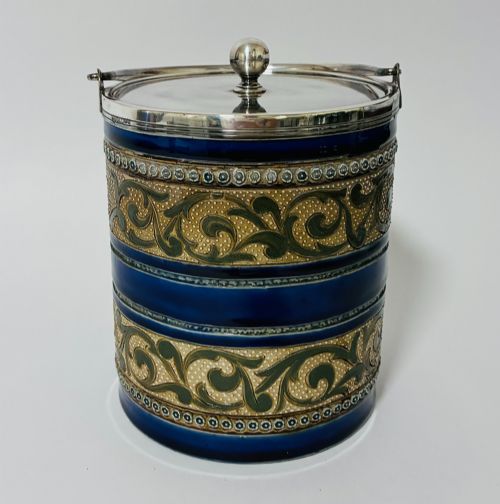
The versions most commonly met on this page range from Georgian earthenware examples to Victorian ceramic iterations fitted with silver plate mounts. Makers across England, Europe, and Asia shaped these pieces to serve both practical pantry needs and decorative table displays.
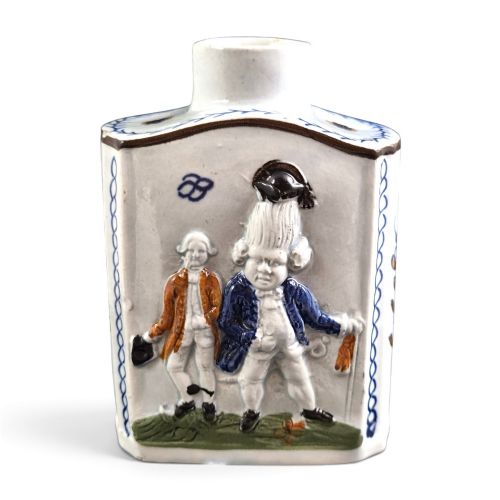
Forms shift from octagonal covered boxes to cylindrical jars, showing how potters adapted standard utilitarian containers into appealing household items. Each piece reflects the material culture of its specific period, whether through transfer-printed blue and white patterns or hand-painted floral enamels.
Materials and methods of production
Potters relied primarily on earthenware, pearlware, and stoneware bodies to shape the containers, often finishing surfaces with lead or salt glazes. These foundational ceramic materials provided the necessary density to keep dry goods protected from the ambient humidity of historic kitchens.
Decoration required skilled application, utilising hand-painted enamels, flow blue techniques, and occasional gold leaf accents over the fired clay. Many British and European examples paired the ceramic body with fitted metal hardware such as silver plate lids and swing handles.
Antique Pottery Caddy Retail Price Guide 2026
Typical asking prices for pottery caddy among the pieces listed under this phrase on Sellingantiques today, from the lower quarter to the upper quarter. They describe what is for sale here now, not the wider market.
Some Victorian biscuit barrels required guests to ask the host for a sweet, functioning as polite social gatekeepers of the afternoon tea table.
Distinctions in quality and finish
Quality rests significantly in the crispness of the moulding and the control demonstrated during the firing and glazing processes. Superior pieces display evenly distributed glazes without heavy pooling, alongside hand-painted or transfer-printed details that remain sharp and well-aligned.
The integration of secondary materials also separates standard production from finer examples, particularly where silver plate mounts fit the ceramic vessel precisely. Weight, balance, and the preservation of delicate enamel or gilt highlights further distinguish the better pieces in this category.
Leeds Pottery·Doulton Lambeth·Tokyo Taizan·Carlton Ware
The Antique Pottery Caddy Glossary
- Biscuit Barrel
- A ceramic container with a fitted lid, often featuring metal mounts, used to store dry biscuits in the Victorian parlour. These vessels frequently appeared on the dining table after the main meal.
- Tea Caddy
- A small box or jar designed to store loose tea leaves securely before the introduction of standard retail packaging. They often included internal compartments or locking mechanisms.
- Pearlware
- A refined earthenware developed in the late eighteenth century featuring a bluish glaze that pooled in recesses to mimic Chinese porcelain. It served as a popular canvas for painted and transfer-printed designs.
- Prattware
- A type of early Staffordshire earthenware decorated with coloured underglaze oxides, typically blue, ochre, brown, and green. The technique produced vibrant, durable surfaces on small domestic objects.
- Flow Blue
- A nineteenth-century transfer printing style where lime or ammonia chloride vapour was introduced during the kiln firing to blur the cobalt blue pigment. This created a soft, hazy aesthetic across the ceramic body.
Antique Pottery Caddy: Frequently Asked Questions
What is an antique pottery caddy?
An antique pottery caddy is a ceramic vessel created to hold dry goods like tea leaves or biscuits in historic households. These objects combine utilitarian function with decorative artistry from various past centuries.
They appear in different regional styles, reflecting the ceramic techniques and domestic habits of their respective periods of origin.
How were these caddies used?
These vessels functioned primarily as storage containers to keep perishable food items fresh and protected from damp air. Tea leaves and biscuits were valuable commodities that required secure containment in the home.
Over time, many of these containers also transitioned into decorative display items placed on sideboards or dining tables.
How do I care for a ceramic caddy?
Care requires gentle handling, keeping the piece away from direct sunlight and sudden temperature changes that might stress old glazes. Dusting with a soft, dry cloth is usually sufficient for routine maintenance.
Avoid submerging pieces with metal mounts or delicate enamel work in water to protect the structural integrity of the fittings.