
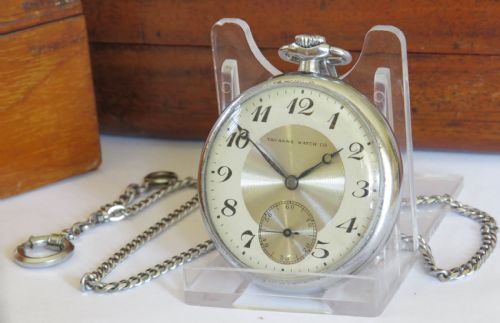
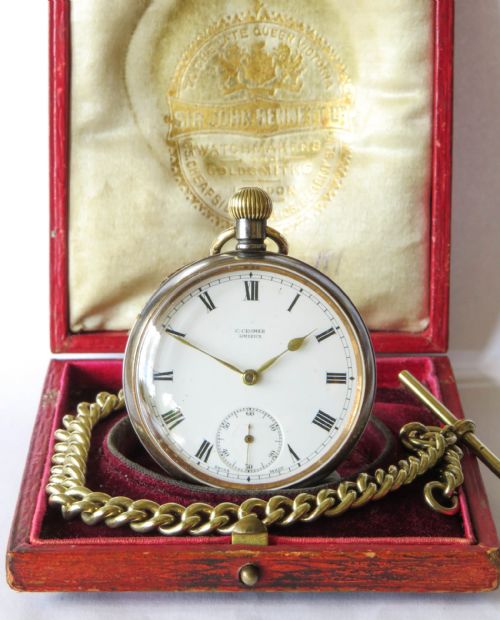
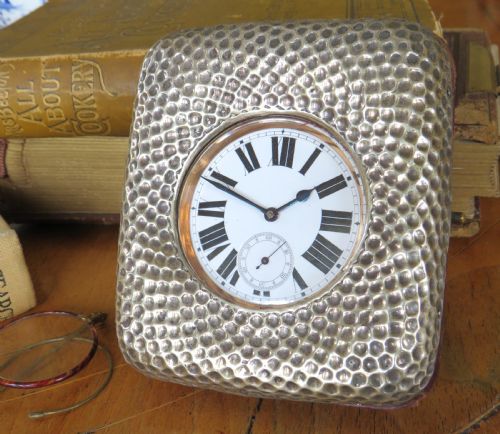


Antique Pocket Watch Movement
These antique pocket watch movement examples are the intricate mechanical hearts of Victorian and early twentieth century timepieces, sought after for horological study and restoration.
Antique Pocket Watch Movement
When you search for an antique pocket watch movement, you are looking at the internal mechanism removed or separated from its outer case, representing the pinnacle of mechanical timekeeping from the nineteenth and twentieth centuries. These mechanisms span the Victorian, Edwardian, and Art Deco periods, encompassing various eras of precision engineering.
The pieces you encounter on this page range from Swiss lever mechanisms to fusee movements found in early English silver pieces. They display the functional beauty of brass plates, steel gears, and enamel dials that once kept time in the pockets of previous generations.
Materials and construction
Makers constructed these movements primarily using brass for the plates and bridges, combined with steel for the pinions, wheels, and springs. Enamel frequently coats the visible dials, while gold plating, sterling silver, or gun metal often forms the surrounding housing of the complete watch before disassembly.
Techniques relied upon skilled hand-finishing of the gear trains and escapements, occasionally incorporating decorated bridges or specialised mechanisms such as fusee setups. Watchmakers assembled these miniature components to ensure reliable timekeeping without modern automated machinery.
Materials recorded across the inventory include brass, steel, enamel, sterling silver, gold plate, and gun metal.
Variations in quality
Quality in these movements depends upon the complexity of the escapement, the number of jewels fitted to reduce friction, and the overall finish applied to the brass and steel components. Nicely decorated movements with careful engraving or specialised adjustments stand apart from utilitarian mass-produced equivalents.
The preservation of the original finish, the integrity of the gear train, and the presence of signed maker details or specific calibres further distinguish superior examples from standard workshop items.
Waltham·Stauffer·Omega·Revue·Tiffany and Co·Elgin
The Antique Pocket Watch Movement Glossary
- Fusee movement
- A conical pulley device used in older watches to equalize the power of the mainspring as it unwinds. This mechanism ensured steady tension and greater timekeeping accuracy.
- Swiss lever
- An escapement design utilising a small lever and pallet stones to deliver impulses to the balance wheel. It became the standard system for reliable portable timepieces.
- Half hunter
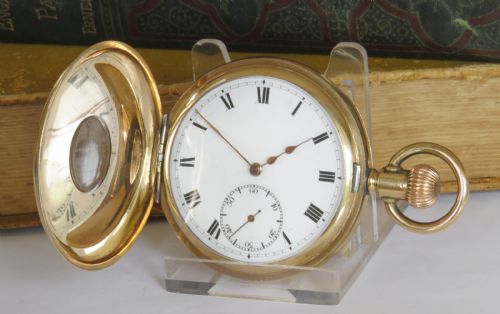
- A watch case featuring a glass or open centre in the front cover, allowing the user to read the hands without opening the case completely. The outer rim typically displays enamel numerals for the hours.
- Full hunter
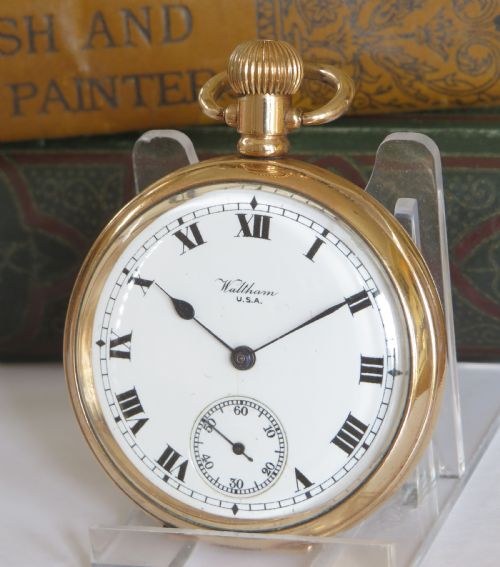
- A pocket watch possessing a solid metal outer lid that completely covers and protects the dial. The spring-loaded cover opens via the crown.
Antique Pocket Watch Movement: Frequently Asked Questions
What is an antique pocket watch movement?
An antique pocket watch movement is the internal mechanical assembly of gears, springs, and escapements that drives a vintage timepiece. These mechanisms were often salvaged from watches originating from the Victorian era through the nineteen-thirties.
Collectors and restorers acquire them to study historical horology, display the intricate brass and steel components, or repair complete watches from the same period.
How do I identify the age of a movement?
Dating a movement relies on examining engraved maker names, serial numbers, style characteristics, and the type of escapement used. Victorian examples often feature fusee mechanisms, while later twentieth-century pieces incorporate Swiss lever designs.
Comparing serial numbers against known manufacturer records can provide a narrower production year for established firms.
Were these movements originally housed in gold?
Many movements were paired with cases made from sterling silver, gold plate, gun metal, or solid gold such as nine carat or eighteen carat gold. The outer casing material varied according to the intended market and price point of the original watch.
Over time, movements and cases were sometimes separated due to damage to the exterior housing or for the recovery of precious metals.
How should I display a watch movement?
Movements can be safely displayed in specialised glass domes, shadow boxes, or bespoke desk stands that allow clear viewing of the gear trains and balance wheels. Keeping them in a dry environment prevents tarnishing of the brass and steel surfaces.
Handling should be minimised and done with clean tools or gloves to avoid depositing oils onto the delicate metal components.