




Antique Pine Footstool
An antique pine footstool brings honest utility and quiet character to a room, offering sturdy low seating or a place to rest tired feet.
Antique Pine Footstool
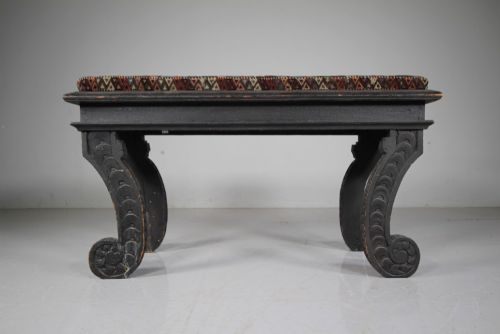
An antique pine footstool encompasses various low seating forms from the nineteenth century, including small milking stools, hearth stools, and larger fireside pieces. These items serve practical domestic functions while displaying the straightforward construction methods of country workshops.
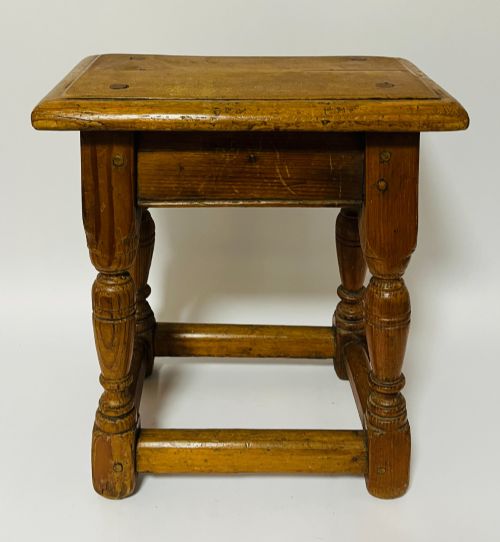
Buyers frequently encounter English and Eastern European examples shaped by vernacular traditions, alongside occasional French provincial pieces. The selection ranges from unpretentious joint stools to painted window seats and low benches.
Most items date from the nineteenth century and the Edwardian era, reflecting regional preferences for local softwoods and simple, serviceable designs. These pieces often show the honest wear of daily use in kitchens, parlours, and farmhouses.
Materials and construction methods
Makers relied on pine and pitch pine for the primary frames, frequently pairing softwood tops with sturdy timber legs. Selected pieces incorporate elm for seats or utilise dense hardwoods alongside the pine for added strength.
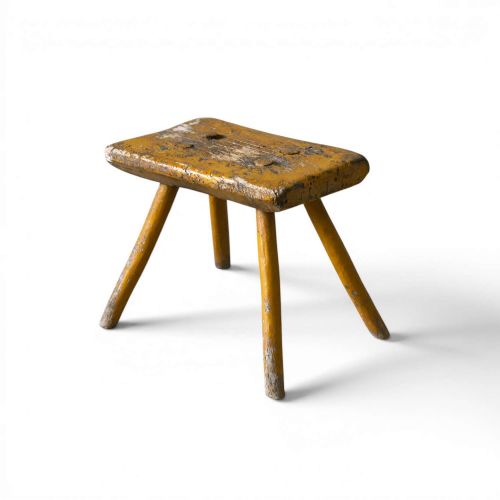
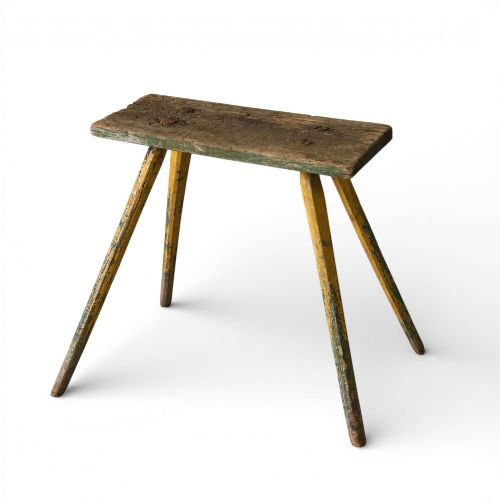
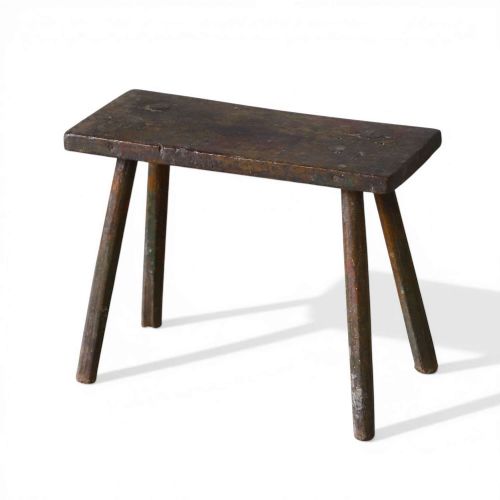
Surfaces often retain original paint finishes, including ochre and green pigments that protect the timber while adding distinct visual warmth. Simple joinery, ball feet, and traditional framing techniques ensure the structural integrity of these low seats.
Antique Pine Footstool Retail Price Guide 2026
Typical asking prices for pine footstool among the pieces listed under this phrase on Sellingantiques today, from the lower quarter to the upper quarter. They describe what is for sale here now, not the wider market.
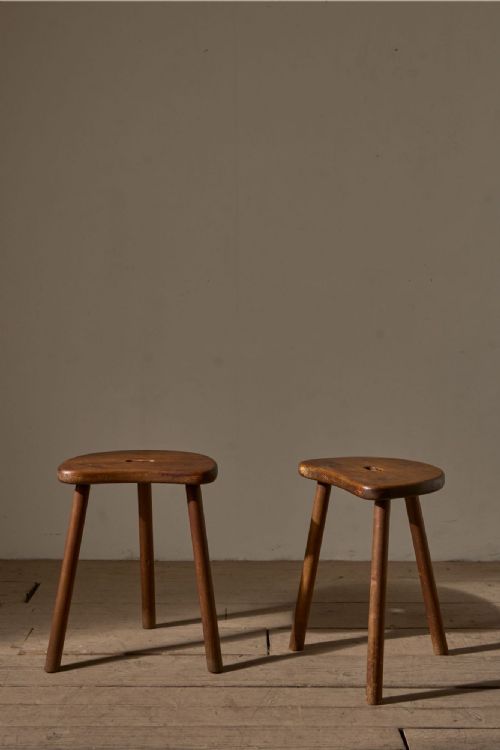
Several milking stools arrive ready for work with their original ochre and green paint still clinging to the legs.
Assessing quality and character
Quality rests in the survival of original painted surfaces and the integrity of the timber framing. Pieces retaining their early ochre or green paint hold greater decorative presence than stripped alternatives.
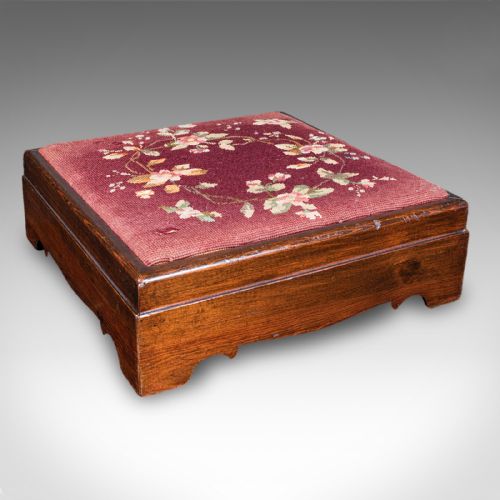
Proportion and stance distinguish better examples, particularly where turned ball feet or balanced vernacular legs complement the top. The harmony between the softwood grain and any applied textile or tapestry upholstery dictates the overall visual success of the stool.
The Antique Pine Footstool Glossary
- Pine
- A softwood derived from conifer trees, widely used in vernacular furniture for its workability and availability. It forms the primary body of these stools.
- Pitch pine
- A resinous pine variety known for its durability and prominent grain pattern. It provides robust support in fireside seating.
- Milking stool
- A traditional three-legged or four-legged low seat designed for agricultural work. These items feature simple pegged construction.
- Vernacular
- Everyday furniture made by local craftsmen for regional use rather than high-style urban production. This style prioritises function above ornament.
- Joint stool
- A sturdy wooden seat constructed with mortise and tenon joints held by wooden pegs. These pieces predate common use of nails.
Antique Pine Footstool: Frequently Asked Questions
What periods do these stools date from?
The available pieces primarily date across the nineteenth century, including specific items from around eighteen eighty and the Edwardian era.
Maker traditions from this span show strong regional variations across England, France, and Eastern Europe.
How were milking stools originally used?
Milking stools served as portable low seats for agricultural workers tending dairy animals in byres and fields.
Their three-legged design provided stability on uneven earthen floors.
What is pitch pine?
Pitch pine is a denser, highly resinous softwood appreciated for its strength and striking grain figures.
It appears frequently in nineteenth-century domestic seating requiring extra durability.
How should I clean original painted surfaces?
Original painted finishes require gentle dusting with a dry cloth to preserve the historic pigment layers.
Avoid liquid cleaners or abrasive agents that might lift or damage the historic paint.
Are these stools suitable for daily use?
These timber stools retain their sturdy construction and handle regular seating or footrest duties well.
Careful placement away from extreme heat sources helps protect the aged softwood timbers.