

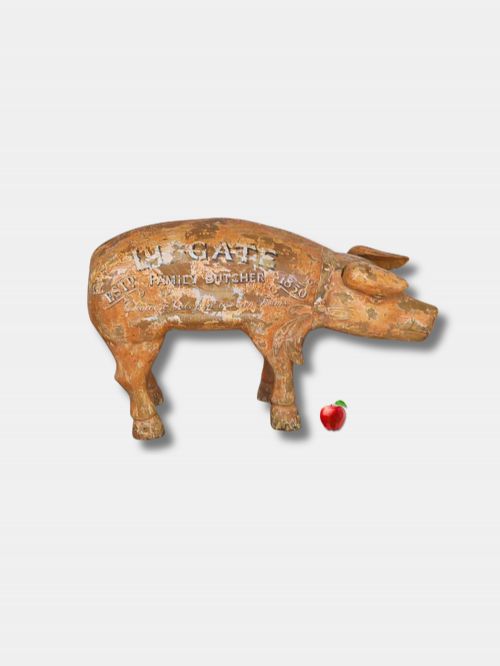


Antique Pig Painting
These antique pig painting works and related displays bring character and rural charm to any room through oil, wood, and iron.
Antique Pig Painting
When you search for antique pig painting, you encounter a mix of oil on canvas artworks, painted trade signs, and sculptural shop displays that capture rural life. These pieces span the nineteenth century and the Edwardian period, reflecting both fine art traditions and vernacular commerce.
The most frequent items on this page are oil paintings depicting farmyard scenes by nineteenth-century artists, alongside painted iron and plaster butcher shop display figures. Such works range from detailed landscape canvases featuring livestock to robust trade signs and figures made for commercial use.
Materials and construction methods
Paint is applied to canvas, wood panels, or metal surfaces, frequently framed in gilt wood and gesso for the hanging works. The sculptural pieces utilise cast iron or plaster, shaped and painted to serve as trade signs or shop displays.
Artists and signwriters employed traditional oil paints and durable pigments, ensuring the surfaces survived decades of commercial or domestic placement. Gilt wood frames and carved wooden supports add structure to the pictorial and sculptural formats.
Antique Pig Painting Retail Price Guide 2026
Typical asking prices for pig painting among the pieces listed under this phrase on Sellingantiques today, from the lower quarter to the upper quarter. They describe what is for sale here now, not the wider market.
A sixteen-kilogram painted iron butcher pig once drew daily glances through a Victorian shop window.
Factors of quality and execution
The execution of detail in the brushwork or the moulding separates skilled representations from simpler commercial items. Finer oil paintings exhibit careful draughtsmanship in the rendering of animals and landscape settings, whereas trade signs rely on bold visual impact.
Condition of the original paint layer and surface wear influence the character of each piece. Surviving gilding on frames and minimal restoration in the paint layer distinguish better preserved examples.
John Frederick Herring·Franz Bergman·Godfrey Douglas Giles·Charles Hunt Jnr
The Antique Pig Painting Glossary
- Oil on canvas
- Pigment suspended in drying oil applied to a stretched fabric support. This technique allows for rich colour blending and lasting durability.
- Trade sign
- A painted board or sculptural object hung outside a business to advertise goods. Butchery and grocer examples frequently featured animal subjects.
- Gesso
- A plaster mixture applied to wood or canvas as a base for paint or gilding. It provides a smooth surface for decorative framing.
- Folk art
- Artistic work created from a cultural tradition rather than academic training. These pieces often display charming stylistic liberties.
- Vienna Bronze
- Small cold-painted bronze sculptures produced in Austrian workshops around the turn of the twentieth century. They are known for detailed finishing.
Antique Pig Painting: Frequently Asked Questions
What periods do these pieces date from?
The items generally date from the nineteenth century through the Edwardian era, encompassing works from the eighteen-fifties to nineteen hundred.
Such dating derives from stylistic clues, framing methods, and the recorded periods of the artists and makers represented.
Where were trade signs displayed?
Trade signs and painted iron figures were positioned outside or inside shops, notably butcheries, to advertise wares to passersby.
These commercial objects combined practical advertising with robust craftsmanship suited to daily trade environments.
How should oil paintings be cleaned?
Oil paintings require careful dusting with a soft, dry brush and should not be wiped with household cleaning agents.
Professional conservators handle deeper cleaning to preserve the integrity of the original paint and varnish layers.
What is a sand picture?
A sand picture uses coloured sands fixed to a backing to create a detailed pictorial scene without liquid paint.
Mid-nineteenth century examples achieved remarkable tonal variation solely through the arrangement of natural mineral grains.