



Antique Pew Style Bench
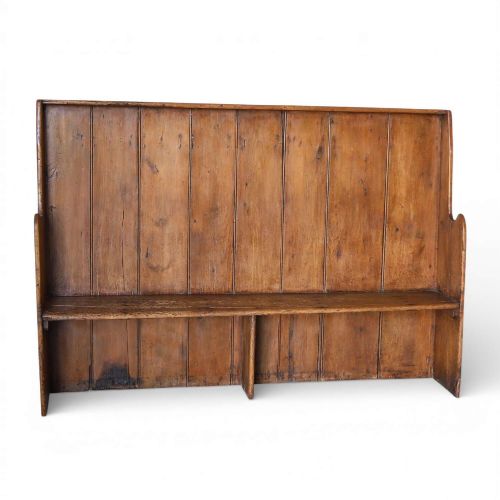
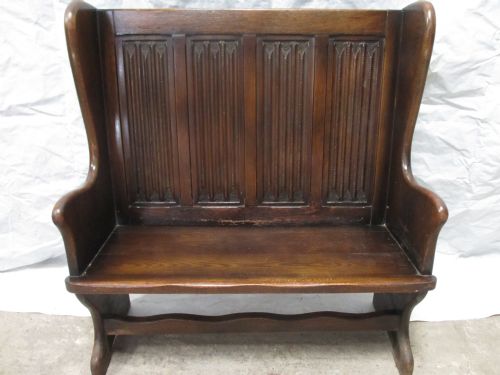
These antique pew style bench examples bring heavy timbered seating and historic ecclesiastical form straight into domestic halls and libraries.
Antique Pew Style Bench
An antique pew style bench draws on historic ecclesiastical and vernacular forms, offering high backs and solid wooden seats designed for long hallways, kitchens, and large living spaces. Buyers searching for an antique pew style bench encounter sturdy timber seating rooted in architectural traditions rather than standard domestic furniture.
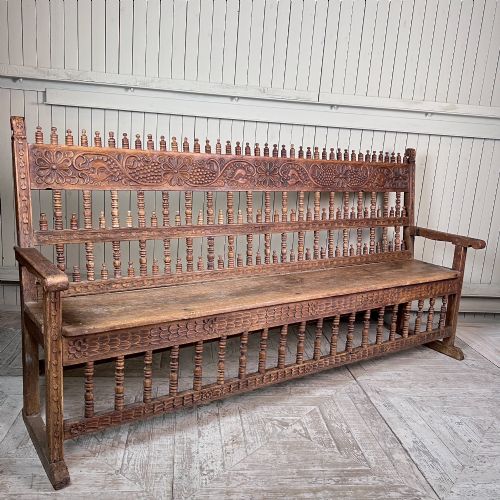
The pieces appearing on this page span several centuries and regional traditions, ranging from English country settles to Spanish colonial hardwood seating and Gothic revival designs. Oak and pine dominate the domestic British examples, while walnut and ash appear in continental and regional variants.
Tall backs provide both shelter from draughts and a significant decorative surface, often detailed with carved panels, poppy head finials, or trefoil supports. These forms function practically as wall seating or freestanding architectural statements within a room.
How they were made
Construction relies heavily on native hardwoods such as oak, ash, and elm, joined using traditional methods suited to heavy daily use. Panels are framed and panelled to accommodate seasonal wood movement without splitting.
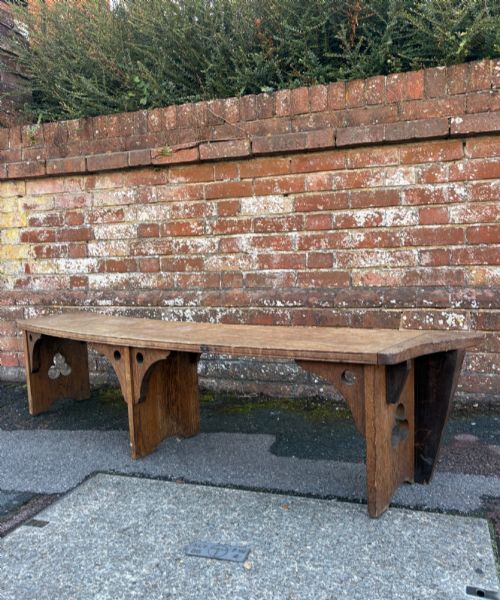
Carving and shaping are executed by hand, visible in elements like trefoil supports, poppy head finials, and relief panels. Surface finishes range from natural unpolished timber to historical paint layers and warm wax patinas.
Antique Pew Style Bench Retail Price Guide 2026
Typical asking prices for pew style bench among the pieces listed under this phrase on Sellingantiques today, from the lower quarter to the upper quarter. They describe what is for sale here now, not the wider market.
Some benches wear their history quite literally, carrying centuries of polished elbow grease on high oak arms and honey-brown settles.
What varies in quality
The integrity of the timber and the depth of the carving separate standard vernacular seating from finer architectural works. Pieces retaining their original structural framing and early joinery hold greater physical and historical coherence.
Surface patination plays a major role in visual depth, where natural wear and old wax finishes contribute to the character of the wood. The sophistication of stylistic details, such as Gothic tracery or crisp finial carvings, distinguishes simpler regional builds from more ambitious workshop designs.
The Antique Pew Style Bench Glossary
- Settle bench
- A wooden bench featuring a high back, solid arms, and often a storage box beneath the seat. This form provided shelter from cold draughts in pre-central heating interiors.
- Poppy head finial
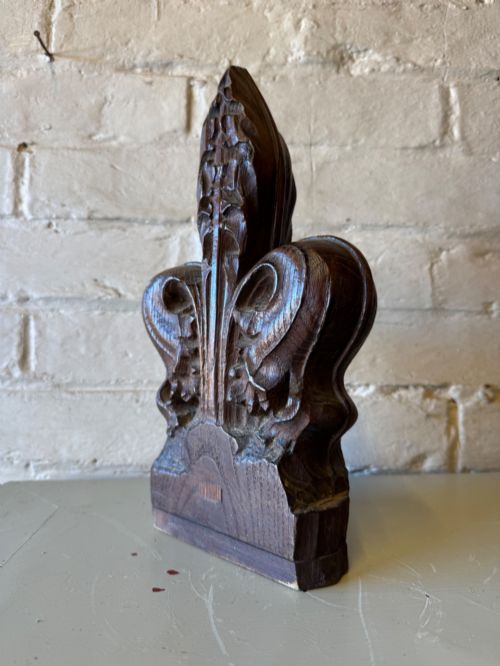
- An ornamental carved capping on the top of a bench end or pew cheek, typically taking a stylised leaf or bud shape. It is frequently encountered in Gothic revival and ecclesiastical seating.
- Trefoil
- A graphic ornament composed of three overlapping rings or lobes, commonly pierced through wooden bench supports or carved in relief. The motif derives from Gothic architecture.
- Patina
- The surface sheen and colour developed by timber over decades of handling, exposure to light, and polishing. A desirable patina indicates age and continuous use.
- Architectural salvage
- Elements or entire fixtures rescued from historic buildings before demolition or alteration. These pieces retain structural fabric directly linked to older architectural schemes.
Antique Pew Style Bench: Frequently Asked Questions
Where should I place an antique settle bench?
These benches suit large entrance halls, spacious dining kitchens, or against long living room walls where their high backs create a strong visual anchor. Their architectural presence makes them effective as standalone statement pieces.
Because of their depth and height, they require adequate wall space and clearance to be appreciated fully without overwhelming smaller rooms.
How do I care for antique oak and pine benches?
Maintain the wood by applying traditional beeswax sparingly and buffing with a soft cloth to preserve the natural patina. Avoid placing timber seating near direct heat sources or in strong sunlight.
Routine dusting with a dry cloth prevents dirt build-up in carved recesses and panel grooves.
What is the difference between a settle and a pew?
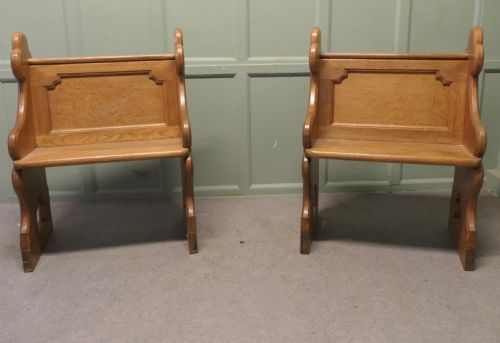
Settles traditionally feature enclosed bases or box seats beneath the bench, offering domestic storage alongside high panelled backs. Pews are typically open underneath and were designed for communal seating in churches.
Both forms share tall protective backs, but settles evolved specifically for domestic comfort and draught exclusion.
How can I tell the period of a wooden bench?
Dating relies on observing tool marks, timber species, joinery techniques, and stylistic motifs such as Gothic tracery or Arts and Crafts linear forms. Earlier pieces from the seventeenth century often show pegged mortise and tenon joints and hand- cleft boards.
Later nineteenth-century revivals incorporate machine-sawn elements while copying historical aesthetics closely.