



Antique Parlour Mirror
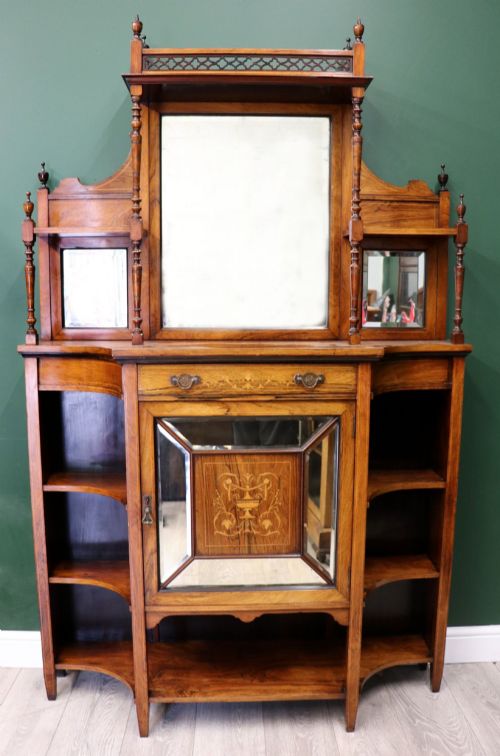
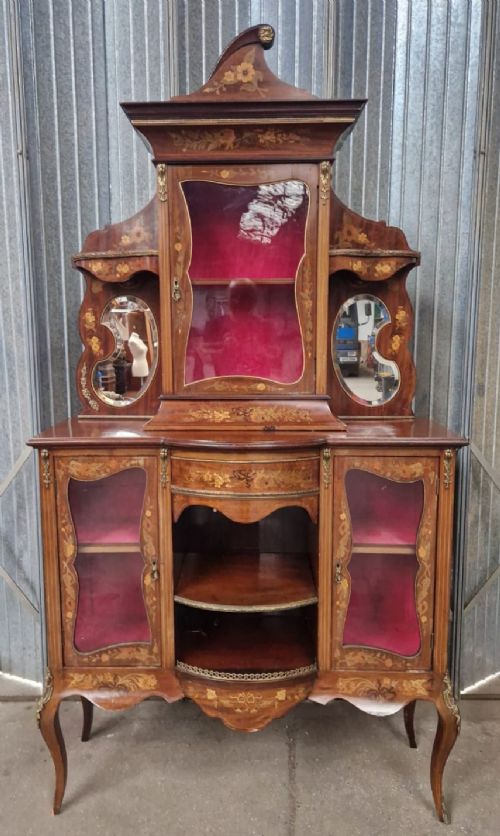
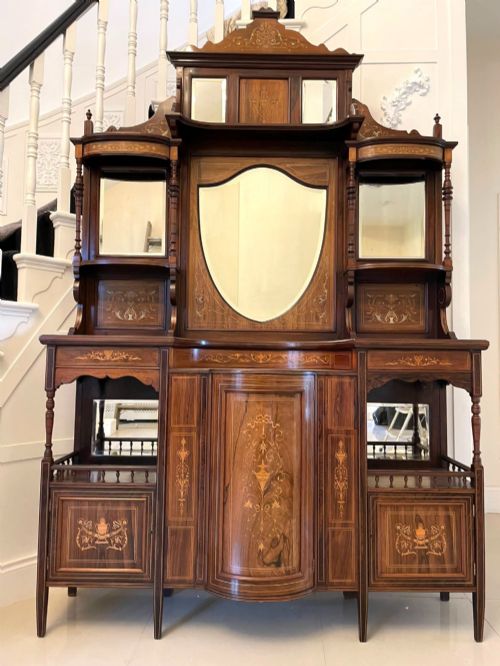
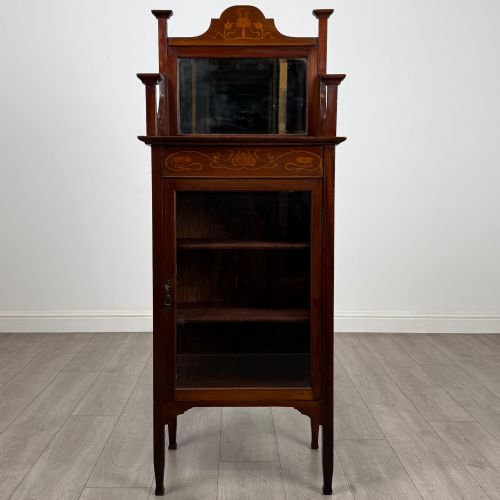
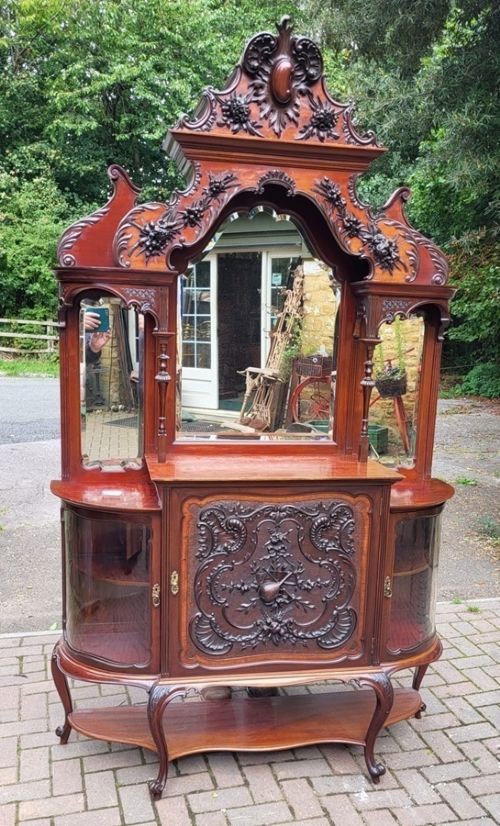
An antique parlour mirror brings depth and reflected light into a room, taking the form of large cabinet backs made during the Victorian and Edwardian periods.
Antique Parlour Mirror
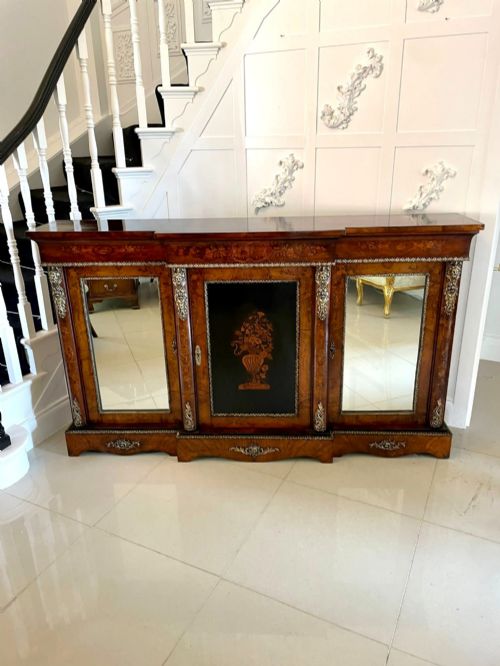
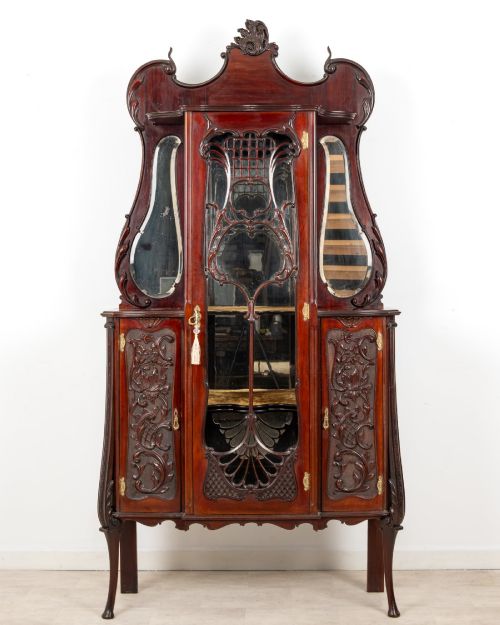
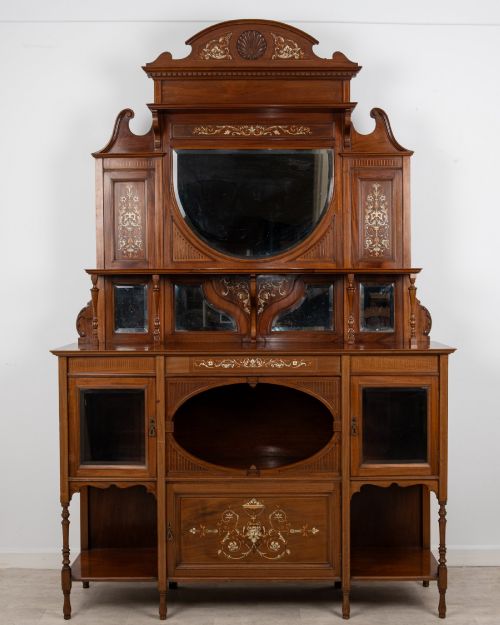
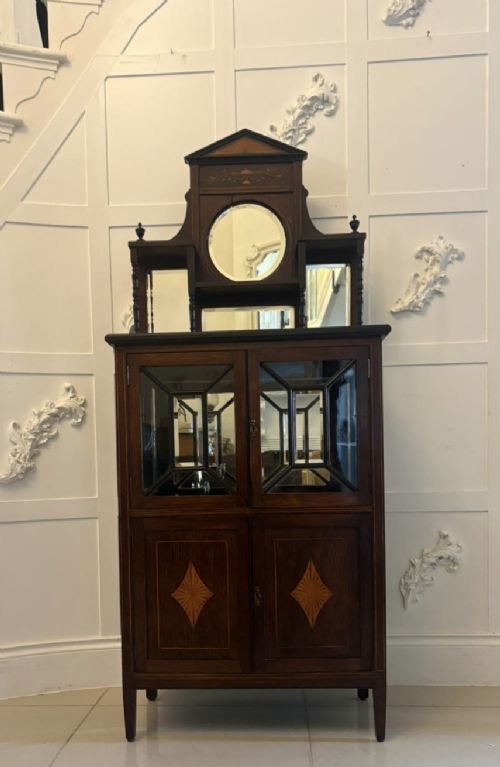
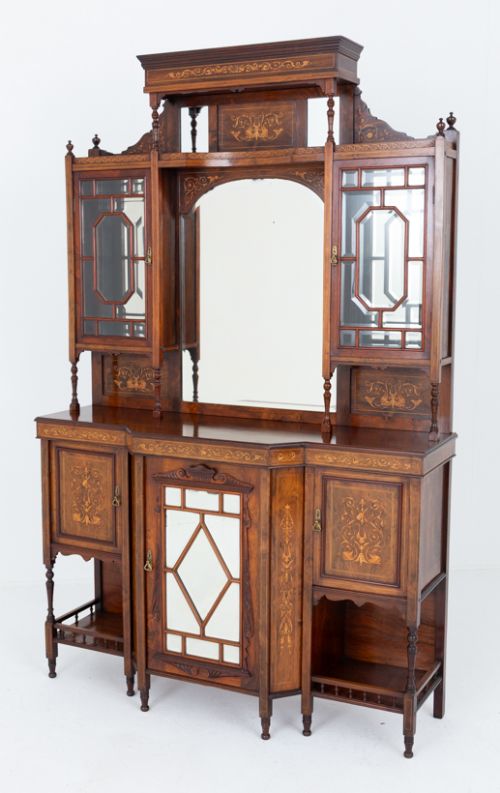
An antique parlour mirror most frequently appears as an integrated component of a larger cabinet, such as a side cabinet, credenza, or display cabinet from the Victorian or Edwardian eras. These pieces combine a functional reflective glass plate with storage or display space, designed specifically for the principal reception rooms of past homes.
The versions met on this page span the late nineteenth century into the early twentieth century, showing styles from the Aesthetic Movement and Art Nouveau to Edwardian French Revival and Chippendale Revival. They serve both to brighten a parlour by reflecting window light and to display porcelain, books, or decorative objects on integrated shelves.
Materials and construction
Cabinet makers utilised dense hardwoods such as mahogany, walnut, burr walnut, rosewood, and satinwood, often embellishing the timber with intricate marquetry and contrasting stringing. Ebonised finishes also appear, providing a dark, uniform ground for inlaid details.
Glass plates form the mirror backs, paired with brass hardware and occasionally carved mahogany or satinwood frames. Joinery relied on traditional methods to support both the weight of the central mirror and the surrounding shelving or cabinetry.
Listings feature woods including mahogany, rosewood, walnut, burr walnut, satinwood, and ebonised timber.
Variations in quality
The standard of a piece rests on the choice of timber and the execution of its marquetry and carving. Finely figured burr walnut or profusely inlaid rosewood signify a higher grade of craftsmanship than plain mahogany or simpler veneers.
Design ambition also separates examples, with makers incorporating bowed fronts, drop centre mirror backs, and detailed brass mounts achieving a greater visual presence than utilitarian storage pieces.
Garnett & Sons·Gillows
The Antique Parlour Mirror Glossary
- Marquetry
- Decorative patterns created by fitting together thin slices of wood veneer onto a solid ground. This technique allows for complex floral or geometric designs across cabinet doors and friezes.
- Credenza
- A low-standing reception room cabinet used for storage and display. Victorian examples frequently incorporate mirror backs above the main surface.
- Chiffonier
- A compact sideboard or cabinet equipped with shelving or a small mirror superstructure. It evolved during the nineteenth century for use in smaller parlours.
- Aesthetic Movement
- A late nineteenth century style emphasising visual beauty over narrative or moral content. Pieces from this movement often utilise ebonised wood and gilt decoration.
Antique Parlour Mirror: Frequently Asked Questions
Where were parlour mirrors placed?
These mirror back cabinets stood against drawing room walls, often between windows to maximise the reflection of natural light into the space.
Their integrated shelves also provided a convenient surface for displaying small ornamental objects and ceramics within view of guests.
How do I date a mirror back cabinet?
Dating relies on the stylistic markers of the timber and decorative motifs, moving from heavy Victorian burr walnut and rosewood to lighter Edwardian satinwood and mahogany.
Movements like Art Nouveau or the Aesthetic Movement also provide clear stylistic decades within the late nineteenth and early twentieth centuries.
Are mirror back cabinets sturdy?
Constructed from solid hardwoods and substantial veneers, these cabinets were built to support heavy glass plates and decorative items without structural compromise.
Traditional joinery ensures the upright mirror frames remain securely fastened to the base credenza or sideboard.
What is the difference between a chiffonier and a credenza?
A chiffonier is typically a more compact form of sideboard featuring lower doors and an upper shelf or mirror structure.
A credenza generally offers a longer, lower profile designed specifically for grander reception rooms and formal display.