



Antique Parlor Stool
An antique parlor stool brings domestic comfort from the Victorian and Georgian eras into the modern room.
Antique Parlor Stool
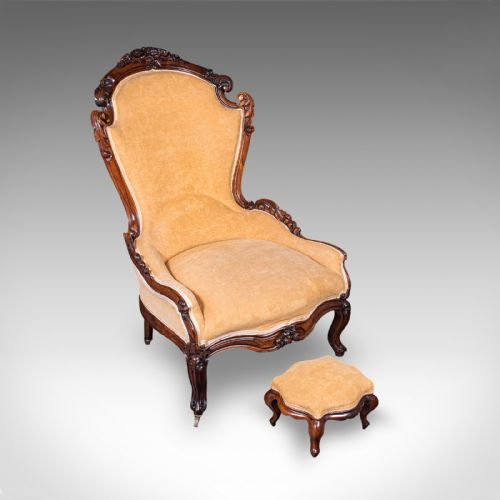
An antique parlor stool serves as a low seating option or footrest, frequently taking the form of a footstool, centre stool, or salon chair and stool combination. These pieces emerge predominantly from the Victorian period, including early Victorian and Victorian Rococo Revival examples, alongside pieces dating to eighteen sixty, eighteen eighty, and the Georgian era.
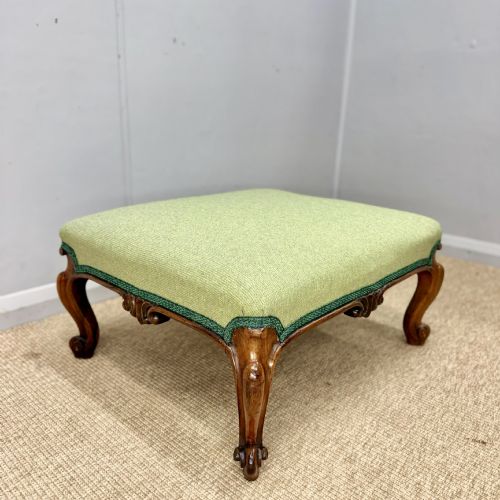
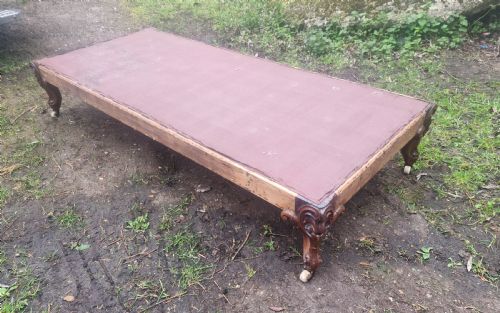
The forms seen here range from small round footstools to pairs of carved rosewood footstalls and freestanding walnut stools. Many retain their original character, while others arrive newly upholstered or stripped back for reupholstering.
How they were made
Cabinetmakers constructed the frames of these parlor stools using dense hardwoods such as rosewood, mahogany, and walnut, often applying intricate hand carving to the timber. Brass elements and ceramic components occasionally feature within the construction or decorative detailing of the frames.
Upholstery forms a vital component of these pieces, incorporating traditional textile, fabric, and velvet coverings over needlepoint, geometric kilim tapestry, and Tunbridge Ware inlaid wooden surfaces.
Antique Parlor Stool Retail Price Guide 2026
Typical asking prices for parlor stool among the pieces listed under this phrase on Sellingantiques today, from the lower quarter to the upper quarter. They describe what is for sale here now, not the wider market.
The listings on this page span the Victorian and Georgian periods, utilising rosewood, mahogany, walnut, brass, and ceramic.
What varies in quality
The distinction between standard examples and the finest pieces lies in the crispness and depth of the timber carving upon the frame. Master craftsmen invested significant labour into shaping rosewood and walnut, creating flowing Rococo revival curves and detailed structural elements.
Surface ornamentation and secondary materials further elevate a piece, such as precise Tunbridge Ware geometric inlay and the integration of delicate needlepoint tapestries. The integrity of the underlying woodwork dictates the lasting endurance of the stool.
The Antique Parlor Stool Glossary
- Centre stool
- A large freestanding stool designed to sit in the middle of a room rather than against a wall. These pieces often feature decorative carving on all sides.
- Tunbridge Ware
- A type of decorative woodwork characterised by minute mosaic patterns made from contrasting natural woods. Craftsmen applied these geometric designs to small panels on boxes and furniture.
- Needlepoint
- A form of canvas work embroidery executed with a yarn threaded through a stiff open weave mesh. It frequently appears on nineteenth century footstools in geometric or floral patterns.
- Rococo Revival
- A mid nineteenth century design movement that reinterpreted the curved, asymmetrical motifs of the eighteenth century French Rococo style. Furniture from this period exhibits exuberant carved scrolls and naturalistic flower forms.
Antique Parlor Stool: Frequently Asked Questions
What is an antique parlor stool used for?
These low seats functioned primarily as footrests or auxiliary seating in nineteenth century reception rooms and parlours. They provided a comfortable companion piece to armchairs and salon seating.
Today, they adapt easily to modern living spaces as compact footstools, dressing table seats, or decorative accents beside larger upholstered furniture.
How do I identify a Victorian parlor stool?
Victorian examples typically rely on dense timbers such as rosewood and walnut, frequently decorated with carved frames or inlaid geometric wooden patterns. The proportions tend to be compact, designed to support the feet or provide low occasional seating.
Stylistic cues include early Victorian curves and Victorian Rococo Revival carving, often paired with traditional velvet, fabric, or needlepoint upholstery.
Are these stools sold with modern upholstery?
Listings vary, with some pieces retaining vintage needlepoint or tapestry work while others are newly upholstered. Certain examples are sold explicitly ready for reupholstering to suit individual interior schemes.
Buyers should examine the specific condition notes to determine whether the fabric is original, recently replaced, or stripped back to the bare frame.
What woods were used for these stools?
Cabinetmakers during the Victorian and Georgian periods favoured durable, dark hardwoods capable of holding intricate carved details. Rosewood, mahogany, and walnut appear frequently across the available pieces.
These timbers were often polished to a deep lustre, occasionally complemented by contrasting wood inlays such as Tunbridge Ware geometric designs.