



Antique Parlor Cupboards
Antique parlor cupboards are timber display pieces designed to showcase household treasures, uniting Victorian craftsmanship with Edwardian elegance.
Antique Parlor Cupboards
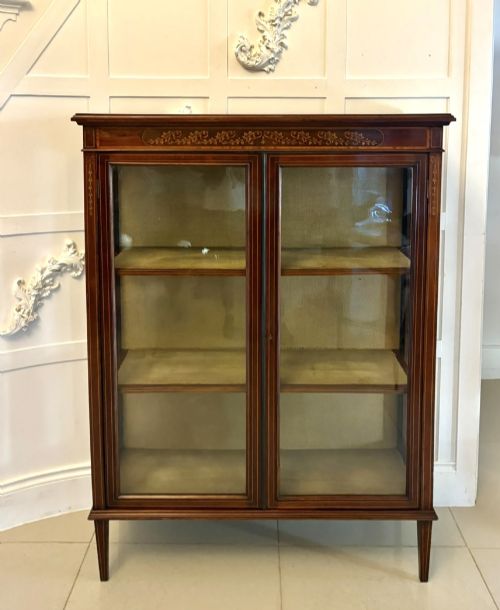
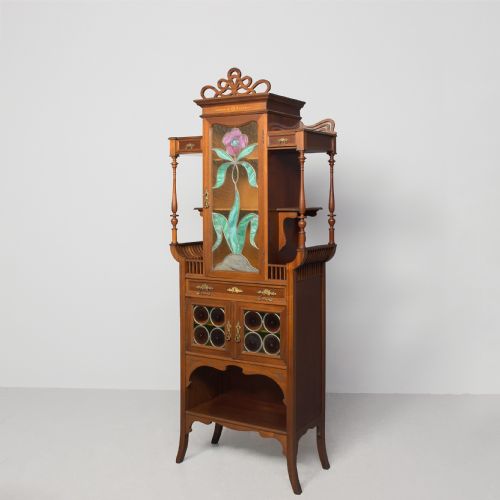
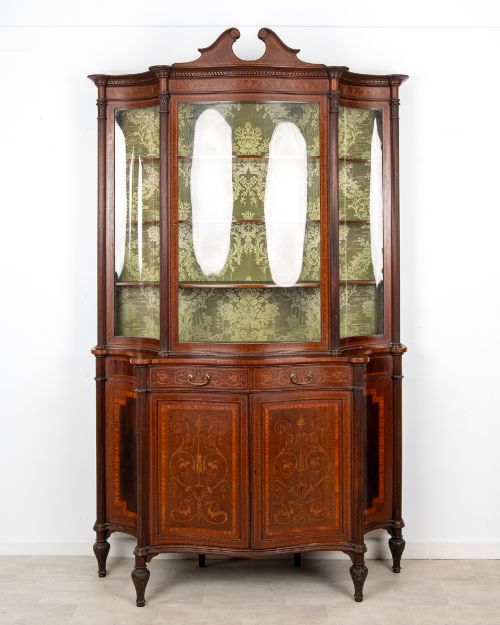
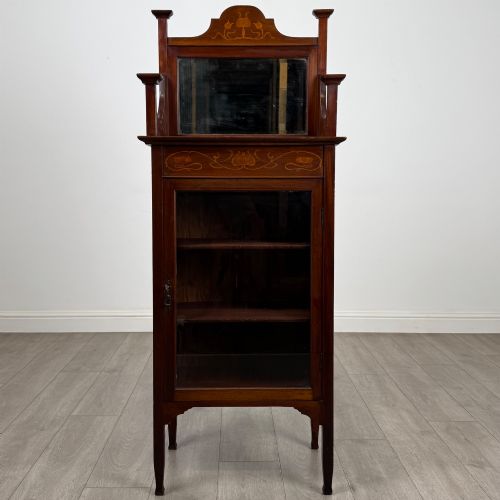
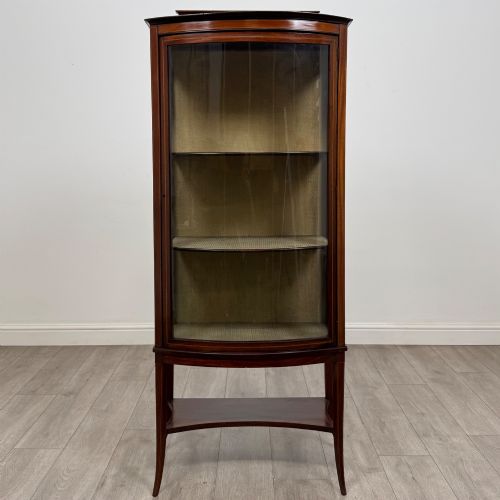
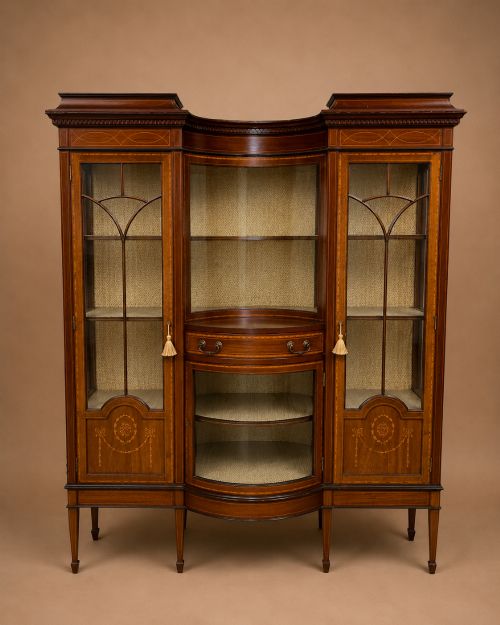
When you search for antique parlor cupboards, you enter a selection spanning the nineteenth and twentieth centuries, predominantly featuring Edwardian and Victorian display cabinets, side cabinets, and credenzas. These storage and display pieces served formal rooms where hosts exhibited ceramics, glassware, and decorative objects to visitors.
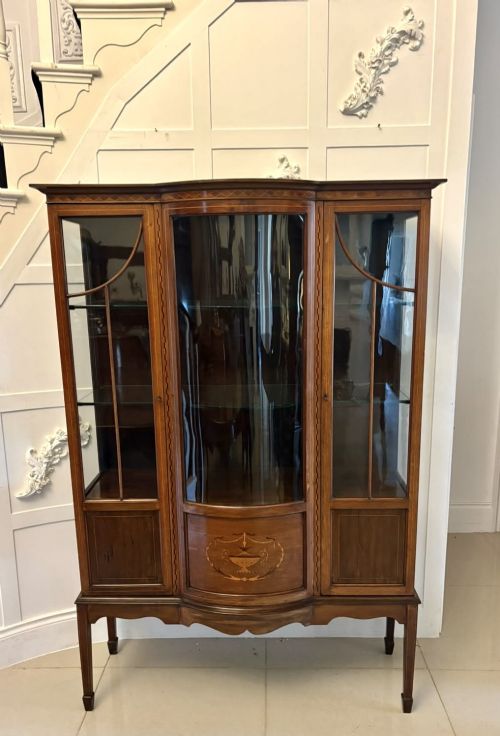
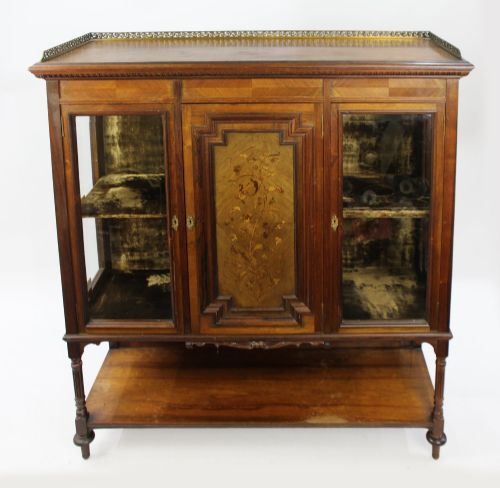
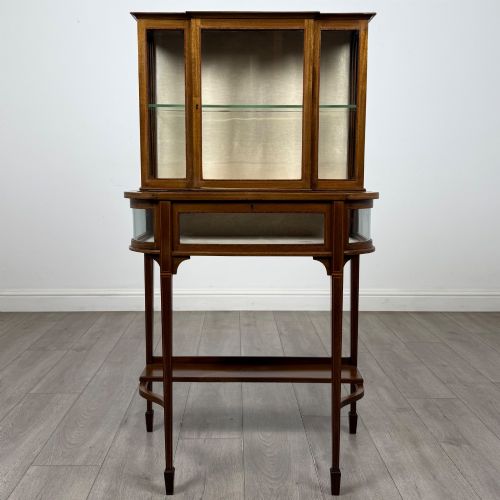
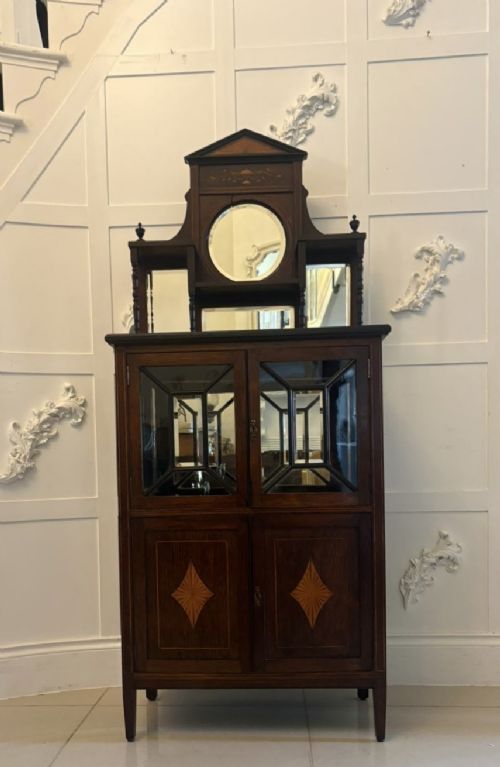
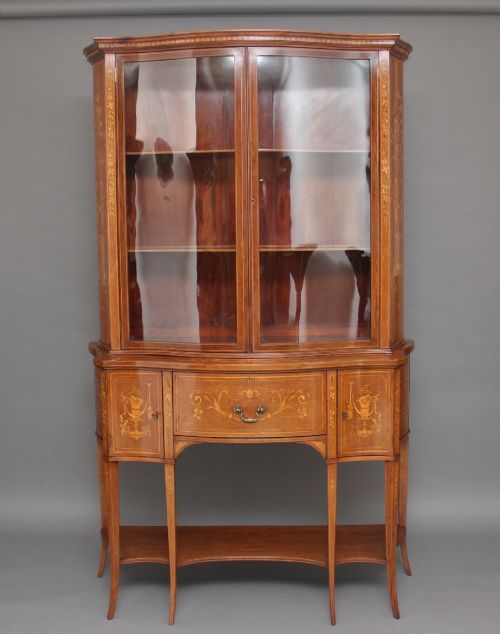
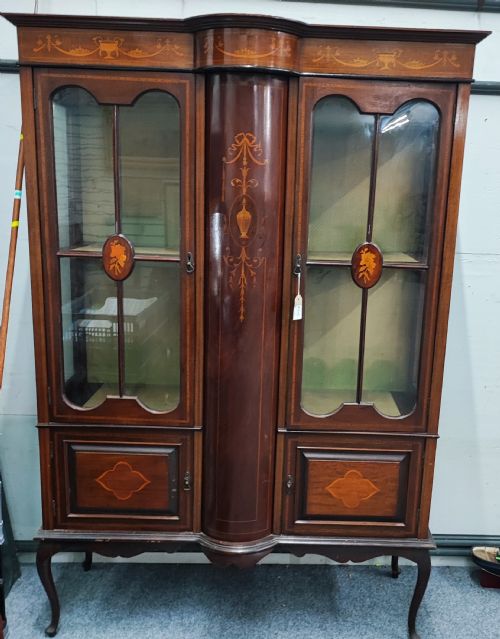
The prevailing examples on this page date from the Edwardian era and the late nineteenth century, executed in mahogany, satinwood, and rosewood. Formats range from bow-front china cabinets and mirror-backed display units to music cabinets and side cabinets with marquetry inlay.
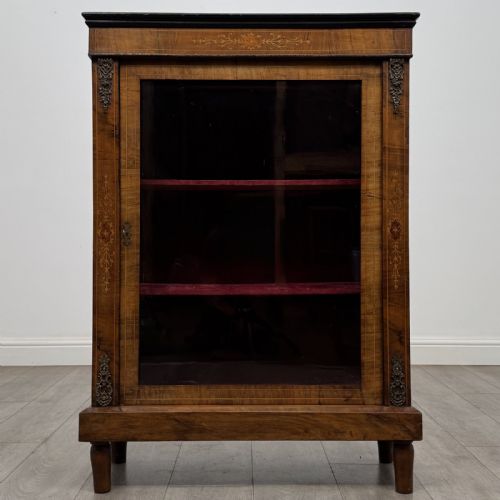
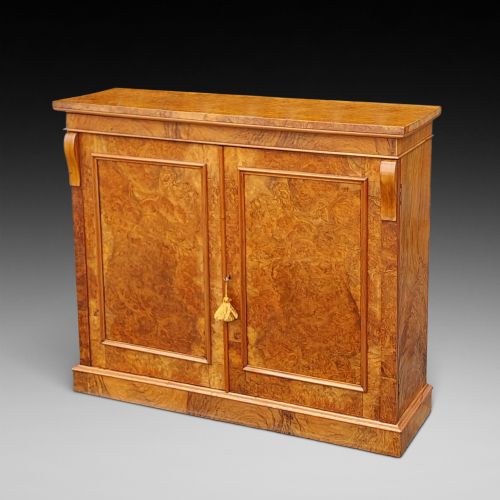
Earlier roots appear in Regency simulated rosewood side cabinets and mid-nineteenth-century walnut or rosewood pieces, alongside French-influenced vitrines. Each variant reflects the domestic requirements of a formal parlor, balancing visible display space with enclosed lower storage.
Materials and construction methods
Cabinet makers utilised dense hardwoods including mahogany, walnut, rosewood, and kingwood as the structural foundation for these pieces. Satinwood and maple provided contrasting timber for decorative stringing, banding, and marquetry motifs.
Surface embellishment relied heavily on fine wood veneers, intricate inlay work, and polished glass panels. Brass hardware, mirror backs, and occasionally painted panels or marble tops completed the construction of these refined parlor storage items.
Antique Parlor Cupboards Retail Price Guide 2026
Typical asking prices for parlor cupboards among the pieces listed under this phrase on Sellingantiques today, from the lower quarter to the upper quarter. They describe what is for sale here now, not the wider market.
Music cabinets included specialised internal partitions designed precisely for holding nineteenth-century sheet music upright without bending.
Assessing quality in parlor cabinets
The distinction between ordinary and superior pieces rests on the precision of timber selection and inlay work. Finer cabinets exhibit harmonious grain matching, crisp marquetry, and delicate stringing executed in contrasting woods rather than painted substitutes.
Construction integrity in the joints, the weight and clarity of the glass, and the originality of brass handles and mirror plates separate workshop standards. Well-executed detailing around spade feet, cornices, and door framing marks the work of skilled cabinet makers.
Maple and Co·Edwards and Roberts·Shapland and Petter
The Antique Parlor Cupboards Glossary
- Marquetry
- Decorative veneer patterns formed by fitting together small pieces of wood, shell, or ivory to create pictorial or geometric designs. This technique appeared frequently on late nineteenth-century cabinet doors and friezes.
- Credenza
- A sideboard or display piece originally used for serving food or storing plate, evolving in the Victorian period into a low cabinet with glass doors. These often incorporate flanking display compartments.
- Vitrine
- A glass-fronted display cabinet specifically designed to show off porcelain, curiosities, and small ornaments. French examples often feature curved glass and gilt-metal mounts.
- Stringing
- Thin lines of contrasting wood inlaid into the surface of a piece to outline panels, drawers, or tabletops. Edwardian satinwood and mahogany cabinets frequently use this linear decoration.
- Bow front
- A convex, outwardly curved front section on a cabinet or chest. This curved form softens the linear geometry of parlor furniture.
Antique Parlor Cupboards: Frequently Asked Questions
What is an antique parlor cupboard?
An antique parlor cupboard is a formal display or storage cabinet designed for nineteenth-century and early twentieth-century reception rooms. These pieces combined glass-fronted shelving for china and curiosities with enclosed lower cupboards.
Craftsmen built them in woods like mahogany, walnut, and rosewood, often embellishing them with marquetry and mirror backs to brighten Victorian and Edwardian interiors.
How do I date an Edwardian display cabinet?
Edwardian display cabinets typically date between 1901 and the First World War, characterised by lighter satinwood and mahogany timbers, spade feet, and refined stringing. They often show neoclassical Revival influences.
Earlier Victorian models tend to use heavier rosewood or walnut with darker finishes, while Edwardian pieces favor airier proportions and extensive use of mirror backs.
Were these cabinets used for china?
Many parlor cabinets functioned specifically as china cabinets for exhibiting prized porcelain tea sets and decorative ceramics. Glass doors kept dust away while allowing hosts to display their social standing through tableware.
Some variants were adapted for sheet music, books, or general parlor ornaments depending on the household's specific needs.
How do I care for a polished wood cabinet?
Maintain polished mahogany, satinwood, or rosewood cabinets by keeping them away from direct sunlight and sudden temperature shifts. Environmental stability prevents the timber and delicate veneer inlays from warping or cracking.
Apply high-quality beeswax sparingly and buff gently with a soft cloth to preserve the historic finish without building up residue.