
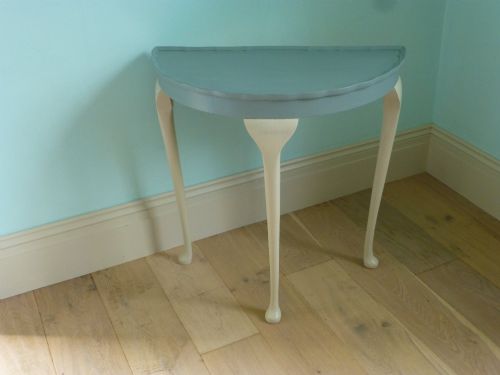

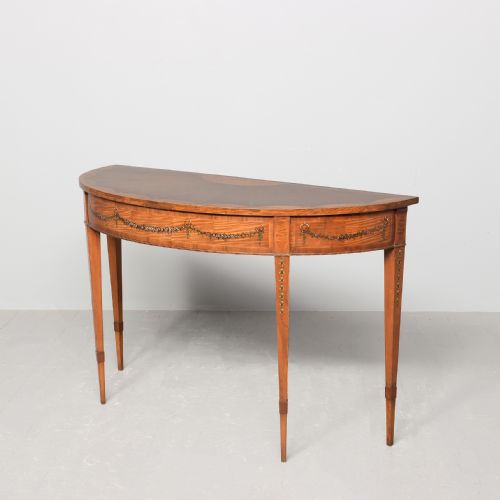
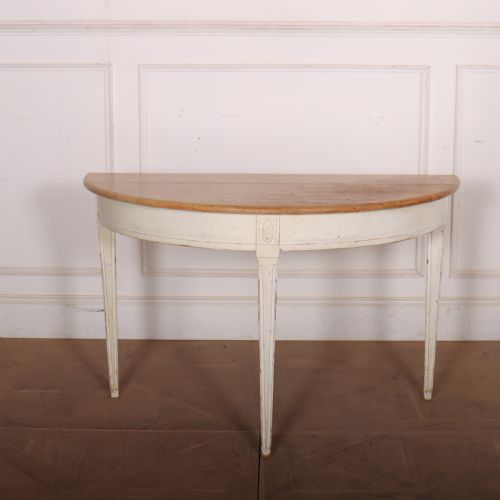


Antique Painted Demi Lune
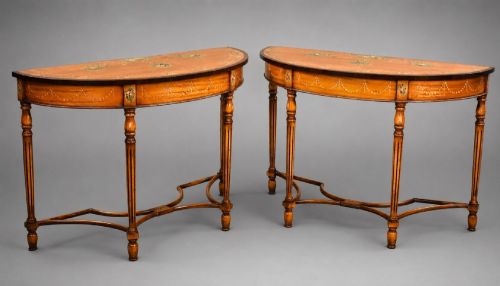
These antique painted demi lune pieces bring graceful curves and delicate painted surfaces to hallways and reception rooms.
Antique Painted Demi Lune
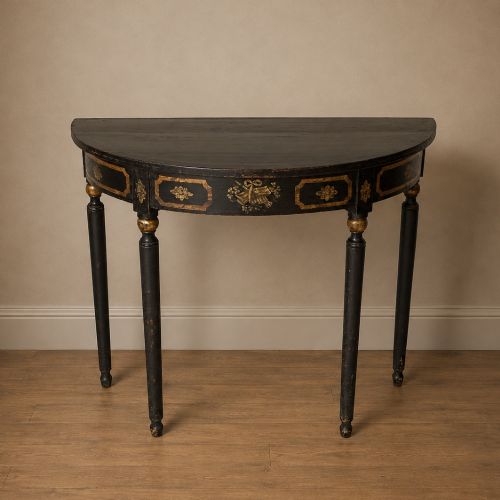
An antique painted demi lune takes the form of a half-circle, designed to stand flat against a wall as a console, card table, side cabinet, or commode. The half-moon silhouette saves floor space while offering a flat surface for display and storage.
The pieces appearing most frequently on this page span the eighteenth, nineteenth, and early twentieth centuries, drawing upon Georgian, Regency, Edwardian, and Sheraton Revival tastes. Makers from Sweden, France, and England adapted the shape with painted and parcel-gilt finishes.
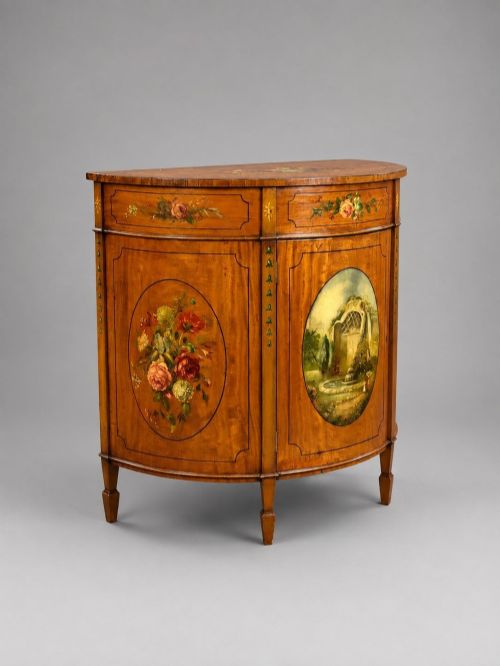
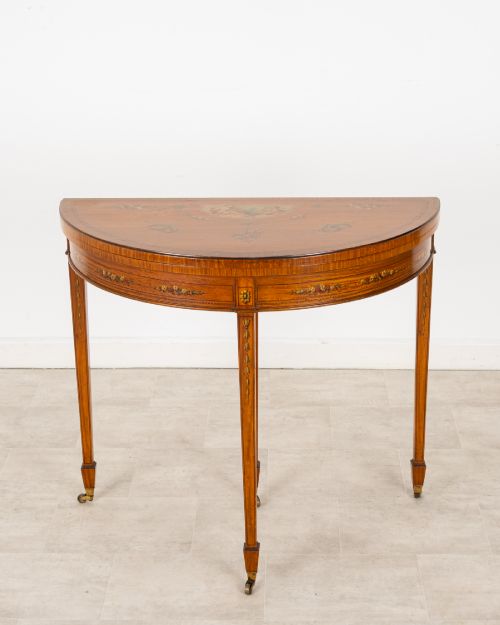
Console tables and games tables dominate the selection, often featuring hinged tops that fold out to reveal baize-lined surfaces. Side cabinets and commodes provide enclosed storage behind curved doors beneath decorated timber tops.
Materials and construction
Carpenters built the curved carcasses using timber and pine, frequently applying fine satinwood veneers to the exterior surfaces. Solid woods like giltwood and wrought iron also appear in specific regional interpretations.
Craftspeople applied paint directly to the wood or over preparatory grounds, often embellishing the panels with classical motifs, floral sprays, or Chinoiserie scenes. Brass hardware such as hinges and handles completed the functional elements of the tables and cabinets.
Listings feature satinwood, pine, and giltwood timbers finished with hand-painted decoration across Georgian, Edwardian, and nineteenth-century periods.
Judging the quality
The refinement of the painted decoration dictates the distinction between standard examples and finer works. Hand-painted classical panels and intricate detailing demand exceptional skill from the artist.
The choice of underlying timber and veneer selection contributes significantly to the integrity of the piece. Satinwood grounds with well-figured grain patterns and stable joinery across the curved frame mark superior construction.
The Antique Painted Demi Lune Glossary
- Demi-lune
- A half-moon shape used for tables and cabinets designed to stand flush against a wall. This profile allows furniture to occupy narrow spaces like hallways.
- Satinwood
- A yellowish-cured hardwood with a lustrous sheen, popular for veneers during the eighteenth and nineteenth centuries. It provided a pale ground for delicate painted decoration.
- Console table
- A table supported by wall brackets or front legs, intended to stand against a vertical surface. Many demi-lune examples function in this role.
- Parcel gilt
- Partially gilded with gold leaf to highlight carved details, mouldings, or decorative motifs. This technique accents specific areas against a painted background.
Antique Painted Demi Lune: Frequently Asked Questions
How do I use a demi lune table?
These tables fit flat against a wall, making them suitable for narrow hallways, landings, and reception rooms where depth is limited. Their surfaces hold lamps, decorative objects, or mirrors hung above.
Fold-over games tables provide an adaptable surface that opens when guests visit. Side cabinets and commodes combine display space with concealed storage behind curved doors.
Are these tables sturdy enough for daily use?
Most antique demi lune tables rely on front legs paired with wall fixing or balanced construction to maintain stability. Console tables intended for display benefit from placement where foot traffic is modest.
Games tables feature hinged leaves supported by swing legs when open. Care should be taken not to overload extended leaves on antique folding tables.
How do I tell different periods apart?
Georgian and George III pieces often display restrained neoclassical painted panels on satinwood. Sheraton Revival furniture from around nineteen hundred reinterprets these earlier eighteenth-century designs with crisp painted finishes.
Swedish Gustavian and French models exhibit distinct regional paint colours, from pale creams to darker lacquers. Edwardian examples often incorporate lighter construction and playful decorative motifs.
What is the difference between a console and a commode?
A console table is an open piece of furniture designed to stand against a wall, supported by legs without enclosed storage beneath. These focus primarily on surface display and architectural presence.
A commode or side cabinet incorporates enclosed shelving or drawers behind doors within the curved body. These provide practical storage alongside surface space.