





Antique Oyster Marquetry
Antique oyster marquetry furniture showcases cross-sections of branches laid as patterned veneers, offering tactile depth and rich surface movement that elevates any period interior.
Antique Oyster Marquetry
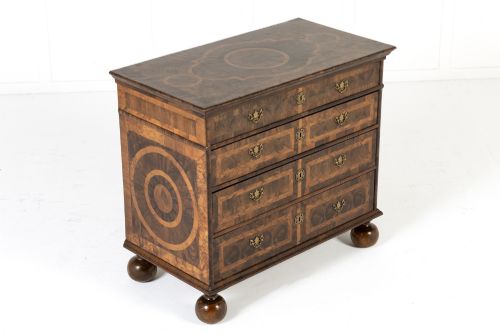
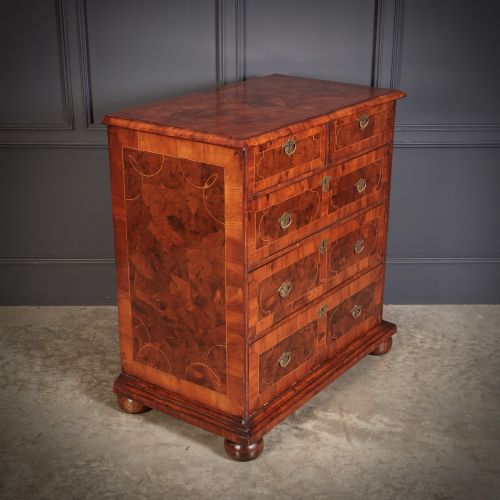
When you search for antique oyster marquetry, you encounter pieces covered in circular and oval wood veneers sliced transversely from small branches. These decorative surfaces appear across the seventeenth century, with later revivals occurring in the twentieth century.
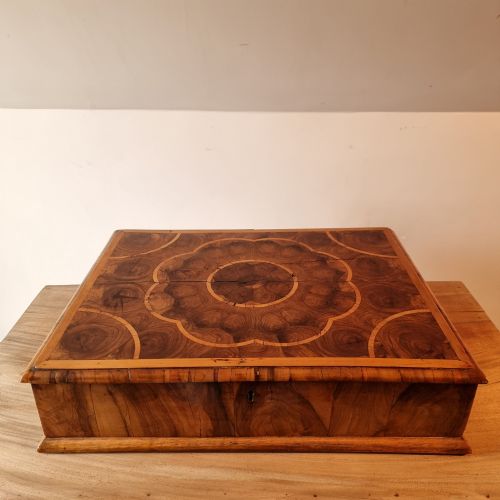
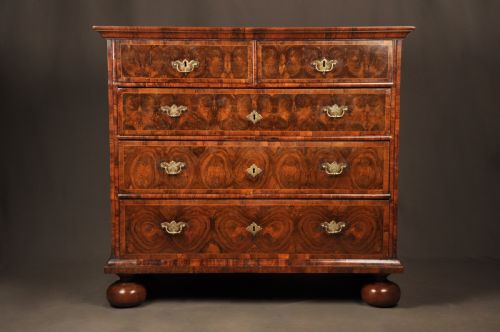
The dominant forms on this page include chests of drawers, cabinets on stand, and smaller boxes or caskets. Walnut, olive wood, laburnum, and kingwood supply the characteristic figured patterns that define these functional items.
Most seventeenth-century examples align with the William and Mary style, whilst revival pieces date from the nineteen-twenties and nineteen-thirties. Chests of drawers and cabinets represent the most frequent formats you will discover in this category.
Materials and construction
Cabinetmakers produced oyster veneer by cutting thin cross-sections across tree branches, creating distinct concentric growth rings. These discs were then arranged in geometric patterns across carcases made from woods such as oak and walnut.
Craftsmen enhanced the primary veneers using stringing and inlay work in contrasting timbers like boxwood and holly. Brass hardware often finished the chests of drawers and cabinets on stand.
Antique Oyster Marquetry Retail Price Guide 2026
Typical asking prices for oyster marquetry among the pieces listed under this phrase on Sellingantiques today, from the lower quarter to the upper quarter. They describe what is for sale here now, not the wider market.
Listings feature sevententh-century pieces alongside twentieth-century revival examples, utilising walnut, olive wood, laburnum, and kingwood.
Distinctions in quality
The visual strength of antique oyster marquetry depends on the choice of timber and the precision of the veneer layout. Olive wood, laburnum, and burr walnut yield striking patterns that outclass plain timber surfaces.
Cohesion between the patterned top, sides, and drawer fronts indicates a higher grade of craftsmanship. Period authenticity also separates seventeenth-century originals from later twentieth-century revival pieces.
The Antique Oyster Marquetry Glossary
- Oyster veneer
- Slices of wood cut across the branch or root to produce circular or oval patterns resembling oyster shells. This technique flourished during the late seventeenth century on cabinets and chests.
- Marquetry
- Decorative veneer applied to furniture structures in geometric or pictorial designs. It creates elaborate surface patterns using contrasting timbers.
- Escritoire
- A writing cabinet featuring a fall-front that opens to reveal compartments and drawers. These pieces often display intricate veneer work.
- Cabinet on stand
- A case furniture form raised on a separate supporting base or frame. They frequently incorporate drawers and elaborate surface decoration.
- Stringing
- Thin inlay lines of contrasting wood used to frame panels and drawer fronts. This detail defines the borders of geometric veneer layouts.
Antique Oyster Marquetry: Frequently Asked Questions
What is oyster marquetry?
Oyster marquetry is a decorative veneer technique where small branch sections are cut transversely to show growth rings. These round or oval pieces are arranged closely together to form patterned surfaces on furniture.
Cabinetmakers utilised timbers like walnut, olive wood, and laburnum to create these distinct circular motifs. The resulting patterns cover the surfaces of chests, cabinets, and small boxes.
How do I date an oyster veneer chest?
Dating relies on examining the carcase construction, secondary woods, and hardware styles alongside the veneer patterns. Seventeenth-century pieces typically show different construction methods compared to twentieth-century revivals.
William and Mary examples often feature specific drawer configurations and brass drop handles. Comparing the timber species and joinery helps distinguish original period pieces from later revival work.
Where were these pieces used?
These decorative items were made for domestic interiors to store valuables, linen, or writing materials. Cabinets on stand and chests of drawers served prominent roles in principal rooms.
Smaller lace boxes and caskets sat on tables or desks to hold personal items. Their decorative surfaces meant they functioned as display pieces as well as storage.
How do I care for antique veneer?
Protect antique veneer by keeping furniture away from direct sunlight and sudden temperature changes. Stable indoor humidity prevents the wood and glue from drying out.
Apply traditional wax sparingly and polish with a soft cloth to maintain the finish. Avoid modern liquid polishes that can damage historic surfaces.