



Antique Oyster Chest
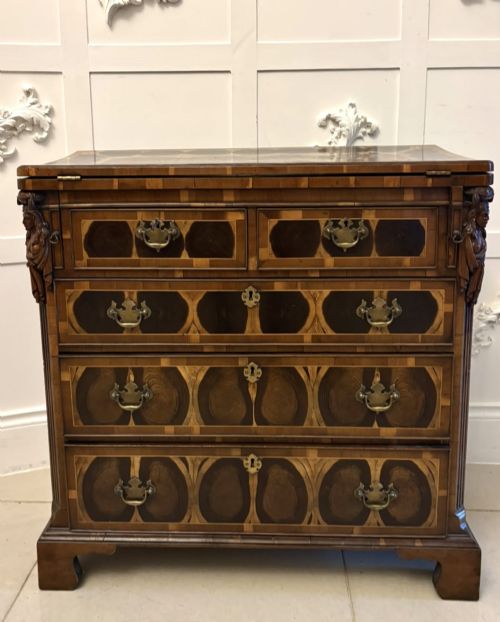
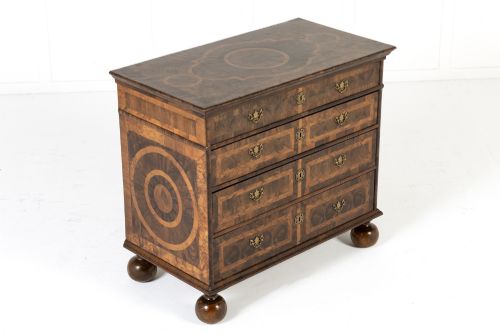
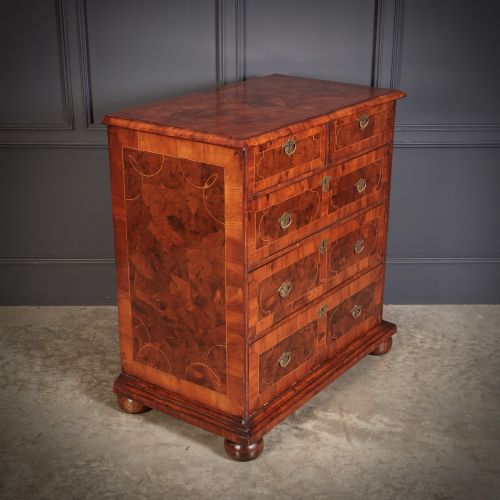
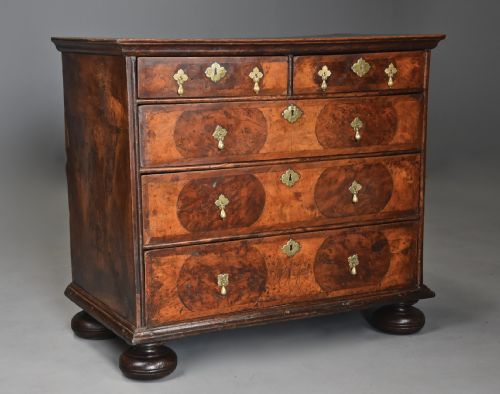
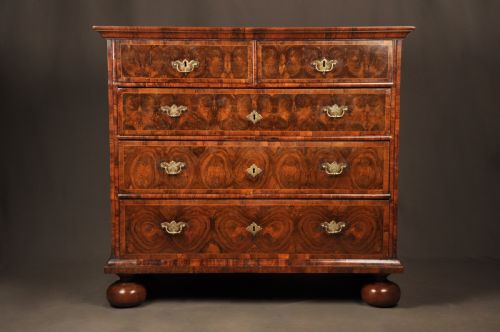
An antique oyster chest brings intricate circular wood patterns from the seventeenth century and later into a room with quiet presence.
Antique Oyster Chest
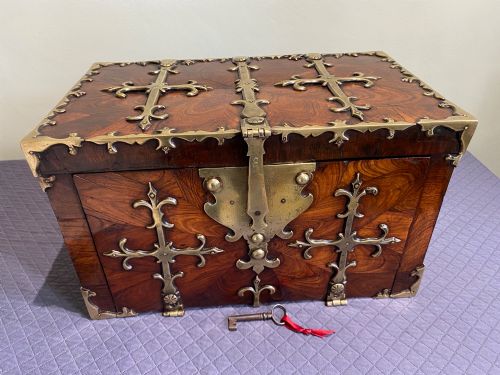
An antique oyster chest is primarily found in forms like chests of drawers, chests on stand, cabinets on stand, and smaller boxes originating from the seventeenth century through the Georgian era and into the 1920s.
Most pieces encountered on this page belong to the William and Mary period, featuring characteristic arrangement of cross-cut timber across the drawer fronts and surfaces.
Buyers also meet compact forms and larger cabinets utilising similar veneering techniques across various timber species.
Materials and construction
Cabinet makers produced the distinctive circular patterns by slicing small branches of timber like walnut, laburnum, olive, and kingwood transversely to reveal the annual growth rings.
These cut sections, known as oyster veneers, were then arranged closely together on a carcase often made of oak or pine, sometimes complemented by boxwood stringing or marquetry details and fitted with brass hardware.
Antique Oyster Chest Retail Price Guide 2026
Typical asking prices for oyster chest among the pieces listed under this phrase on Sellingantiques today, from the lower quarter to the upper quarter. They describe what is for sale here now, not the wider market.
Materials recorded across the inventory include walnut, laburnum, olivewood, kingwood, oak, boxwood, and brass.
Assessing quality and character
Quality rests upon the precision of the veneer placement and the richness of the timber grain, which shows greater depth in olive, kingwood, and laburnum examples.
The integrity of the underlying structure, the subtlety of any inlay work, and the preservation of the original surface patination distinguish finer examples from later revivals.
The Antique Oyster Chest Glossary
- Oyster veneer
- Thin circular slices of wood cut across the branch or root of a tree, resembling the shell of an oyster. This technique became popular during the late seventeenth century.
- Chest on stand
- A case of drawers raised on a separate frame with legs, elevating the storage section above the floor. These often date from the William and Mary period.
- Coffre forte
- A strong box or chest designed for securing valuables, frequently fitted with heavy brass carrying handles and locks. Surviving examples often display elaborate veneering.
- Marquetry
- Elaborate patterns formed by the insertion of different woods, metals, or ivory into a veneered surface. It appears on select seventeenth century pieces.
- Stringing
- A narrow inlaid line of contrasting wood used to outline panels or drawer fronts. Boxwood is frequently utilised for this decorative detail.
Antique Oyster Chest: Frequently Asked Questions
What is an oyster veneer?
Oyster veneer consists of small, circular or oval pieces of wood sliced across the branch rather than along the grain. This method displays the concentric growth rings of the timber.
Cabinet makers arranged these slices in geometric patterns across the surfaces of chests and cabinets during the seventeenth century and subsequent revival periods.
How do I date an oyster chest?
Dating relies on the construction methods, secondary woods, and overall form, with many genuine examples originating in the late seventeenth century under William and Mary.
Later pieces from the 1920s also appear, reproducing the earlier styles using similar laburnum and walnut timbers but with distinct interior construction.
Where were these chests placed?
These chests served as principal storage furniture in domestic interiors, holding linen, clothing, or valuables depending on the specific form of the piece.
Smaller boxes and tea caddies sat upon tables, while larger chests of drawers and cabinets on stand stood against walls in principal rooms.
How do I care for oyster veneer?
Maintenance requires keeping the timber away from direct sunlight and sudden temperature changes to prevent the delicate cross-grain veneers from lifting or splitting.
Routine dusting with a dry cloth and occasional application of appropriate furniture wax helps preserve the finish and patina of the wood.