
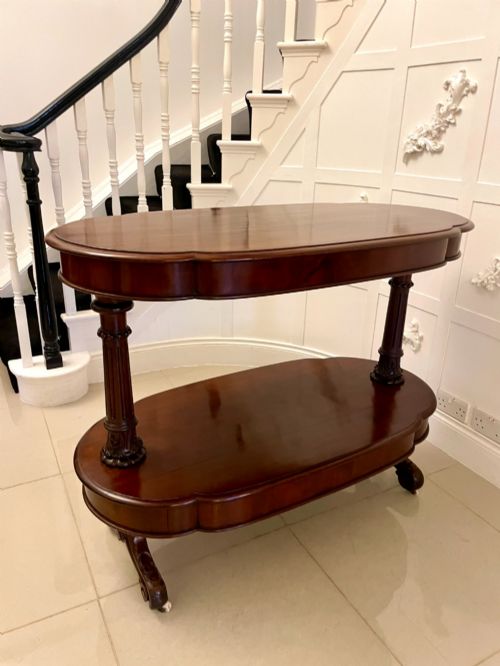
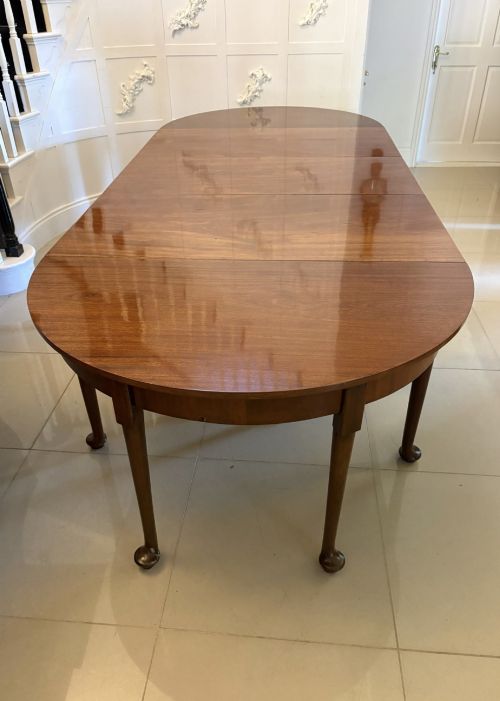
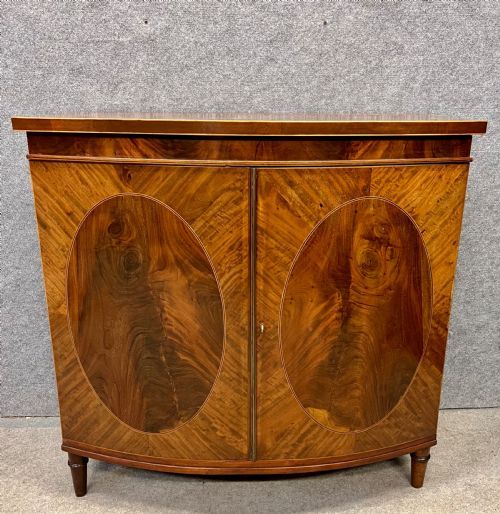
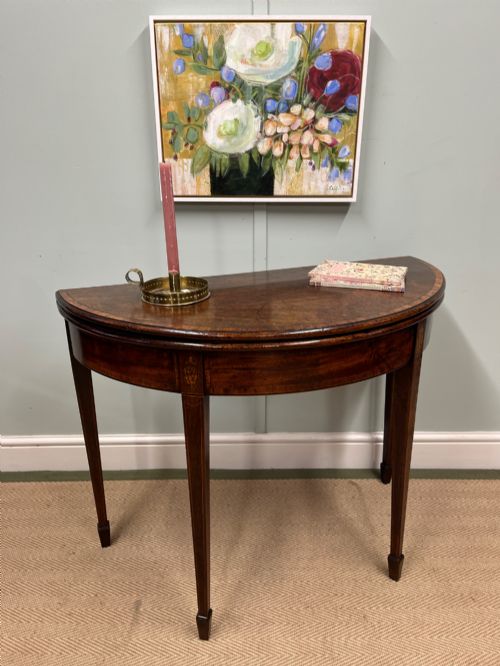






Antique Oval Console Table
An antique oval console table brings curved lines and rich timber grain to a hallway or drawing room.
Antique Oval Console Table
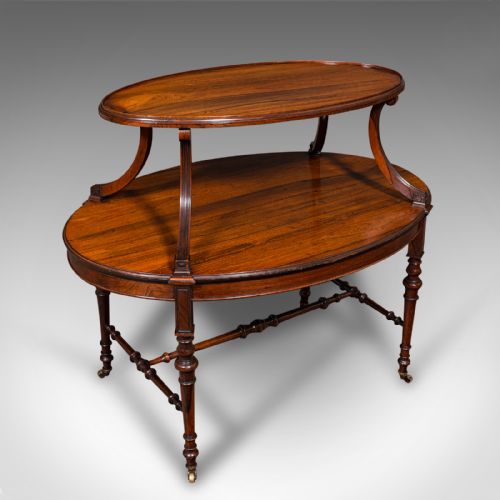
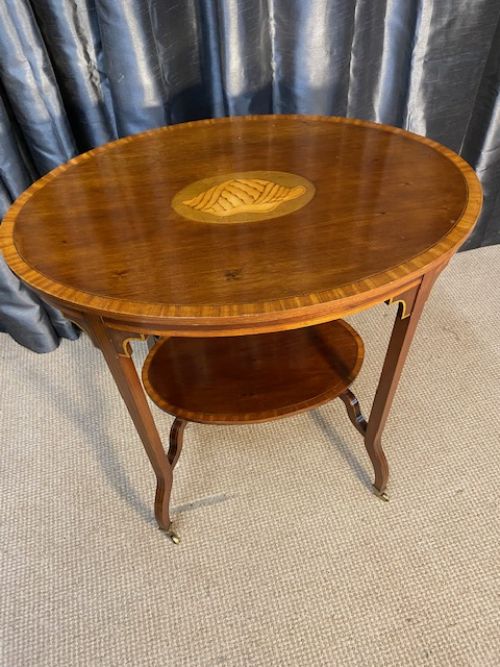
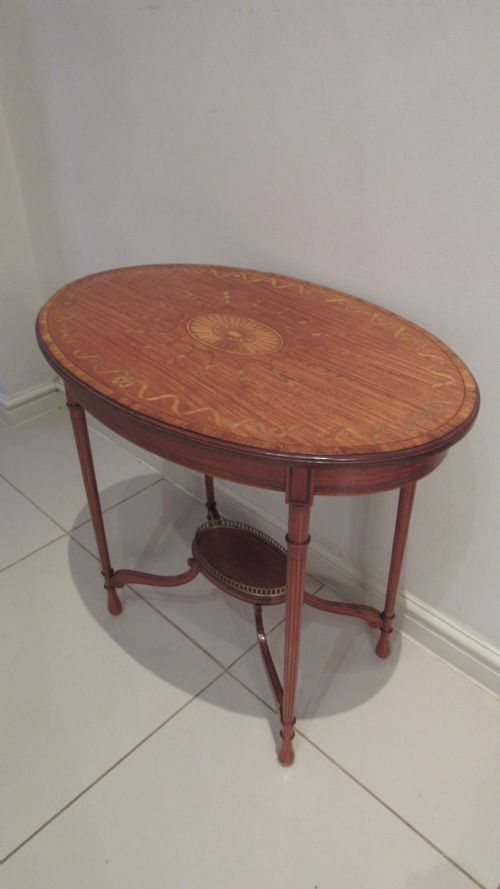
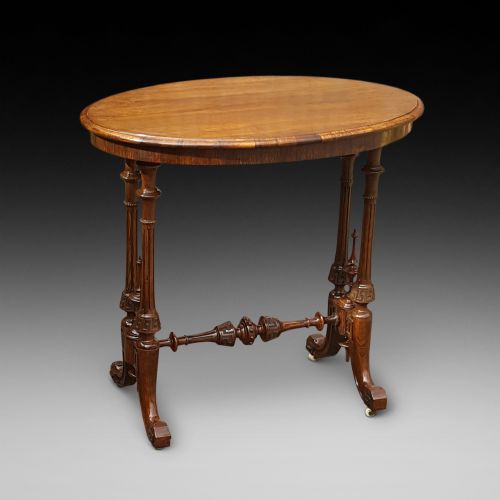
An antique oval console table combines curved proportions with practical surface space, designed to sit neatly against a wall in a hallway or principal reception room. The selection spans formal side pieces, demilune cabinets, serving tables, and occasional furniture spanning the Georgian, Regency, and Victorian periods.
Buyers will most frequently encounter nineteenth century mahogany and burr walnut examples, often featuring inlaid satinwood or delicate marquetry work. Formats range from freestanding serving pieces to folding card tables and two tier stands finished with marble tops or brass mounts.
How they were made
Cabinet makers utilised dense hardwoods such as mahogany, rosewood, and burr walnut as the primary structural foundations, frequently applying fine veneers and contrasting satinwood inlay to the visible surfaces. Carved giltwood and amboyna also appear, providing textural contrast and decorative richness.
Construction techniques include precision joinery for curved aprons and demilune frames, alongside applied marquetry and inset marble slabs. Brass details and gilded carvings finish the structural woodwork, pointing to skilled workshop practices across the Georgian and Victorian eras.
The selection includes mahogany, burr walnut, rosewood, and marble across Georgian, Victorian, and Edwardian periods.
What varies in quality
The distinction between standard domestic furniture and finer examples rests in the selection of timber grain, such as figured burr walnut or rich mahogany, and the crispness of any hand carving. Superior pieces display harmonious proportions and meticulous attention to inlay work rather than purely utilitarian construction.
Original surface treatments and integrated elements like inset marble tops or intact brass mounts elevate a piece significantly. Workshop execution in the joinery of curved rails and demilune frames dictates the overall longevity and visual balance of the table.
The Antique Oval Console Table Glossary
- Demilune
- Half moon shape. This form allows the table to stand flush against a wall while projecting a curved front into the room.
- Marquetry
- Decorative veneer work. Artisans assemble small pieces of contrasting wood and shell to form pictorial or geometric patterns on the table top.
- Giltwood
- Wood coated in gold leaf or gold paint. This finish is commonly found on carved ornamental frames from the nineteenth century.
- Satinwood
- A durable tropical timber with a lustrous yellow sheen. It is frequently employed for contrasting inlay borders and delicate banding.
Antique Oval Console Table: Frequently Asked Questions
Where should I place an antique oval console table?
These tables suit narrow entrance halls, living room perimeters, or reception spaces where a curved profile softens straight architectural lines. Their shallow depth allows them to sit against walls without obstructing thoroughfares.
Larger serving formats function effectively in dining spaces or as display surfaces beneath mirrors, while smaller occasional versions fit beside seating.
How do I identify the period of an antique console table?
Dating relies on timber selection, structural joinery methods, and decorative motifs characteristic of specific eras such as Georgian, Regency, or Victorian. Heavy mahogany and classical lines often point towards earlier decades, while burr walnut and elaborate marquetry frequently indicate later nineteenth century production.
Examining the underside and drawer construction reveals hand cut elements and secondary woods that clarify the manufacturing date.
Are these tables sturdy enough for daily use?
Most antique console and side tables are built from solid hardwoods like mahogany and walnut, making them robust for supporting lamps, books, or decorative objects. Freestanding serving tables and card tables offer substantial stability through heavier framing.
Care should be taken with delicate veneer surfaces and inset marble tops, avoiding excessive weight or moisture.
What is the difference between a console table and a side table?
Console tables traditionally stood against a wall, sometimes anchored to it or supported by front legs, serving a decorative and display function. Side tables are generally freestanding pieces designed for general utility around a room.
Over time, terminology often overlaps, particularly with demilune and occasional tables that share similar proportions and uses.