




Antique Oriental Bookcase
An antique oriental bookcase brings deep carved timber, striking lacquer work, and glass shelving together to hold your volumes with distinction.
Antique Oriental Bookcase
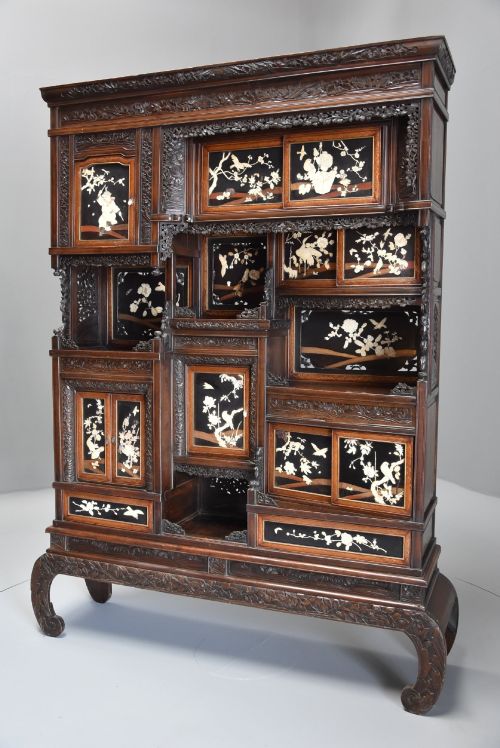
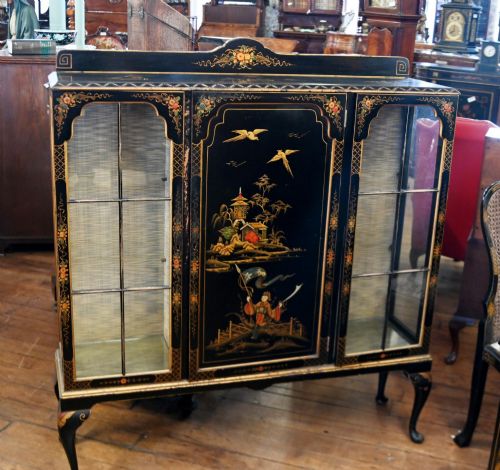
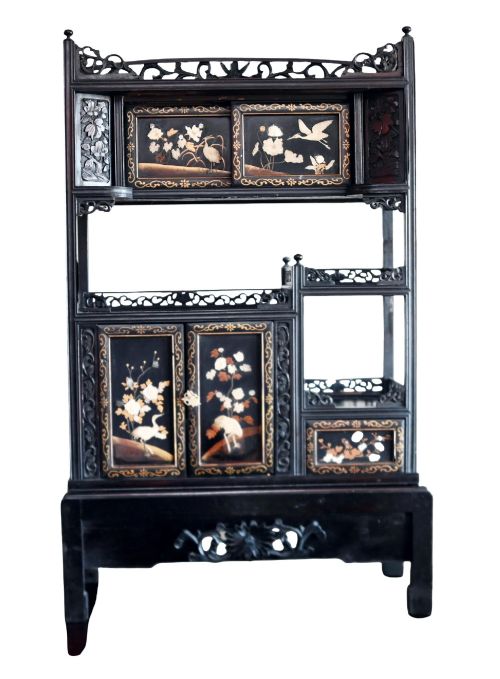
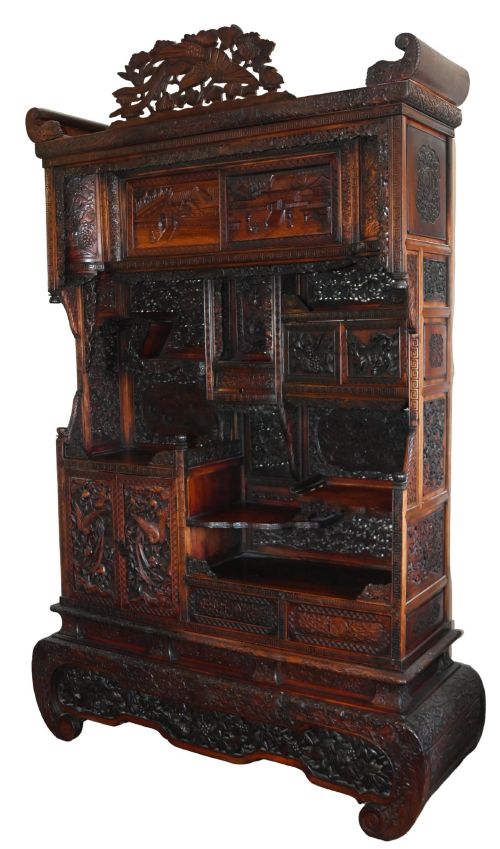
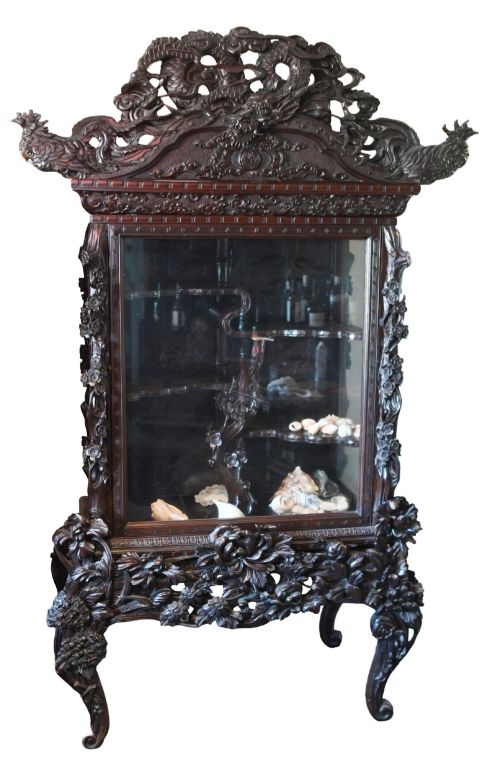
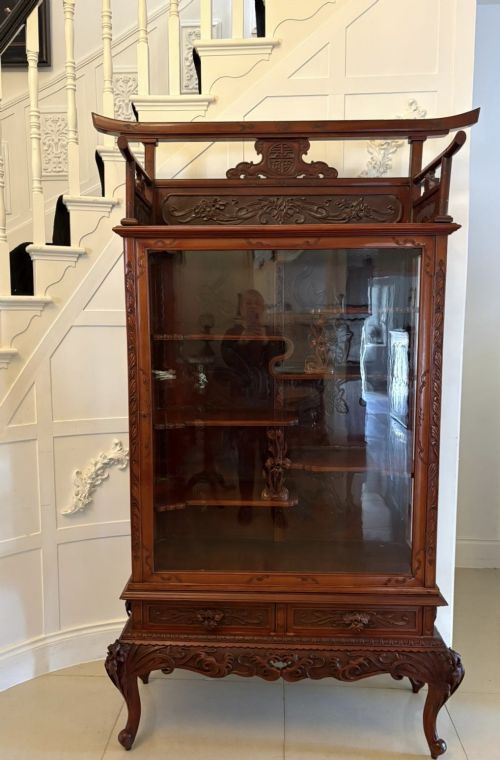
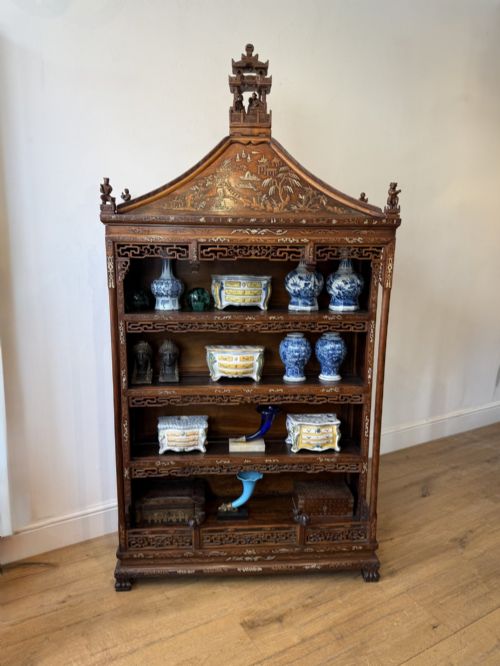
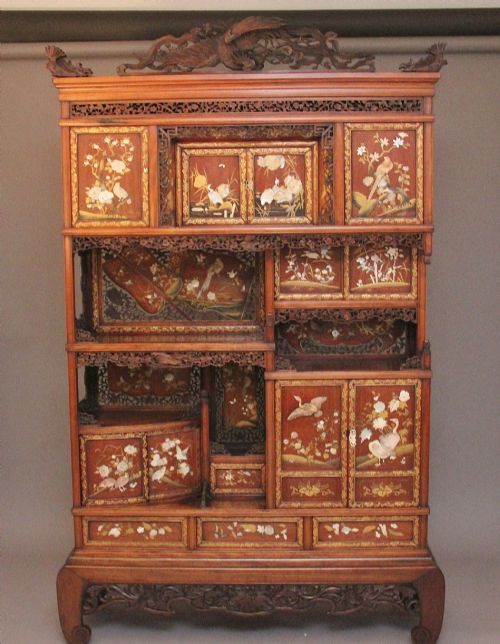
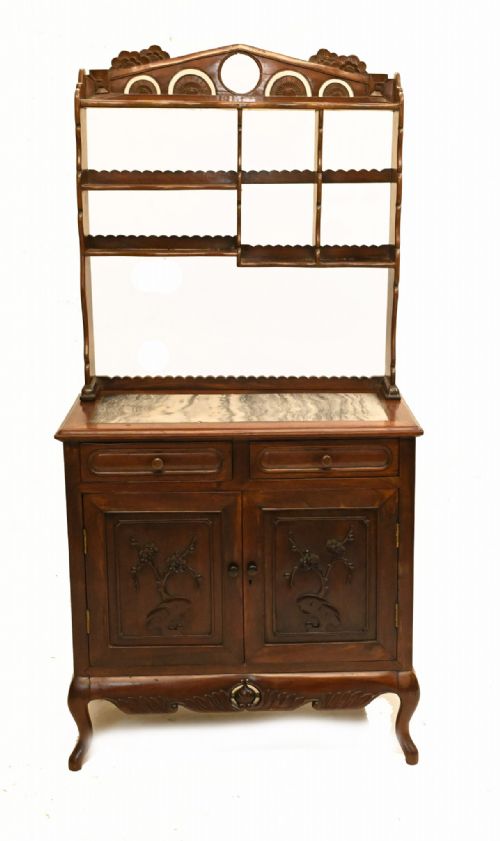
An antique oriental bookcase combines the traditions of Chinese Qing Dynasty joinery, Japanese Meiji period carving, and European Chinoiserie interpretations to create a striking domestic storage piece. Buyers seeking this aesthetic encounter diverse forms ranging from dwarf side-cabinets and open display shelves to glazed bureau bookcases and towering breakfront display cabinets.
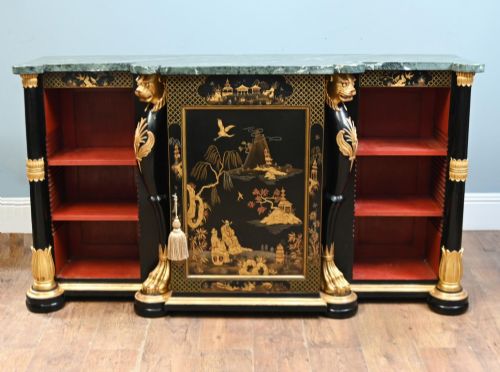
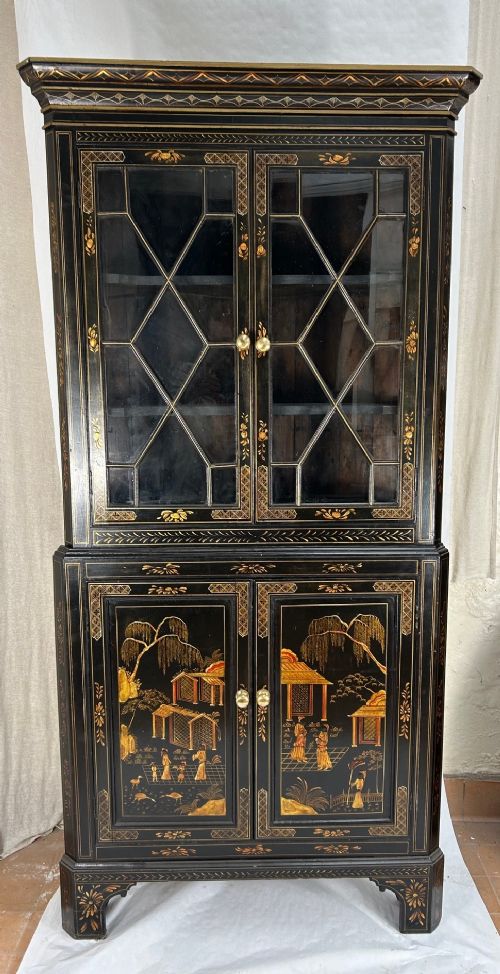
The pieces present on this page span the nineteenth and early twentieth centuries, with a strong representation of Edwardian and early 1900s craftsmanship alongside earlier nineteenth-century examples. Hardwood structures, dark ebonised finishes, and vibrant red lacquer dominate the offerings, frequently incorporating display spaces for decorative ceramics alongside shelving for books.
Makers and workshops from both Eastern origins and European centres working in Japanese and Chinese styles contributed to this category. You will find pieces designated as Chinese export items, French Japonisme furniture, and English Regency Revival interpretations sharing the same market space.
Materials and construction methods
Cabinet makers utilised dense hardwoods including rosewood, hongmu, cherrywood, walnut, and padouk to build sturdy frames capable of supporting heavy rows of books and porcelain. These structural timbers often receive deep ebonised treatments or are carved with intricate motifs depicting natural scenes and figurative elements.
Surface decoration relies heavily on skilled lacquer work in black, red, and gilt finishes, sometimes complemented by inlaid bone, mother of pearl, and brass hardware. Glazed doors protect enclosed compartments, while open sections incorporate stepped shelving derived from traditional Japanese shodana designs and bamboo framework.
Antique Oriental Bookcase Retail Price Guide 2026
Typical asking prices for oriental bookcase among the pieces listed under this phrase on Sellingantiques today, from the lower quarter to the upper quarter. They describe what is for sale here now, not the wider market.
The listings span multiple decades from the mid-nineteenth century through the Edwardian period, featuring both solid hardwoods and lacquered finishes.
Judging quality and execution
The distinction between standard commercial output and superior craftsmanship rests in the depth and crispness of the hand carving upon the structural hardwood. Finer examples display meticulous relief work on every visible surface, whereas lesser pieces reserve ornamentation solely for the primary doors or upper cornices.
Material selection also dictates the standing of a piece, with solid rosewood, hongmu, and heavy lacquering commanding greater appreciation than simpler stained softwoods. Furthermore, the integration of delicate inlays such as mother of pearl and bone requires precise joinery that remains stable over centuries of environmental change.
Gabriel Viardot·Gabriel-Frederic Viardot
The Antique Oriental Bookcase Glossary
- Chinoiserie
- European artistic style and interpretation of Chinese and East Asian artistic traditions, prominent in furniture and decorative arts from the seventeenth century onward.
- Meiji Period
- The era in Japanese history spanning from 1868 to 1912, characterised by the modernization of crafts and the export of highly detailed carved wood furniture to Western markets.
- Shodana
- A traditional Japanese style of ornamental display cabinet featuring asymmetrical shelving, sliding doors, and compartments designed for the arrangement of small objects.
- Hongmu
- A dense, heavy Chinese hardwood translated literally as red wood, highly prized by furniture makers for its rich natural colour and durability.
- Padouk
- A durable tropical hardwood with a reddish tint, utilised by European cabinet makers during the nineteenth century for export-style and Japonisme furniture.
Antique Oriental Bookcase: Frequently Asked Questions
What is an oriental bookcase?
An oriental bookcase is a storage unit for books and display objects originating from East Asian workshops or built in Europe under the influence of Chinese and Japanese design.
These pieces integrate shelving with enclosed cupboards, display cabinets, and decorative carving that reflects nineteenth-century craftsmanship.
How do I date an oriental bookcase?
Dating relies on examining the timber species, construction joints, hardware, and stylistic markers such as Qing Dynasty carvings or Meiji period motifs.
Comparing the primary materials against documented examples from the nineteenth and early twentieth centuries provides a reliable guide to the era of production.
Where were these bookcases made?
Such furniture was produced in Chinese and Japanese workshops for both domestic use and export to Western markets, as well as by European cabinet makers.
French and English designers frequently adopted Eastern aesthetics during the Aesthetic Movement and the Regency Revival.
How do I care for lacquer and hardwood?
Preserving these surfaces requires stable room humidity and protection from direct sunlight to prevent the lacquer from cracking and the timber from drying out.
Dusting with a dry, soft cloth is sufficient for routine maintenance without applying harsh chemical polishes.