



Antique Orange Glass
Antique orange glass brings fire and depth to a room through vibrant hues captured in vases, lamps, and chandeliers.
Antique Orange Glass
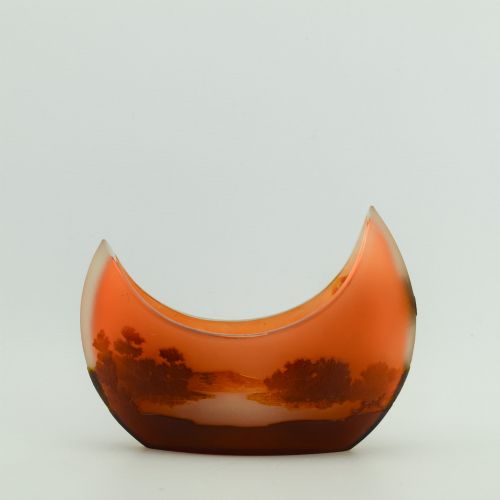
Antique orange glass encompasses pieces created primarily during the early twentieth century, spanning Art Nouveau and Art Deco movements. Collectors searching for antique orange glass encounter luminous cameo vases, stately chandeliers, and delicate vessels produced by renowned French and Scottish makers.
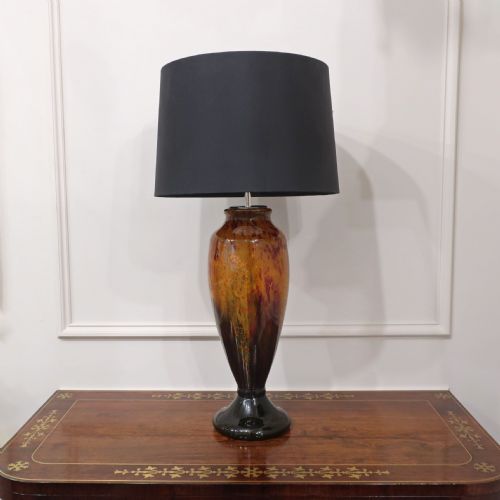
The selections on this page feature iconic forms from the nineteen-hundreds through the nineteen-twenties, including acid-etched landscapes and mottled glass bowls. Table lamps, pendant lights, and liqueur glasses illustrate the varied application of this striking colour across domestic lighting and tableware.
How they were made
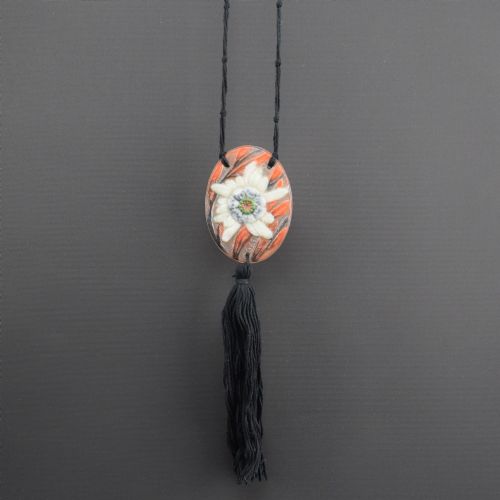
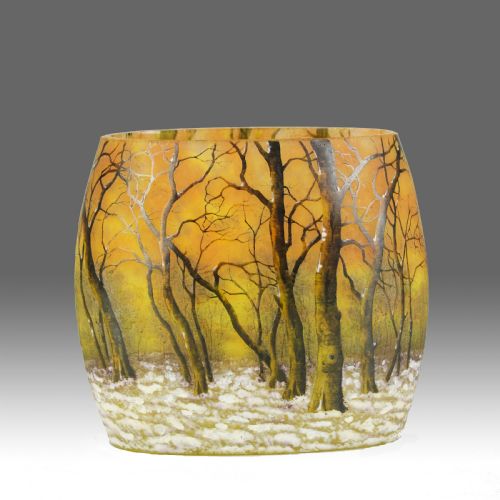
Artisans employed cameo glass techniques, fusing multiple layers of coloured glass before carving or acid-etching the surface to reveal contrasting shades of orange. Enamel decoration and pate de verre methods added further surface texture and tonal complexity to vessels and pendants.
Makers integrated blown glass with wrought iron and gilt metal mounts, particularly in lamps and ceiling lights from the Art Deco period. Molten glass received manipulation through blowing and moulding, sometimes incorporating vibrant orange drips or trailing patterns.
Antique Orange Glass Retail Price Guide 2026
Typical asking prices for orange glass among the pieces listed under this phrase on Sellingantiques today, from the lower quarter to the upper quarter. They describe what is for sale here now, not the wider market.
What varies in quality
Quality rests upon the depth of the cameo carving and the precision of the acid-etching, where sharper definition distinguishes superior pieces. The complexity of layered colours in the glass body dictates visual richness.
The integration of metalwork, such as wrought iron bases by French glasshouses, influences the overall coherence and execution of the object. Signed pieces by established makers demonstrate greater mastery in handling the orange pigment and translucent grounds.
Charles Schneider·Argy Rousseau·Daum Freres·Gallé·Legras·Monart Glass·Verrerie Des Vosge
The Antique Orange Glass Glossary
- Cameo Glass
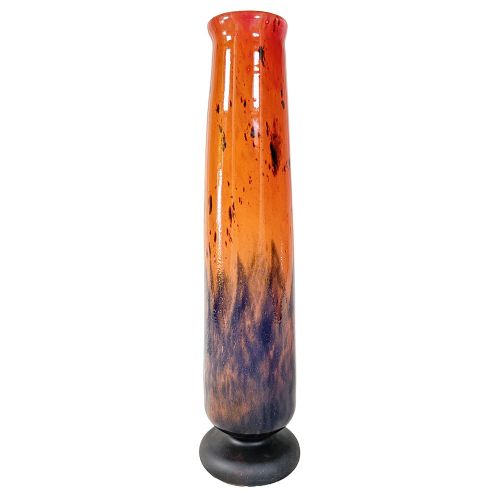
- Glass formed with multiple layers of different colours, then etched or carved to create a raised design. This technique requires exceptional skill to expose the underlying orange tones without damaging the outer layer.
- Pate de verre
- A glass-casting method where finely crushed glass is packed into a mould and fused in a kiln. The resulting pieces display a characteristic granular texture and dense colour.
- Acid-Etched Glass
- Glass treated with hydrofluoric acid to eat away exposed surfaces and create textured or patterned designs. It allows for precise control over the depth of the orange motifs.
- Plafonnier
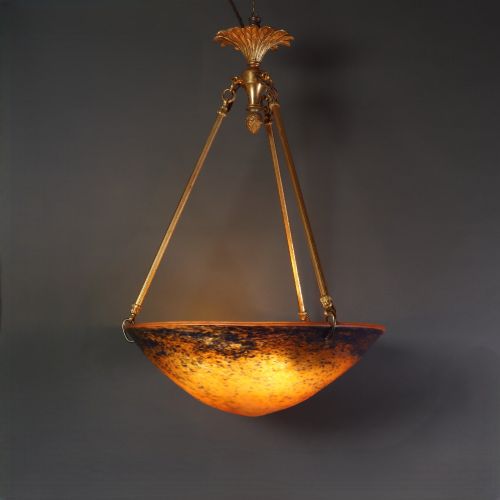
- A ceiling-mounted bowl light that sits flush against the ceiling surface. These fixtures often combine orange glass shades with wrought iron or gilt metal frames.
- Carnival Glass
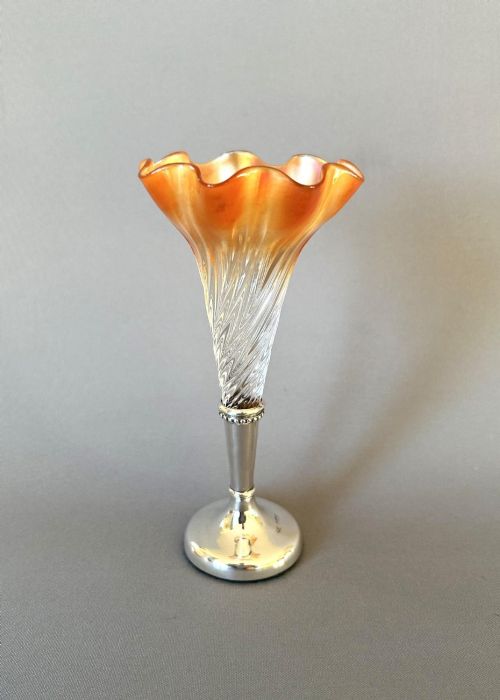
- Moulded glass treated with metallic salts to produce an iridescent sheen. It captures warm amber and orange reflections under changing light.
Antique Orange Glass: Frequently Asked Questions
What is the difference between Art Nouveau and Art Deco orange glass?
Art Nouveau pieces showcase flowing floral designs, organic curves, and romantic landscapes in orange and amber tones. Art Deco items favour geometric patterns, stylised fruit, and robust silhouettes.
The mounting hardware also shifts from sinuous wrought iron plant motifs to clean architectural metalwork.
How should I clean antique glass lamps?
Dust glass shades gently with a soft dry cloth to remove everyday particles. Avoid harsh chemical cleaners that might damage enamel details or metal mounts.
Keep electrical components away from moisture and consult a professional restorer for older wiring.
Can I use antique glass vases for fresh flowers?
Many antique vases were designed to hold water and display stems, particularly sturdy cameo and blown glass pieces. Take care with pieces featuring delicate enamel work or internal metallic inclusions.
Wash them by hand in lukewarm water without abrasive sponges to preserve the original interior surface.