
Antique Opal Jewelry
When you search for antique opal jewellery, you enter a world of play of colour, spanning rings, pendants, and brooches from the Victorian era to mid-century.
Antique Opal Jewelry
When you search for antique opal jewellery, you are looking at pieces shaped in gold, platinum, and silver, originating from periods such as the Victorian era, Edwardian period, and Art Deco years. The selection encompasses rings, necklaces, brooches, and pendants.
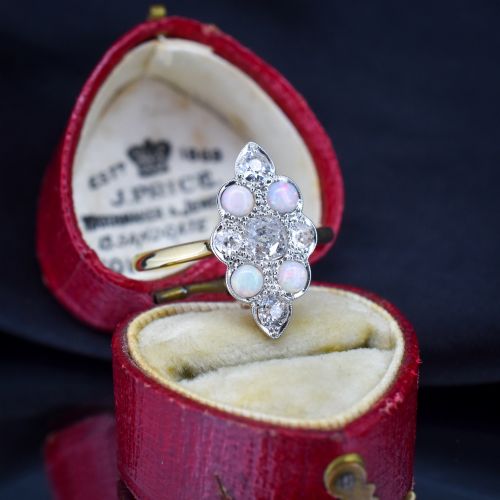
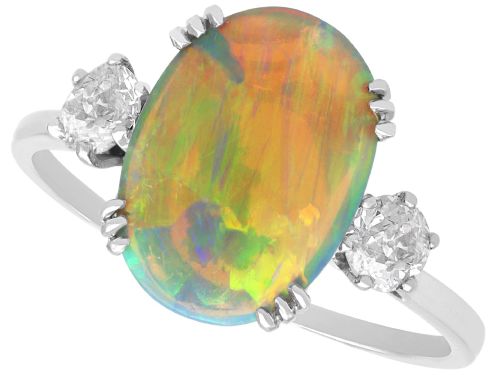
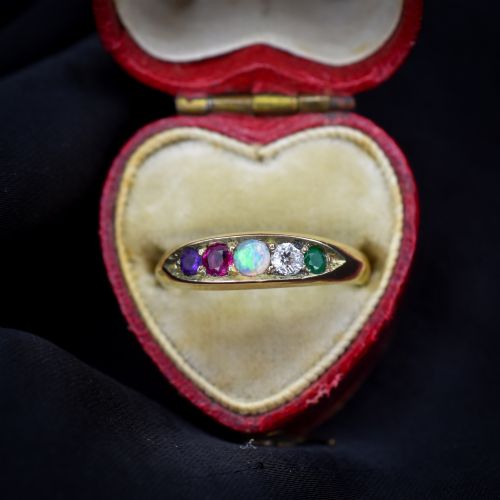
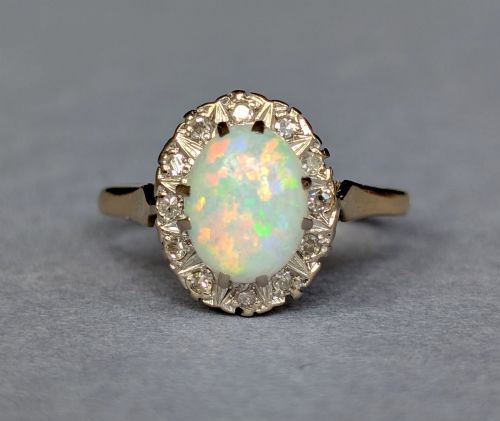
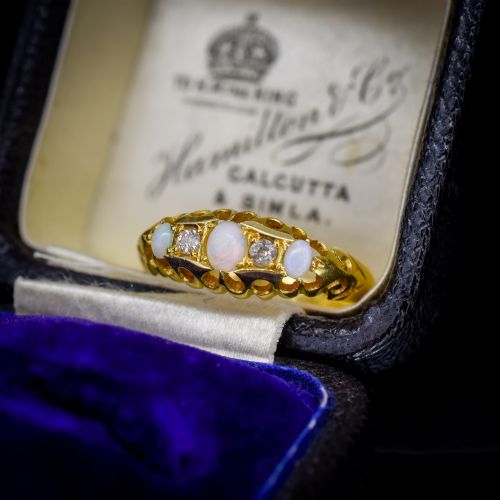
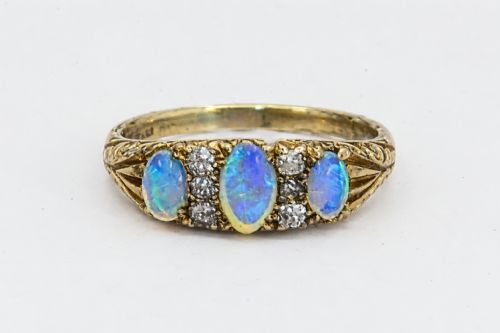
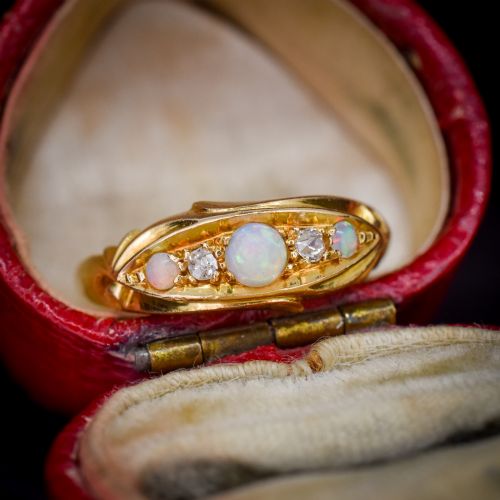
The version you are most likely to meet on this page is a ring, frequently set in 18ct yellow gold or 9ct gold. These often pair the central stone with diamonds in boat ring configurations, cluster designs, or multi-stone settings.
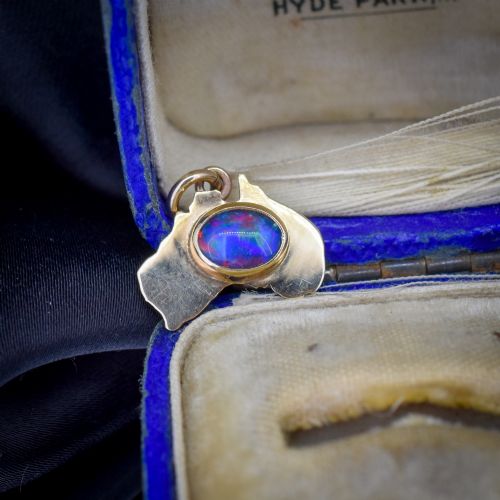
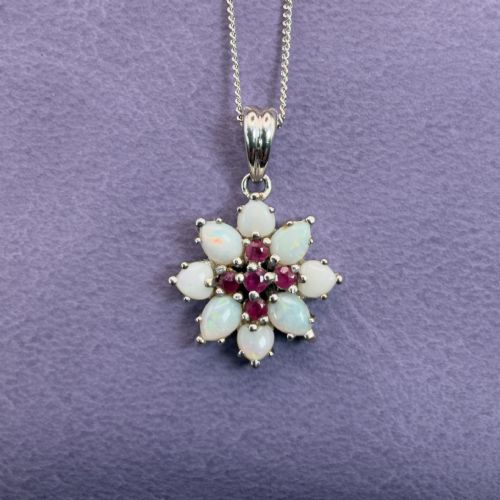
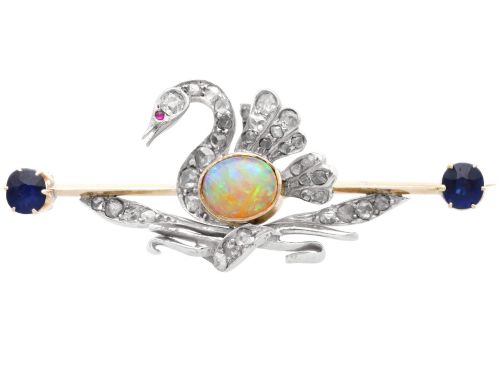
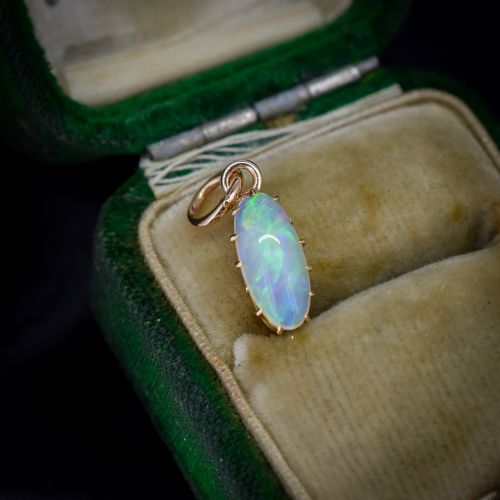
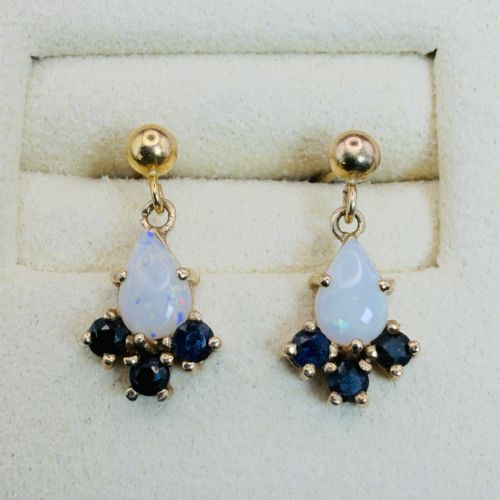
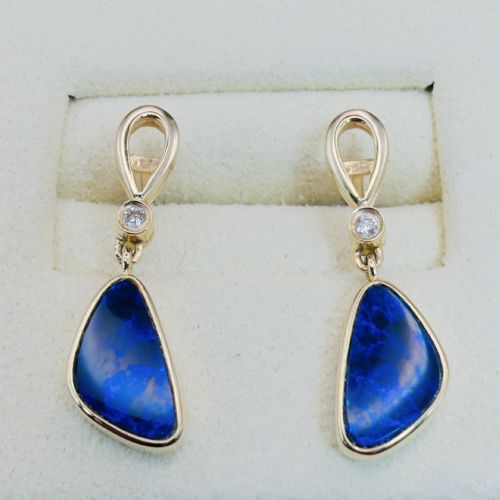
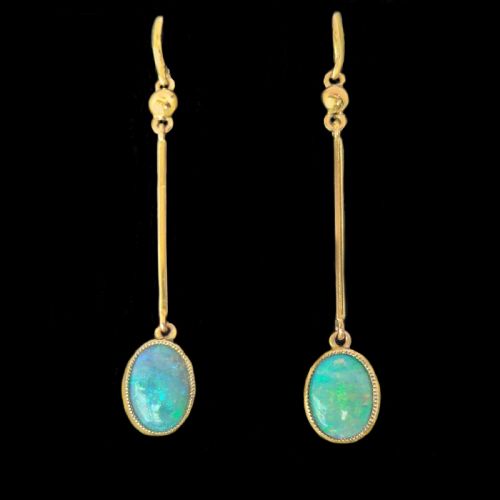
Beyond rings, the listings include pendants and brooches incorporating natural solid opals, boulder opals, and black opals. These pieces frequently feature surrounding gemstones like rubies, sapphires, emeralds, pearls, and turquoise.
Materials and construction
Goldsmiths and jewellers utilised yellow gold, rose gold, white gold, platinum, and silver to mount the stones. Lower and higher carat measures, including 9ct, 14ct, 15ct, and 18ct, provide the structural framework for bezels, claws, and prong settings.
Stones were shaped into cabochons to display the play of colour, then secured alongside diamonds, rubies, and pearls. Artisans employed casting, bezel setting, and claw setting techniques across Victorian, Edwardian, and Art Deco workshops.
Materials range from silver and 9ct gold to 18ct yellow and white gold, platinum, and various opals paired with diamonds.
Separating the ordinary from the exceptional
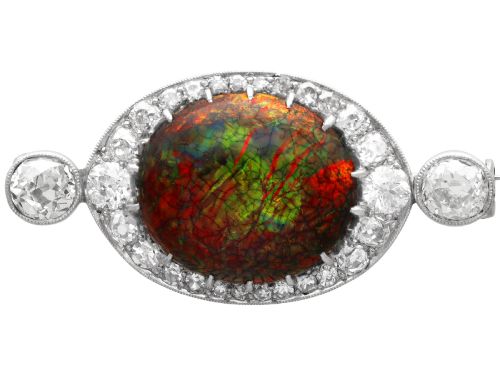
The distinction between tiers rests upon the optical play of colour within the stone itself. Stones exhibiting vibrant flashes across the spectrum from red to green command greater attention than those with muted or single-tone play.
The integration of supporting gemstones, such as matched diamonds and calibrated rubies, elevates a piece. Furthermore, the weight and assay marks stamped into the gold or platinum provide reliable indicators of the maker's original standard.
Knoll and Pregizer·The Gaskins
The Antique Opal Jewelry Glossary
- Cabochon
- A gemstone shaped and polished with a smooth, rounded surface rather than faceted. This cut maximises the optical play of colour in opals.
- Boat ring
- A ring setting featuring a curved, boat-shaped face that tapers towards the band. This style was widely produced during the Victorian and Edwardian periods.
- Festoon
- A necklace featuring a draped chain or garland of suspended links and pendants. Edwardian examples often pair these with opals and pearls.
- Doublet
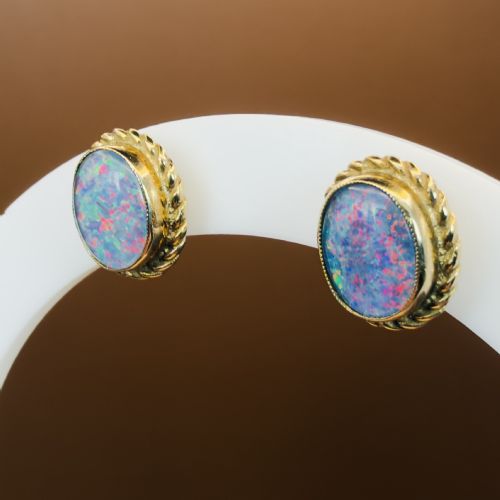
- A composite gemstone made of two layers, typically a thin slice of natural opal glued to a darker backing. This technique enhances the perceived body colour.
- Trilogy ring
- A ring set with three stones arranged in a row, often signifying past, present, and future. They frequently pair an opal centre with diamond side stones.
Antique Opal Jewelry: Frequently Asked Questions
How do I care for antique opals?
Opals contain water within their structure and possess a lower hardness than diamonds. Avoid ultrasonic cleaners, harsh chemicals, and sudden temperature changes.
Store them away from direct sunlight and dry environments. Wipe gently with a soft, damp cloth after wearing.
What is a boulder opal?
A boulder opal is a type of opal that forms naturally within ironstone matrix rock. The host rock remains attached to the back of the gemstone.
This backing provides natural stability and creates a dark background that intensifies the play of colour within the stone.
Are these pieces made of solid gold?
The pieces utilise various purities of gold, including 9ct, 14ct, 15ct, and 18ct yellow, white, and rose gold. Hallmarks and assay stamps often verify the metal.
Some items also employ platinum or silver settings, particularly in Edwardian and Art Deco designs.
How can I tell the period of a ring?
Period identification relies on a combination of gemstone cuts, mounting styles, and metal choices. For instance, boat rings are typical of the late nineteenth and early twentieth centuries.
Assay office marks, maker stamps, and style movements such as Arts and Crafts or Art Deco provide additional dating evidence.