



Antique Oak Tambour
Antique oak tambour furniture brings together slatted wooden shutters and robust timber for practical storage.
Antique Oak Tambour
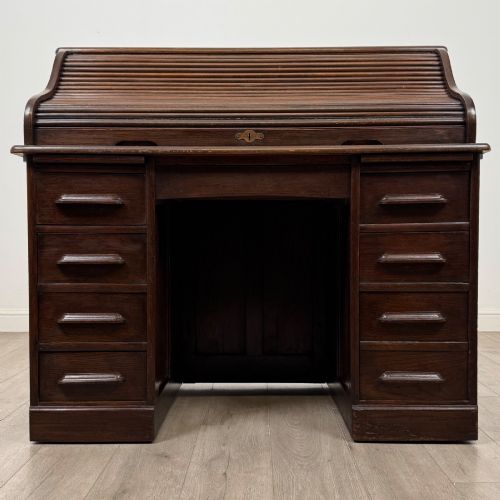
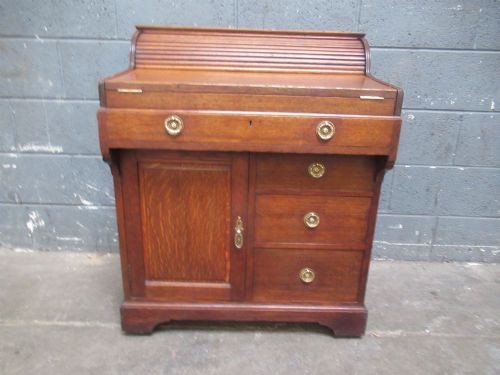
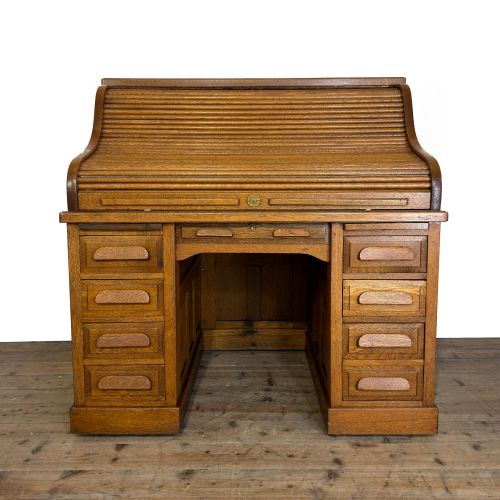
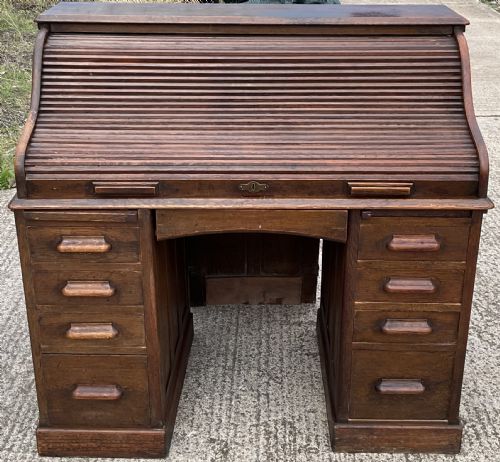
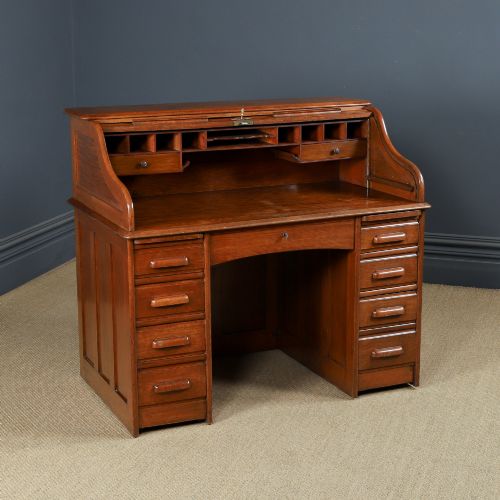
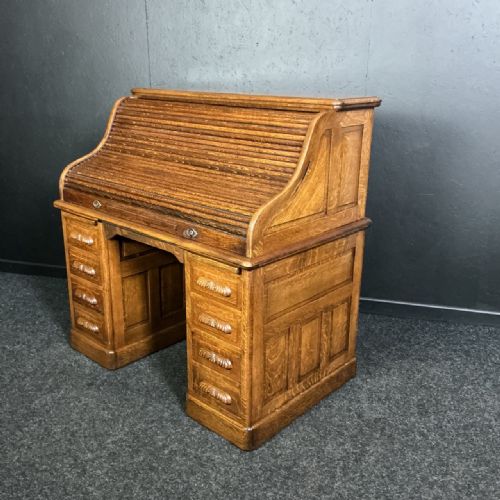
When you search for antique oak tambour, you are looking at items featuring flexible slatted shutters that slide in tracks to conceal interiors. These pieces range from substantial Victorian and Edwardian roll-top desks to compact filing cabinets and stationary storage units spanning the late nineteenth century through to the mid twentieth century.
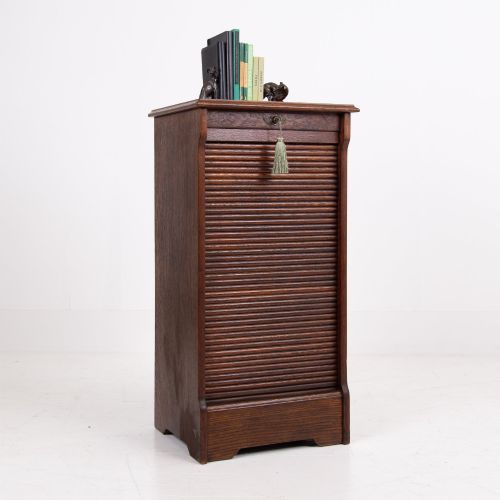
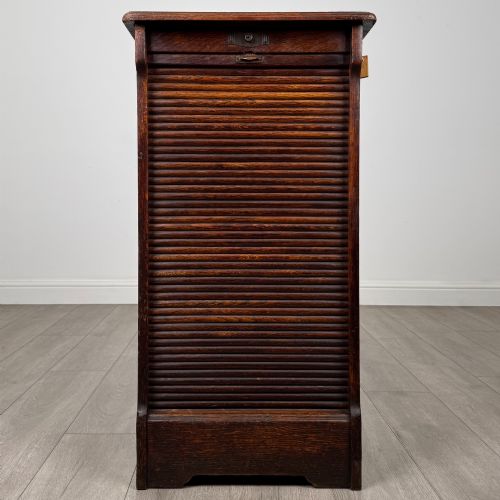
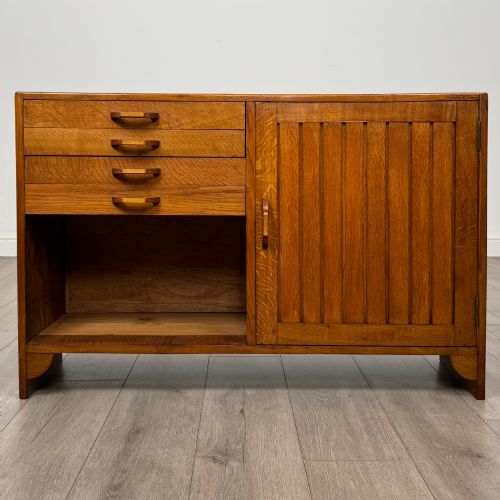
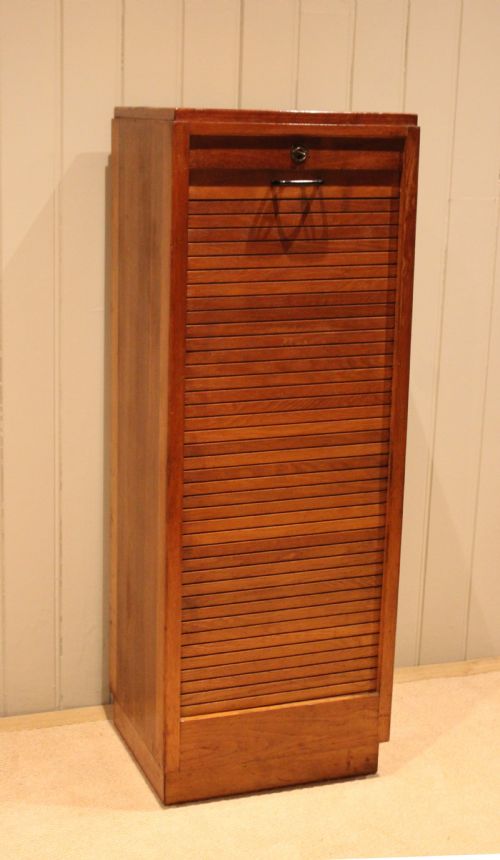
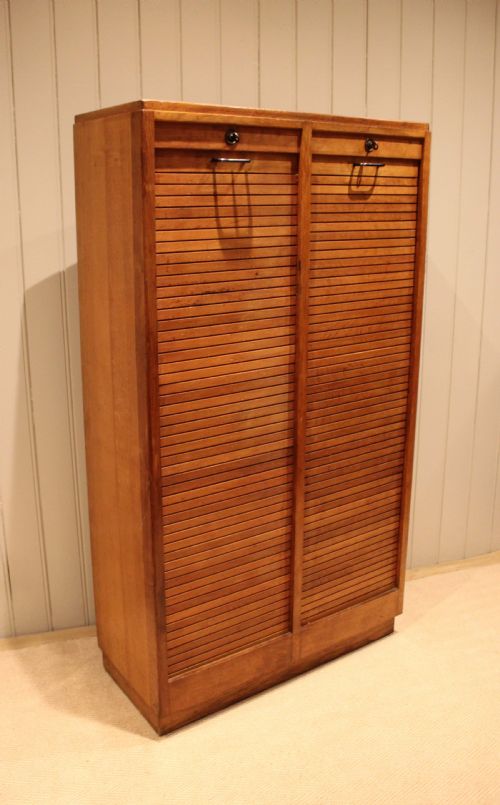
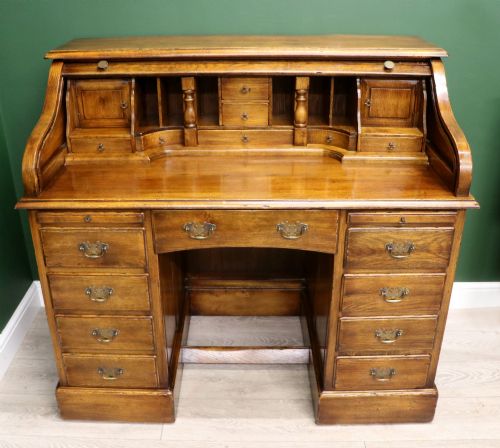
The items commonly met here include large pedestal desks, office filing cabinets with single or double tambour fronts, and specialised stationery or cigar cabinets. Styles span Victorian, Edwardian, Arts and Crafts, Art Deco, and French Utility, demonstrating how utilitarian office furniture evolved across decades.
Most examples originate from the early twentieth century and the Edwardian era, constructed primarily in solid or panelled oak. They served working offices and domestic studies alike, offering clever concealment for papers, books, and writing materials.
Materials and construction methods
Makers constructed these pieces using solid oak and panelled oak timber for the structural carcases, frames, and drawer fronts. Brass and metal hardware appear on handles, locks, and internal mechanisms.
The signature tambour shutters are formed from narrow slats of wood fixed to a backing material such as canvas or leather, allowing the flexible door to curve smoothly along internal grooves. Glass doors and lead details are found on associated bookcase sections.
Antique Oak Tambour Retail Price Guide 2026
Typical asking prices for oak tambour among the pieces listed under this phrase on Sellingantiques today, from the lower quarter to the upper quarter. They describe what is for sale here now, not the wider market.
One unexpected Edwardian tambour creation specifically houses a personal cigar collection alongside traditional writing equipment.
Distinctions in quality
The standard of a tambour piece rests on the smooth operation of the slatted shutter along its tracks and the precision of the joinery in the internal pigeonholes and drawers. Heavier solid oak construction and panelled carcases separate robust examples from simpler utilitarian office pieces.
Finer items display thoughtful timber selection, such as golden oak finishes and integrated architectural details like 'S' shaped roll-tops or adjustable shelving. Maker attribution, seen in pieces from established firms, further distinguishes the upper tier of the range.
Maples of London and Paris·James Shoolbred and Co
The Antique Oak Tambour Glossary
- Tambour
- A flexible door or shutter made from narrow wooden slats glued to a fabric backing, designed to slide around a curved track. This clever mechanism conceals desk interiors or cabinet contents without requiring swing space for doors.
- Roll top desk
- A large writing desk featuring a tambour cylinder that pulls down from the back to cover the writing surface and pigeonholes. These desks often include multiple pedestal drawers and internal stationery compartments.
- Pedestal desk
- A heavy freestanding desk supported by two banks of drawers or cabinets beneath the main writing surface. They frequently incorporate panelled construction and tambour fronts in office settings.
- Stationery cabinet
- A small desktop or tabletop cabinet designed to hold writing paper, envelopes, and documents, often featuring adjustable shelves and date mechanisms. They frequently employ tambour doors to protect the contents.
- Arts and Crafts
- A design movement emphasising honest construction, visible craftsmanship, and simple forms. Pieces from this style often highlight the natural grain of the oak timber without excessive ornamentation.
Antique Oak Tambour: Frequently Asked Questions
What is an oak tambour cabinet?
An oak tambour cabinet is a storage unit featuring a sliding shutter made of narrow wooden slats attached to canvas or leather. This allows the door to curve around the sides or back of the cabinet.
These pieces were widely used in offices and homes to store files, stationery, and books while keeping contents concealed when not in use.
How do you operate a roll top desk?
The slatted tambour top runs along curved grooves cut into the sides of the desk frame. Pulling the handle draws the flexible wooden curtain down to cover the desktop and pigeonholes.
Many of these mechanisms include a locking system that secures the entire desk when the tambour is pulled fully down.
Where were tambour cabinets used?
These cabinets served primarily in commercial offices, legal practices, and studies during the Victorian and Edwardian periods. Their space-saving sliding doors made them ideal for tight workspaces.
Today, they function well in modern home offices and living spaces to store paperwork, electronics, and collections out of sight.
How do I date an antique oak tambour desk?
Dating relies on examining the overall style, construction methods, and materials present in the piece. Victorian and Edwardian examples often feature heavier solid oak frames and elaborate interior fittings, while later 1930s and 1940s pieces tend toward simpler utility designs.
Hardware styles, brass fittings, and maker labels also provide clear indicators of the period of manufacture.