
Antique Oak Display
An antique oak display piece brings sturdy utility and rich grain to a room, holding books, china, and curated objects.
Antique Oak Display
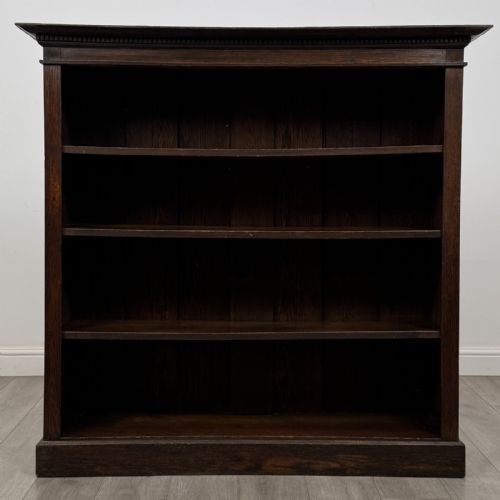
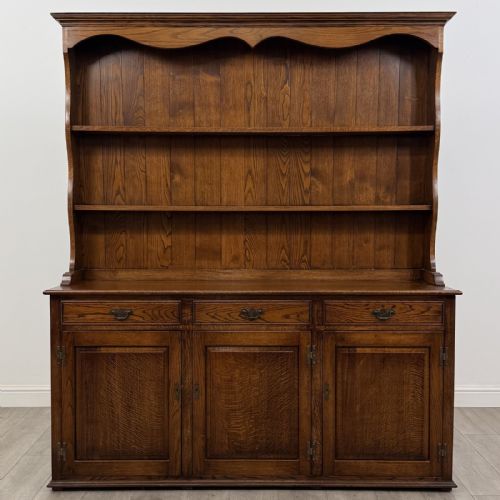
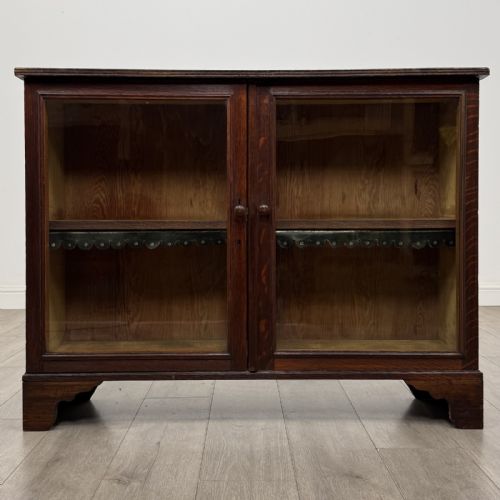
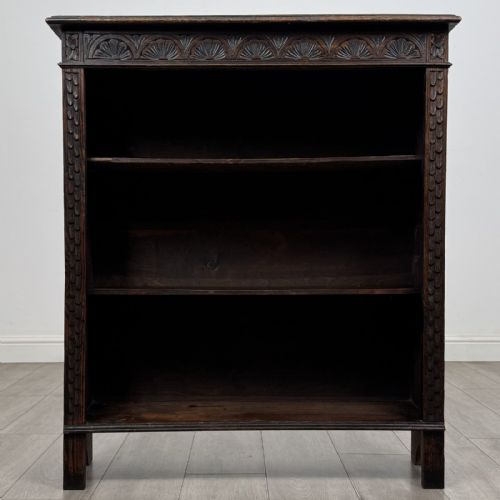
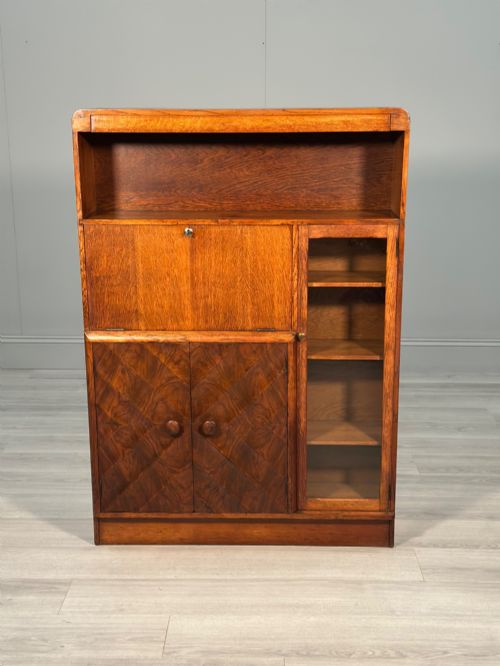
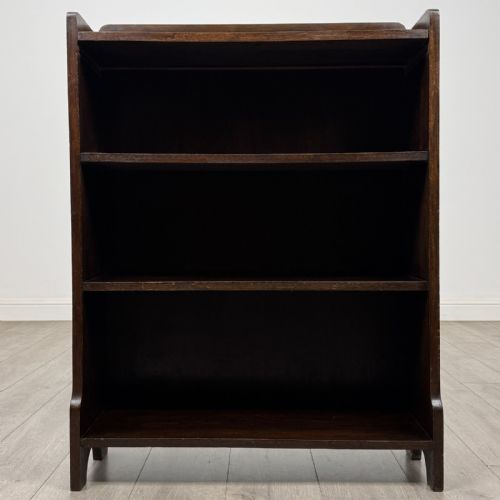
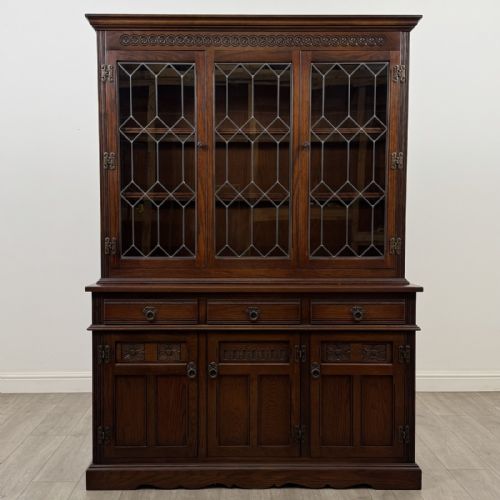
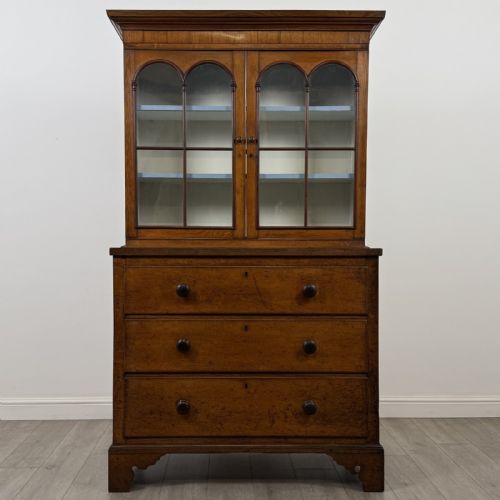
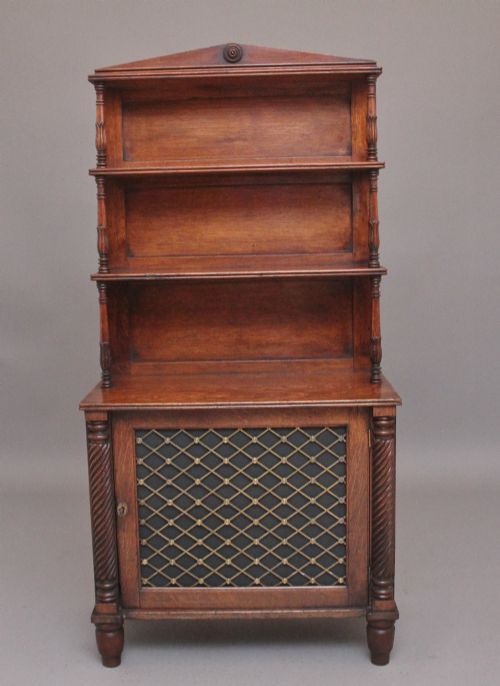
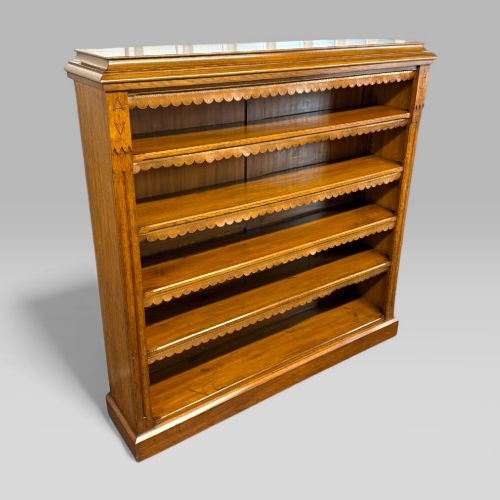
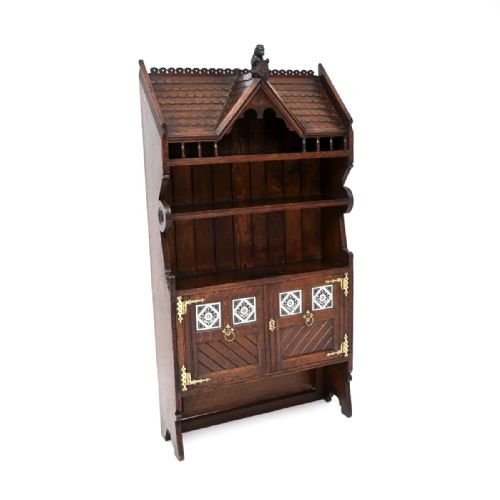
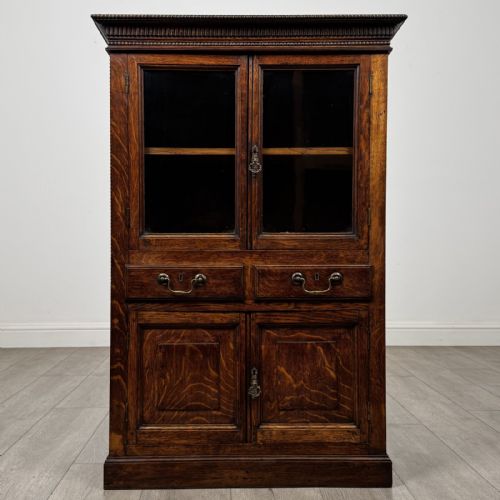
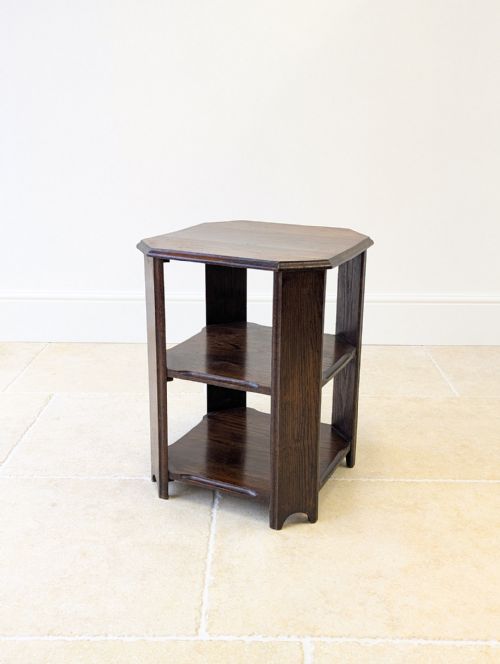
When buyers search for an antique oak display, they encounter versatile furniture designed to showcase and store possessions within domestic or commercial spaces. These pieces encompass glazed cabinets, open bookcases, sideboards, dressers, and specialised shop fittings from various eras.
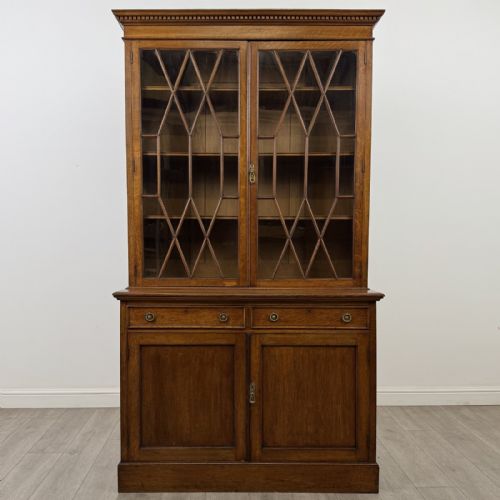
The selections span predominantly from the Victorian and Edwardian periods into the early twentieth century, alongside earlier Georgian items. Low glazed bookcases, tall display cabinets, and sectional library furniture appear frequently across the current selection.
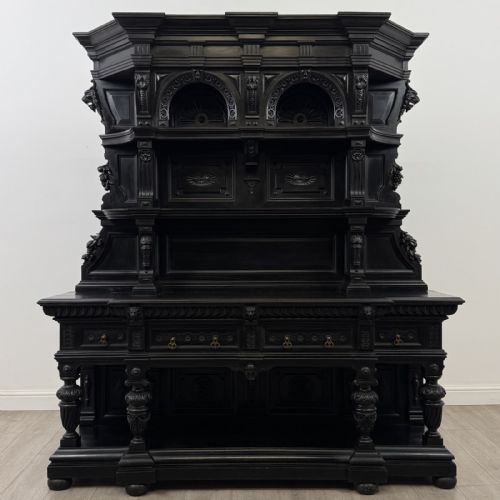
Makers and workshops from the nineteenth and twentieth centuries contribute distinct stylistic interpretations, ranging from austere Arts and Crafts designs to ornate Jacobean Revival and Aesthetic Movement forms.
Materials and Construction
Makers utilised solid oak and golden oak alongside secondary timbers, often incorporating glass panels, brass hardware, and lead or iron fixings to construct functional storage units. Crossbanding in mahogany occasionally adds tonal contrast to drawer fronts and tabletops.
Construction methods rely on traditional joinery, visible in adjustable shelving systems, carved panels, dentil cornices, and raised galleries. Glazed doors utilise timber framing to protect contents while maintaining visibility.
Surface treatments vary from polished finishes and ebonisation to bleached oak and hand-carved detailing such as lion mask motifs.
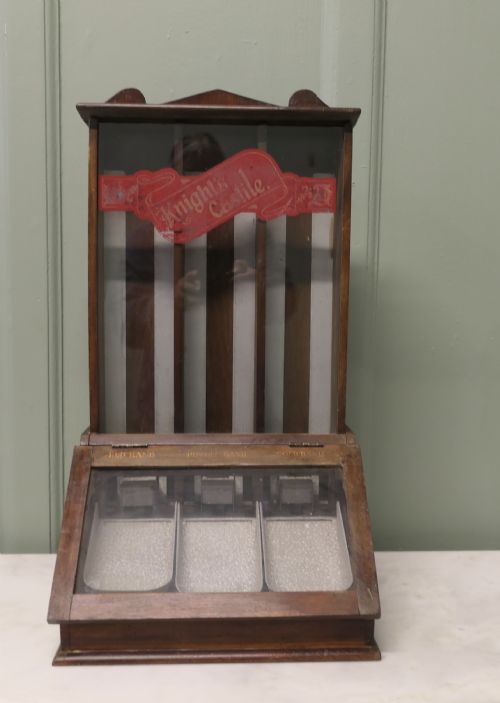
The listings feature diverse forms including corner cabinets, wall units, and shop display dispensers spanning the Victorian, Edwardian, and Art Deco eras.
Assessing Quality
Quality rests upon the selection of timber grain, the precision of joinery, and the integrity of original glass and hardware. Superior examples display thoughtful proportions and harmonious integration of carved decoration rather than superficial ornamentation.
Maker attribution elevates certain pieces, particularly those bearing stamps or design characteristics associated with notable workshops and retailers. The retention of original fittings, adjustable mechanisms, and functional keys distinguishes better-preserved specimens.
E Gomme·John Moyr Smith·Lebus·Globe Wernicke·Shapland & Petter·Gillows·Bowman Brothers
The Antique Oak Display Glossary
- Dentil cornice
- A moulding decorated with a series of small, rectangular blocks resembling teeth, commonly found along the upper edge of bookcases and cabinets.
- Sectional bookcase
- A modular furniture type comprising stacking glazed units that can be configured vertically, popularised by makers such as Globe Wernicke.
- Crossbanding
- A decorative border technique where thin strips of veneer, such as mahogany, are laid with the grain running perpendicular to the main surface.
- Raised gallery
- A low decorative railing or superstructure fitted to the top surface of a side table or bookcase.
- Ebonisation
- A chemical treatment applied to timber to darken the surface and imitate ebony.
- Aesthetic Movement
- A late nineteenth-century design style emphasising visual and decorative qualities over narrative content.
Antique Oak Display: Frequently Asked Questions
How do I date an oak display cabinet?
Dating relies on architectural styles, construction techniques, and hardware. Pieces from the Georgian era often show hand-cut dovetails and simpler interiors, whereas Victorian and Edwardian examples incorporate machine-sawn components and more elaborate cornices.
Looking at the backboards, handle styles, and glass manufacturing flaws helps narrow the decade of production. Stylistic movements like Arts and Crafts or Aesthetic Movement also provide clear chronological markers.
Are the shelves usually adjustable in these bookcases?
Many period bookcases feature adjustable shelving systems utilising wooden ratchets, metal pins, or sliding tracks. This adaptability allowed owners to accommodate books of varying heights.
When examining a piece, checking the interior pilasters reveals whether the adjustment mechanism is original to the cabinet construction.
How do I care for antique oak furniture?
Maintaining oak furniture involves keeping pieces away from direct heat sources and strong sunlight, which can dry out the timber and fade the finish. Regular dusting with a soft, dry cloth preserves the surface lustre.
Applying a quality wax sparingly once or twice a year feeds the wood without building up excessive residue. Avoid silicone-based sprays that can penetrate the grain.
What is a sectional lawyer bookcase?
A sectional bookcase consists of individual stackable shelf tiers with upward-lifting glass doors, designed to protect books while remaining modular. This design gained popularity at the turn of the twentieth century for home and office use.
Units often include a distinct base drawer and a top cornice, allowing owners to add or remove tiers as their collection grew.