



Antique Oak Bookends
These antique oak bookends are solid desk accessories and library furniture, brought to life through carved wood and metal details that keep heavy volumes upright.
Antique Oak Bookends
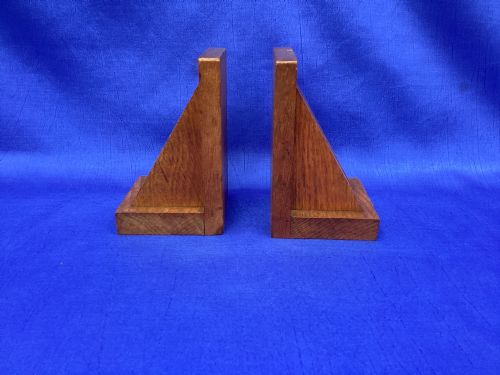
When you search for antique oak bookends, you meet a variety of desk accessories and book slides dating from the Victorian era through to the nineteen-thirties. These pieces range from simple wooden blocks to carved terminals, extending slides, and sculptural animal pairs.
The selection on this page shows pieces spanning the Edwardian period, the nineteenth century, and the nineteen-twenties and thirties. You will find forms ranging from standard bookends to extending book stands and carved panels adapted for library use.
Materials and construction
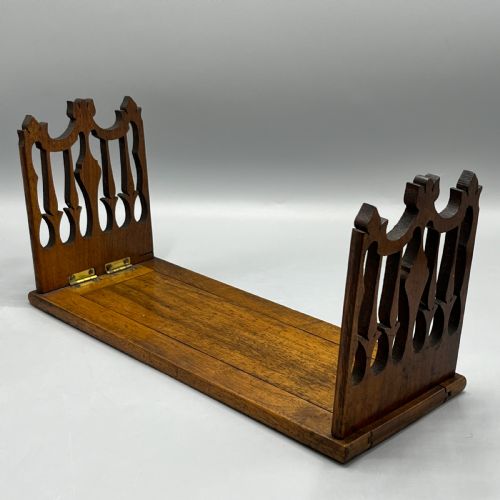
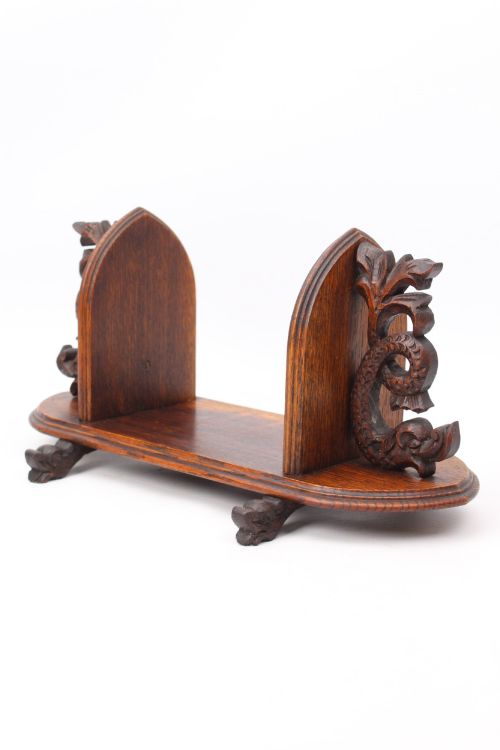
Makers utilised oak alongside linden wood, fruitwood, and general timber, frequently incorporating brass, glass, bone, and metal elements. Carving serves as the primary technique, seen in detailed animal figures, heraldic griffins, and sculptural busts.
Many examples employ extending mechanisms or mounted plinths to support heavier books. The combination of dense wood with carved detailing creates durable supports suited for domestic libraries and studies.
Antique Oak Bookends Retail Price Guide 2026
Typical asking prices for oak bookends among the pieces listed under this phrase on Sellingantiques today, from the lower quarter to the upper quarter. They describe what is for sale here now, not the wider market.
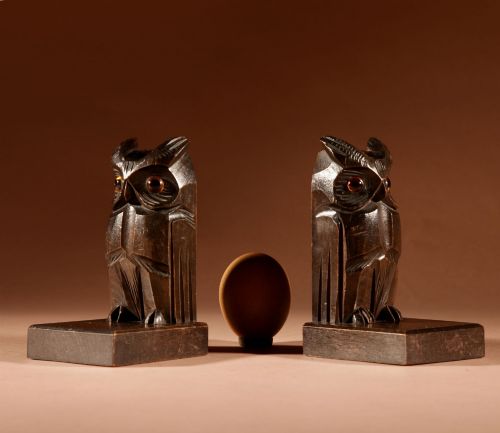
A pair of carved owls keeps watch over your library shelves.
Assessing quality and craftsmanship
The distinction between standard items and superior examples lies in the depth and precision of the carving. Finely rendered animal subjects, such as owls or lions, demonstrate greater artistic skill than plain wooden blocks.
Material selection and mechanism integrity also define the upper tier of pieces. Original brass fittings, well-engineered extending slides, and crisp detailing on sculptural forms elevate the overall standard.
Gordon Russell·Thornton Smith Co
The Antique Oak Bookends Glossary
- Book slide
- An adjustable rack designed to hold a row of books upright on a desk or table. These often feature extending mechanisms.
- Gothic Revival
- A nineteenth-century architectural and decorative style that draws inspiration from medieval design. It frequently incorporates pointed arches and heraldic motifs.
- Black Forest
- A style of wood carving originating from the mountain region in Germany, known for realistic animal subjects. Owls and bears are common motifs.
- Terminals
- Carved architectural or decorative ends that terminate a pair of bookends or a book slide. They often depict mythical beasts or sculptural figures.
Antique Oak Bookends: Frequently Asked Questions
What periods do these pieces cover?
The selection spans from the nineteenth century through the Edwardian era and into the nineteen-twenties and nineteen-thirties. Victorian and Gothic Revival examples sit alongside later Art Deco and regional carvings.
Each period brings distinct stylistic traits, from monumental carved lions to playful animal subjects and functional extending desk slides.
How were antique book slides used?
Book slides sat on desks, tables, or library shelves to keep smaller collections of volumes tidy and upright. The extending mechanism allowed the owner to adjust the width as books were added or removed.
Unlike fixed bookends, these slides offered a flexible platform often finished with decorative wooden or metal ends.
What materials appear alongside the wood?
While oak and general timber form the primary structure, makers incorporated various other substances for contrast and support. Brass fittings, glass panels, bone details, and metal castings frequently appear.
These mixed media combinations were typical of desk accessories designed for Victorian and Edwardian studies.
How do I identify Black Forest carvings?
Black Forest pieces are characterised by highly detailed, naturalistic wood carvings, often depicting animals such as owls, elephants, or dogs. The wood is typically linden or fruitwood, rendered with deep texture.
These decorative items date predominantly around nineteen hundred to nineteen twenty and serve as whimsical library ornaments.