



Antique Needlework Ottoman
These antique needlework ottoman pieces combine period woodwork with tactile textile panels, offering both functional seating and traditional craftsmanship for the home.
Antique Needlework Ottoman
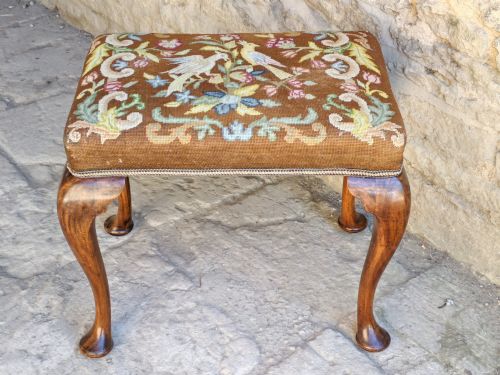
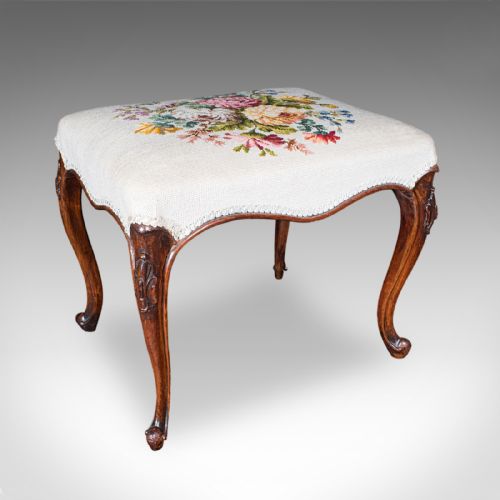
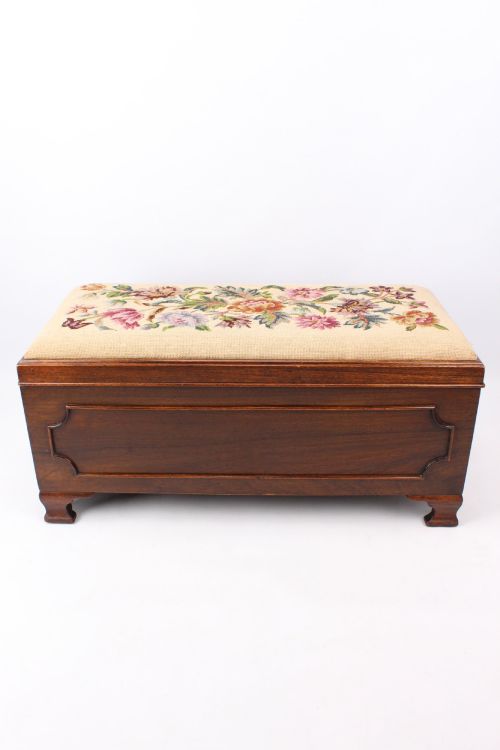
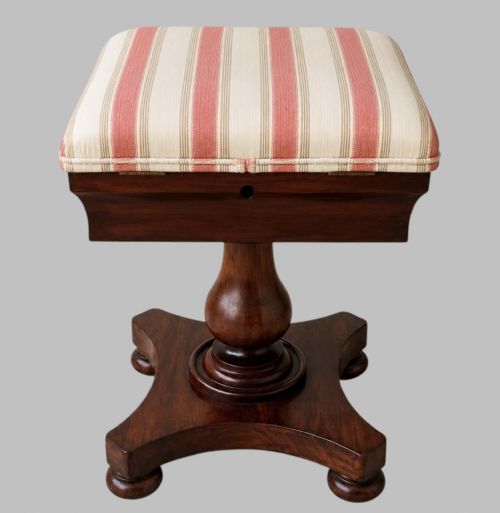
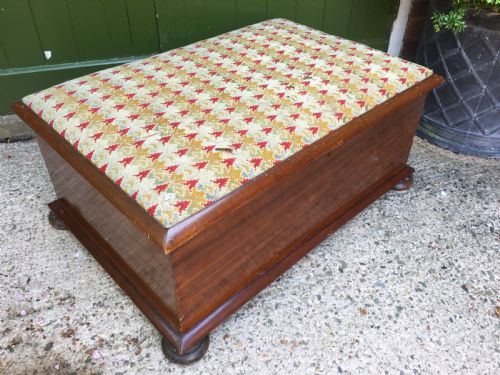
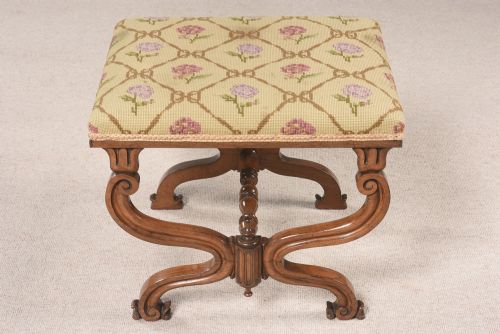
An antique needlework ottoman takes the form of footstools, sewing box stools, and upholstered seats featuring worked textile tops. When searching for an antique needlework ottoman, buyers encounter diverse iterations spanning the eighteenth century through to the early twentieth century.
The selection ranges from Victorian walnut and mahogany frames to regional Greek Island embroideries mounted as textile panels. Stools from the Regency and William IV periods sit alongside later nineteenth-century revival styles and painted Italian frames.
Makers utilised various timber supports, pairing them with wool, silk, and linen needlepoint or tapestry seats. Pieces often reflect specific regional aesthetics, such as Cretan embroidery or Skyros bedsheet borders.
How they were made
Carpenters constructed the structural frames using hardwoods like walnut, mahogany, and rosewood, applying joinery techniques appropriate to periods from Queen Anne revivals to Louis XV revivals. Turned legs, carved details, and occasional painted finishes defined the wooden bases.
Upholsters and needleworkers applied wool, silk, and linen threads onto canvas grounds to create gros-point and petit-point tapestry seats. Separate textile panels relied on traditional embroidery methods executed on linen foundations across Greek islands and mainland workshops.
Some nineteenth-century needlework seats preserve tiny hidden stitches where makers experimented with colour gradients.
What varies in quality
Quality rests upon the execution of the needlework and the integrity of the timber frame. Dense, finely worked tapestry and well-preserved embroidery demonstrate superior handwork compared to coarse or later replacement stitching.
The choice of primary wood and the crispness of the framing influence overall merit. Solid mahogany and walnut structures with original upholstery retain greater integrity than altered or heavily restored examples.
The Antique Needlework Ottoman Glossary
- Gros-point
- A coarse-stitch needlepoint embroidery executed on canvas, commonly used for durable upholstery on heavy furniture.
- Needlework
- General term for decorative sewing and textile embellishment using a needle and thread on a ground material.
- Tapestry
- Hand-woven or hand-embroidered textile featuring pictorial or decorative designs, often utilised for seat covers.
- Embroidery
- The art of decorating fabric or other materials using a needle to apply thread or yarn.
- Ottoman
- A low, upholstered seat or footstool lacking a back or arms, designed for resting feet or sitting.
Antique Needlework Ottoman: Frequently Asked Questions
How do I clean antique needlework?
Surface dust can be removed gently using a soft brush or a low-suction vacuum attachment protected by mesh.
Moisture and chemical cleaners damage aged wool and silk fibres, so professional textile conservation is recommended for deep cleaning.
Are these ottomans comfortable for daily use?
Most antique stools and ottomans were built with firm horsehair or traditional stuffing rather than modern foam.
While suitable for resting feet or short periods of sitting, heavy daily use can strain historic frames and fragile textiles.
How do I date an antique wooden frame?
Turn timber frames over to inspect joint construction, tool marks, and the ageing of the wood beneath.
Secondary woods, fastening methods, and stylistic cues like Regency scrollwork or Victorian walnut turning help narrow the decade of manufacture.
Can I place these pieces in direct sunlight?
Ultraviolet light causes natural dyes in wool, silk, and linen needlework to fade significantly over time.
Positioning stools away from south-facing windows preserves the original colouration of the historic textiles.