



Antique Needle Holder
An antique needle holder is a small sewing accessory designed to keep your needles safe, and you will find them in silver, treen and mother-of-pearl.
Antique Needle Holder
When you search for an antique needle holder, you encounter a variety of small sewing accessories and objects of vertu designed to organise and protect needles in domestic spaces. These pieces range from utilitarian treen items to decorative silver novelties and mounted porcelain cases.
You are most likely to meet 19th century examples on this page, alongside earlier Georgian and Edwardian pieces. The selection spans utilitarian knitting sheaths and sewing cases to novelty animal pin cushions and pocket-sized etuis.
Materials vary from sterling silver and fruitwood to mother-of-pearl and glass, often reflecting distinct periods such as the Georgian era or the Edwardian years. Each form serves a specific function within sewing and needlework, from holding threads to storing pins.
How they were made
Silversmiths formed sterling silver and standard silver into miniature animal pin cushions, thread holders, and hat pin cushion stands, frequently incorporating gilt-metal mounts. Etuis combined mother-of-pearl or Meissen porcelain with metal fittings to house multiple sewing implements securely.
Antique Needle Holder Retail Price Guide 2026
Typical asking prices for needle holder among the pieces listed under this phrase on Sellingantiques today, from the lower quarter to the upper quarter. They describe what is for sale here now, not the wider market.
Materials documented across the inventory include sterling silver, velvet, fruitwood, glass, fabric, and mother-of-pearl.
What varies in quality
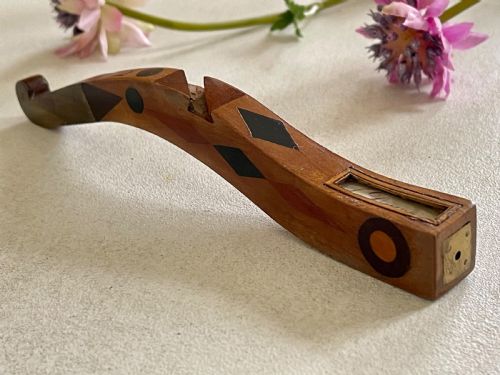
The degree of detail in decorative work separates standard examples from finer pieces, particularly in the precision of punchwork, incised lines, and geometric wood inlays. Metalwork quality is visible in the casting of novelty animal pin cushions, such as lions, swans, and pheasants.
Choice of materials also dictates the standard of the object, with sterling silver and mounted porcelain representing higher tiers of craftsmanship compared to simpler wooden items.
George W Shiebler·Artificer's Guild·Meissen
The Antique Needle Holder Glossary
- Treen
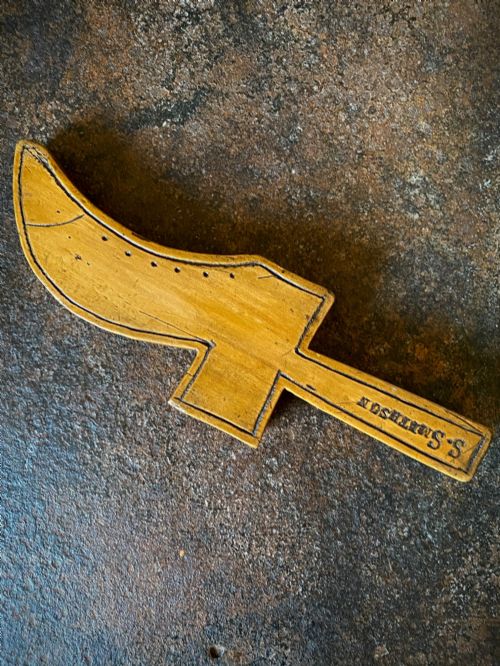
- Small handmade wooden objects of domestic use. These items include knitting sheaths and sewing cases fashioned from fruitwood.
- Etui
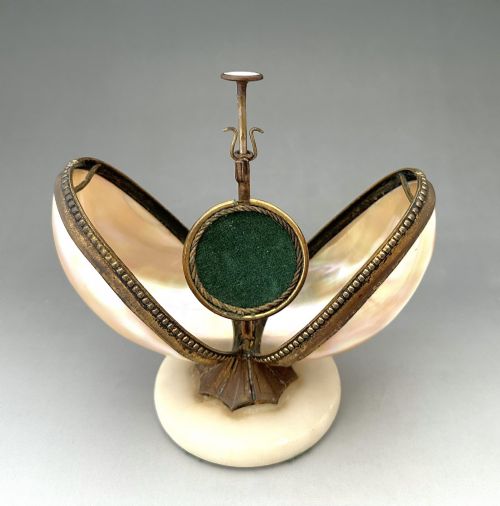
- A small ornamental case for holding needles, bodkins, or cosmetics. These portable containers often feature mother-of-pearl or gilt-metal mounts.
- Knitting Sheath
- A device tucked into a belt or apron to hold a knitting needle steady. They are frequently carved from wood with incised decoration.
- Pin Cushion
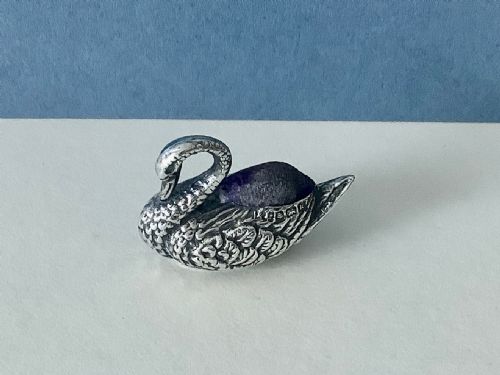
- A small pad or fitted object used to store pins safely during sewing. Victorian and Edwardian examples often take novelty animal shapes.
- Bodkin Case
- A rigid container designed to store a blunt needle used for drawing tape or ribbon through loops. They appear in porcelain and metal.
Antique Needle Holder: Frequently Asked Questions
What is an antique needle holder?
An antique needle holder is a small vessel or case designed to store sewing needles securely. These items were essential tools for hand sewing before mass manufacturing.
They appear in various forms, including pocket cases, treen sheaths, and silver containers, reflecting the personal tastes of past makers and owners.
How were sewing cases used?
Sewing cases and needle holders kept delicate tools organised and protected from damage during storage or travel. Needles, pins, and thread holders rested inside these dedicated compartments.
Domestic spaces relied on these portable accessories to keep workspaces tidy and prevent the loss of small sharp implements.
What materials are common?
Common materials include sterling silver, fruitwood, and mother-of-pearl, alongside fabric, glass, and velvet. Wooden items often feature geometric inlays or carved details.
Precious metals and porcelain appeared on more decorative pieces, such as novelty pin cushions and etuis.
How do I date an antique?
Dating relies on stylistic clues, materials, and maker's marks or hallmarks where present. Georgian and Victorian pieces exhibit different decorative conventions from Edwardian designs.
Techniques such as specific wood inlay patterns and silver casting styles help place objects within the nineteenth or early twentieth century.