






Antique Navette Jewellery
Antique navette jewellery brings elongated boat-shaped clusters to the hand, shoulder and ear, shaped by centuries of French design and delicate gemstone settings.
Antique Navette Jewellery
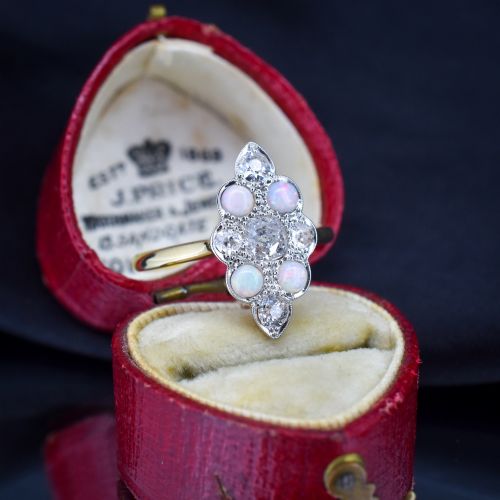
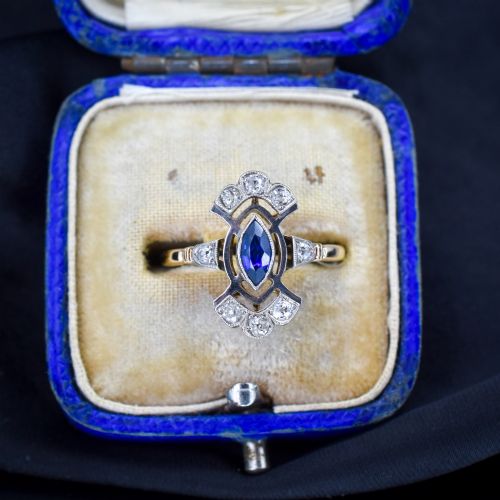
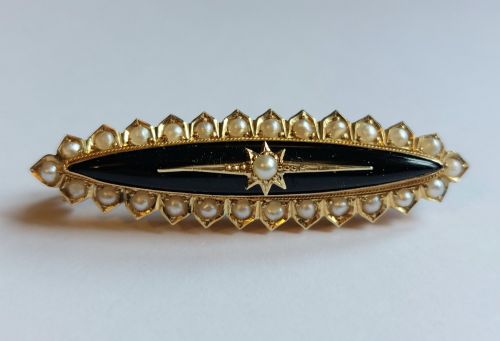
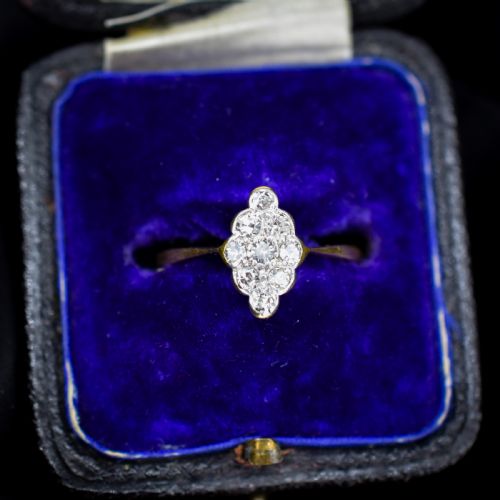
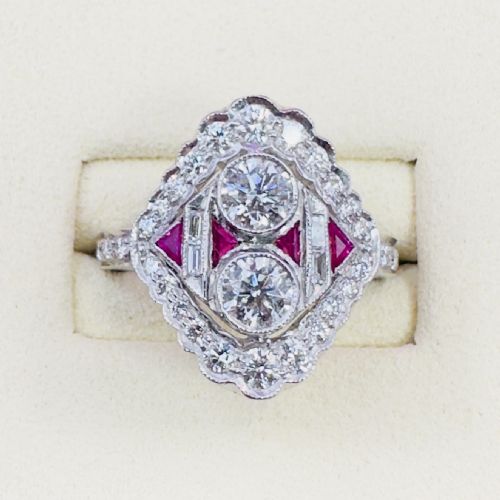
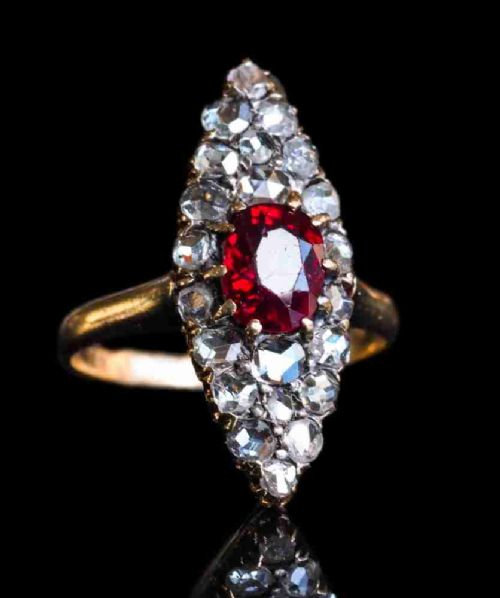
Antique navette jewellery comprises rings, brooches and earrings characterised by their pointed, boat-shaped silhouettes that sit flat along the finger or garment. These pieces span periods from the Victorian and Edwardian eras through to the Art Deco decades, capturing a distinct shift in proportion and symmetry.
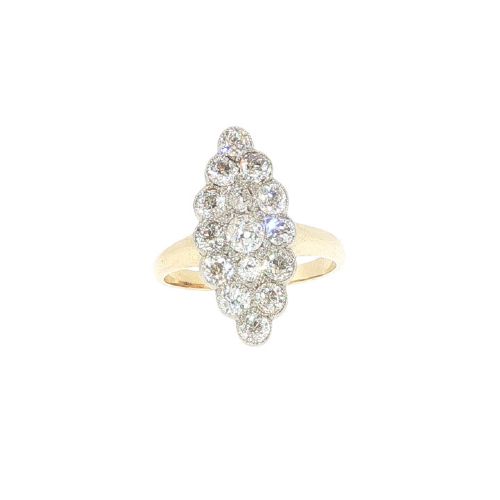
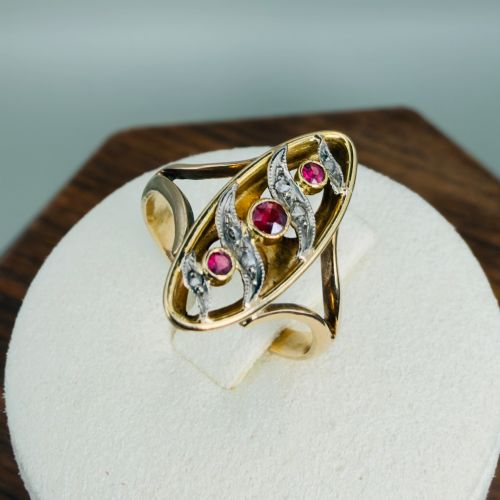
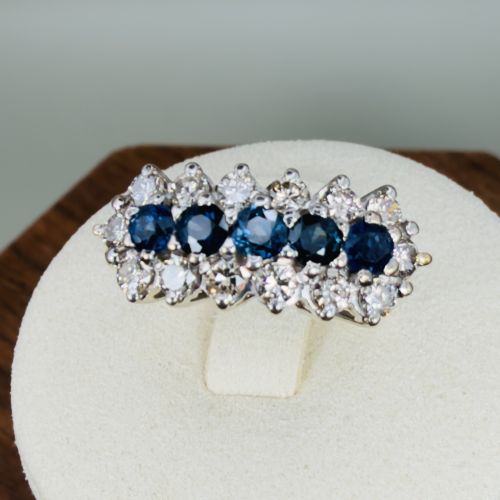
The version most commonly met on this page is the cluster ring, where a central spine of diamonds or coloured gemstones is surrounded by smaller stones to accentuate the sharp, tapered ends. Examples also appear as brooches and drop earrings, utilising platinum or gold to trace the elongated outline.
How they were made
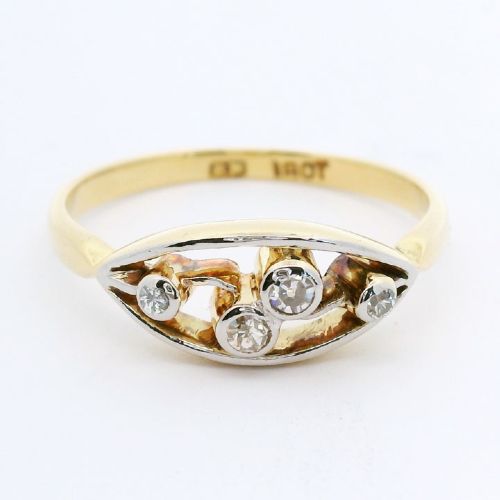
Goldsmiths constructed these pieces using combinations of 18ct yellow gold, 9ct gold, and durable platinum, often pairing platinum settings with gold shanks to give white metal brilliance directly to the stones. Gemstones including old cut diamonds, sapphires, rubies, turquoises and pearls were secured closely together within intricate cluster frameworks.
Techniques relied on hand-cut stones such as old mine cuts, rose cuts and early transitional cuts, bedded into detailed collet or millegrain mounts that softened the metal edges around the gems.
Antique Navette Jewellery Retail Price Guide 2026
Typical asking prices for navette jewellery among the pieces listed under this phrase on Sellingantiques today, from the lower quarter to the upper quarter. They describe what is for sale here now, not the wider market.
Listings feature periods from Georgian through to the 1960s, with Edwardian and Victorian examples forming the backbone of the selection alongside Art Deco platinum pieces.
What varies in quality
Quality rests upon the crispness of the tapered outline and the harmony between the central stones and their surrounding border. Finer examples display meticulous stone matching, where colour saturation in rubies or sapphires and the lively light return of old cut diamonds remain consistent across the entire length of the cluster.
The integrity of the metalwork also defines the tier of the piece, visible in the precision of the claw or millegrain work and the structural weight of the gold or platinum backing that ensures the elongated shape resists bending during wear.
The Antique Navette Jewellery Glossary
- Navette
- A French term meaning little ship, describing a pointed, boat-shaped silhouette that tapers at both ends. This geometry directs the eye along the length of the finger or across a brooch.
- Marquise
- An alternative term for the boat-shaped outline or stone cut, sharing the same elongated, pointed aesthetic as navette pieces. It offers generous finger coverage through a balanced geometry.
- Old Cut
- A diamond cut executed by hand before modern machinery, featuring a smaller table, higher crown and open culet. These stones catch candlelight and low illumination with a distinct, blocky sparkle.
- Millegrain
- A decorative technique involving tiny, raised metal beads along the edges of a setting. This border frames the gemstones with a soft, textural finish typical of Edwardian work.
- Cluster
- An arrangement where a central gemstone is encircled by a border of smaller stones. This method maximises visual impact and light reflection.
Antique Navette Jewellery: Frequently Asked Questions
How do I wear an antique navette ring?
Navette rings feature elongated profiles that sit horizontally or vertically along the hand, making them striking standalone pieces. Wear them on fingers where the pointed ends will not constantly rub against neighbouring bands.
Because of their distinct length, pairing them with plain wedding bands or wearing them on the middle finger ensures the design commands attention without crowding adjacent jewellery.
What is the difference between navette and marquise?
Both terms describe the same characteristic boat-shaped, pointed silhouette found across rings and brooches. Navette is frequently used to describe cluster settings made of multiple smaller stones, while marquise often refers to a single large gemstone or the outline shape.
In practice, antique dealers and collectors use both words interchangeably to indicate an elongated, tapered form from the Victorian, Edwardian or Art Deco eras.
How should I care for my antique navette jewellery?
Care requires gentle handling, particularly with Edwardian and Victorian pieces featuring delicate millegrain work or closed-back settings. Clean them softly with a dry or slightly damp cloth, avoiding harsh ultrasonic cleaners that can dislodge old cut stones or damage pearls and turquoise.
Store each piece individually in a lined box to prevent the pointed ends from scratching other items in your collection.
How can I tell an Edwardian navette ring from an Art Deco one?
Edwardian navette pieces often utilise yellow gold paired with platinum tops, incorporating softer millegrain borders and natural pearls alongside diamonds and softer-hued gemstones. The overall feel leans towards organic lace-like delicacy.
Art Deco examples lean into geometric strictness, utilising platinum exclusively with high-contrast rubies, sapphires and onyx alongside sharp, linear diamond clusters.