



Antique Mushroom Table Lamp
An antique mushroom table lamp brings distinct form and soft illumination to a room, drawing on early twentieth-century design.
Antique Mushroom Table Lamp
An antique mushroom table lamp is defined by a characteristic cap shape that diffuses light downward over a matching base or stem. When you search for this phrase, you find lighting pieces that span the Edwardian period through to the Art Deco and Art Nouveau eras, generally dating from nineteen hundred up to nineteen thirty.
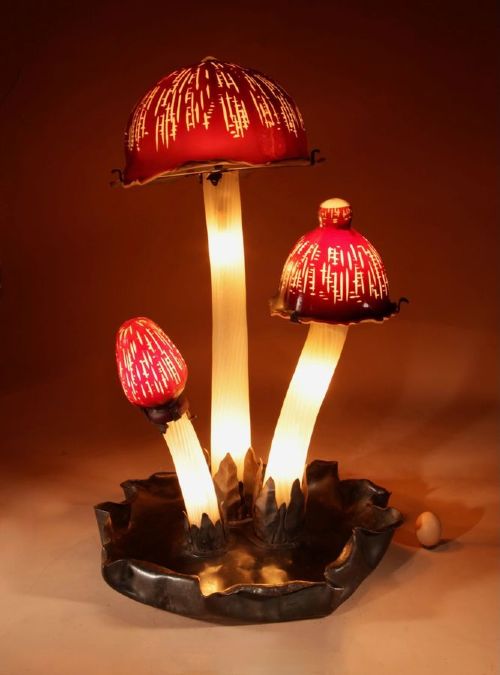
The versions you are most likely to meet on this page rely heavily on cut glass, crystal, and art glass forms. Many examples take the shape of desk lamps or standard table lamps, utilising brass, wrought iron, or bakelite structures to support the distinct glass shades.
How they were made
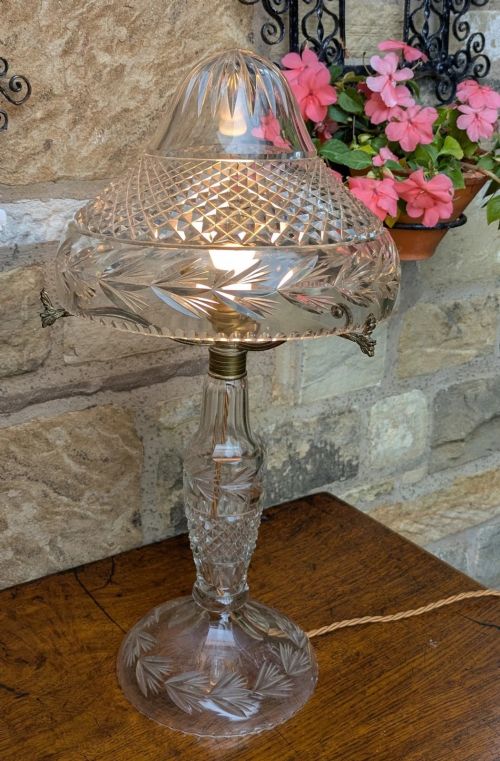
The construction of these lamps relies on heavy press-molded or hand-blown glass combined with metalwork foundations. Makers utilised cut glass and lead crystal to create faceted surfaces that catch and refract light across the mushroom-shaped cap.
Supporting structures utilise brass, bronze, and wrought iron, providing a sturdy base for the substantial glass components. Some modernist designs incorporate bakelite, reflecting the industrial shifts of the nineteen thirties.
Antique Mushroom Table Lamp Retail Price Guide 2026
Typical asking prices for mushroom table lamp among the pieces listed under this phrase on Sellingantiques today, from the lower quarter to the upper quarter. They describe what is for sale here now, not the wider market.
Listings feature pieces from the nineteen tens, twenties, and thirties, showcasing glass, crystal, brass, and wrought iron.
What varies in quality
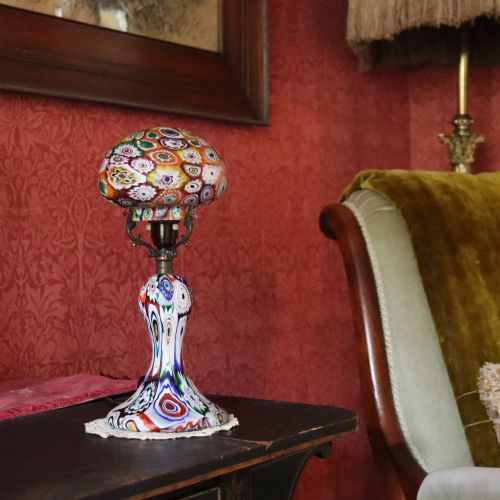
Quality in these lamps rests primarily on the depth and clarity of the glass cutting and the weight of the metal components. Pieces featuring intricate millefiori work or specialised art glass show a higher degree of artisan skill than standard moulded variants.
The integrity of the original mountings and the heft of the crystal or brass heavily influence the overall character of the piece. Superior examples maintain a harmonious balance between the shade and base, with precise fitting of the electrical or original hardware components.
Fratelli Toso·Stuart Crystal·Eileen Grey
The Antique Mushroom Table Lamp Glossary
- Millefiori Glass
- A glasswork technique producing distinct patterned mosaic canes within the material. This method creates colourful floral motifs visible across the lamp body.
- Art Deco
- A design style spanning the nineteen twenties and thirties characterised by sleek lines and geometric forms. Pieces from this period often embrace streamlined industrial materials like bakelite.
- Art Nouveau
- An artistic movement prominent around nineteen hundred featuring organic, fluid lines inspired by natural forms. Lamps from this era frequently incorporate bronze and floral-inspired glass elements.
- Lead Crystal
- A high-clarity glass variety containing metal oxide that increases weight and refractive index. This material allows for deep, sharp facets that enhance light dispersion.
- Bakelite
- An early synthetic thermosetting plastic introduced in the early twentieth century. It appears in modernist desk and table lamp designs for structural bases and switches.
Antique Mushroom Table Lamp: Frequently Asked Questions
What is an antique mushroom table lamp?
An antique mushroom table lamp is a lighting fixture featuring a rounded, cap-like shade that resembles a mushroom. These pieces originate from the early twentieth century and serve both practical illumination and decorative purposes.
They combine glass shades with metal or synthetic bases to create a distinct silhouette. Collectors prize them for their ability to diffuse warm, ambient light.
How do I date a mushroom lamp?
Dating these lamps involves examining the materials, manufacturing techniques, and stylistic markers present in the design. Pieces showing heavy Edwardian crystal cutting differ significantly from the streamlined Art Deco bakelite models.
Maker attributions and specific glass techniques also provide clear indicators of production era. Reference points typically span from nineteen hundred through nineteen thirty based on surviving design records.
Where were these lamps used?
These lamps were primarily placed on desks, side tables, and boudoir surfaces in domestic and professional interiors. Their design provided focused downward illumination suitable for reading or working.
Over time, they transitioned from functional task lighting to decorative focal points in period rooms. Today, they function well on low sideboards or bedside tables.
What materials are common in these lamps?
The predominant materials include cut glass, lead crystal, and art glass for the characteristic mushroom shades. Supporting elements typically consist of brass, bronze, wrought iron, or early plastics.
Combinations of heavy crystal and patinated metal define the most common configurations found in early twentieth-century examples. Each material requires specific care to preserve its original surface patina.