

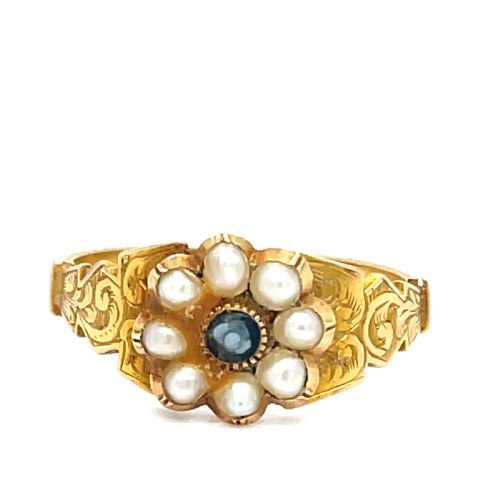


Antique Mourning Jewellery Ring
These antique mourning jewellery ring examples are sentimental tokens fashioned to remember the dead, prized for their intimate connection to past lives.
Antique Mourning Jewellery Ring
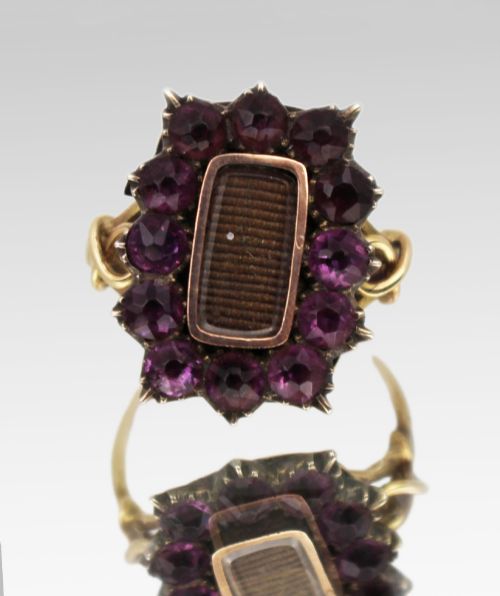
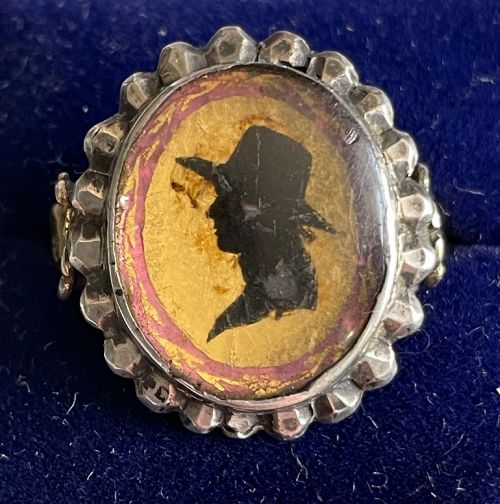
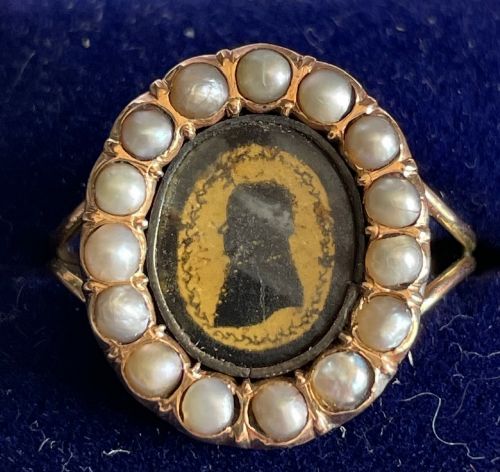
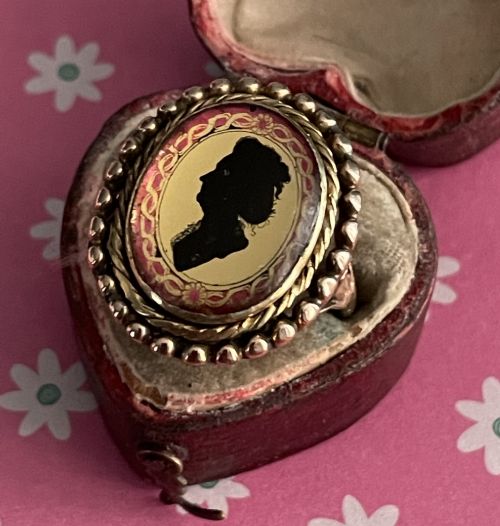
The examples most commonly met on this page span the nineteenth century, featuring gold bands combined with glass, enamel, pearls, or onyx. They range from understated bands housing braided hair behind glass to detailed portrait miniatures and silhouette designs.
Materials and construction
Goldsmiths utilised yellow gold in nine-carat, fifteen-carat, and eighteen-carat purities to form the structural mounts and bands. These precious metals were often paired with black enamel to signify grief and remembrance.
Intricate internal compartments secured delicate strands of human hair, frequently arranged in intricate woven patterns beneath protective glass or crystal panels. Seed pearls, diamonds, paste, and agate were then set around these central hairwork or miniature portrait panels.
Antique Mourning Jewellery Ring Retail Price Guide 2026
Typical asking prices for mourning jewellery ring among the pieces listed under this phrase on Sellingantiques today, from the lower quarter to the upper quarter. They describe what is for sale here now, not the wider market.
The listings span the Georgian, Victorian, and Edwardian periods, utilising gold, hair, pearls, enamel, and diamonds in ring formats.
Distinctions in quality
The standard of execution in miniature painting, verre églomise work, and silhouette cutting separates standard production from finer creations. Hand-painted portraits and detailed hand-cut silhouettes display a level of artistry that elevates the piece beyond simple mass commemoration.
The complexity of the hairwork and the structural integrity of the gold setting further define the tier of the piece. Intact enamelling and well-preserved stones secured within robust precious metal mountings indicate superior original craftsmanship.
The Antique Mourning Jewellery Ring Glossary
- Verre eglomise
- A technique involving cold painting or gilding on the reverse side of glass. This method creates a reflective, detailed silhouette or design often seen in early pieces.
- Seed pearl
- Very small, natural pearls used frequently in sentimental designs. They are typically arranged in floral or geometric clusters around central hairwork.
- Hairwork
- The practice of cleaning, braiding, and arranging human hair into decorative motifs for jewellery. It served as a direct physical relic of the departed individual.
- Silhouette
- A solid black profile portrait typically cut from paper or painted. These were incorporated into rings to provide a recognisable likeness of the deceased.
Antique Mourning Jewellery Ring: Frequently Asked Questions
How was human hair used in these rings?
Human hair was meticulously cleaned, split, and braided into decorative patterns. It was placed beneath glass panels or crystal compartments on the face of the ring.
This practice allowed the bereaved to keep a literal physical part of their lost relative close at hand throughout daily life.
Which materials appear most often?
Gold in various carats forms the primary structural bands and settings for these memorial pieces. Black enamel, seed pearls, diamonds, and glass also feature prominently across the surviving examples.
Makers combined these durable materials with organic elements like hair and painted miniatures to create lasting tributes.
How do I distinguish Georgian from Victorian rings?
Georgian rings frequently display closed-back settings, intricate hand-painted silhouettes, and fine verre églomise work. They tend to reflect eighteenth-century and early nineteenth-century aesthetics.
Victorian examples often showcase heavier gold construction, black onyx, and distinct styles of hairwork influenced by changing social attitudes towards public mourning.