



Antique Motif Earrings
Antique motif earrings bring together centuries of natural symbolism and precious metals, offering a wearable piece of history that collectors cherish.
Antique Motif Earrings
These antique motif earrings span the Victorian, Edwardian, Art Deco, and Mid-Century Modern periods, showcasing designs inspired by nature and classical symbolism. You will encounter botanical and animal motifs such as ivy leaves, bamboo designs, oak leaves, snakes, horseshoes, hearts, and grapes across the collection.
The forms range from intricate dangly drop earrings to screwback designs and diamond solitaires. Materials scale from sterling silver and various carats of gold to platinum, set with diamonds, garnets, turquoise, malachite, pearls, and paste stones.
How they were made
Goldsmiths shaped these pieces using yellow, rose, and white gold alongside platinum and sterling silver, employing casting and hand-working techniques suited to each era. Stones including diamonds, garnets, turquoise, and malachite were hand-set into mounts that often incorporated detailed metalwork.
Early pieces utilise rose cut diamonds and intricate configurations like snake and ivy leaf forms. Later mid-century examples integrate clean lines with substantial diamond carat weights.
Antique Motif Earrings Retail Price Guide 2026
Typical asking prices for motif earrings among the pieces listed under this phrase on Sellingantiques today, from the lower quarter to the upper quarter. They describe what is for sale here now, not the wider market.
Snakes, ivy, bamboo, and horseshoes vie for attention, proving that Victorians really did turn the entire garden into a jewellery box.
What varies in quality
The fineness of the metalwork and the quality of the stone settings define the upper tiers of these pieces. Higher-grade examples display precise carving in organic motifs like oak leaves and grapes alongside well-matched natural stones.
Design complexity also dictates distinction, where pieces combining multiple materials such as turquoise and pearl, or pairing significant diamond carat weights with precious metals, demonstrate superior craftsmanship.
The Antique Motif Earrings Glossary
- Rose cut
- A diamond cut featuring a flat base and a faceted dome that resembles an opening bud. This style was favoured in earlier periods before brilliant cuts became standard.
- Parure
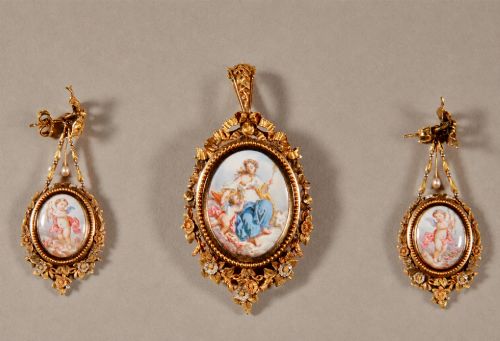
- A set of matching jewellery designed to be worn together, such as earrings and a pendant. These matched suites represent complete decorative statements from the Victorian era.
- Screwback
- A mechanical earring fastening utilising a threaded post and a small screw nut to secure the piece to unpierced lobes. This design was common before the widespread adoption of modern clips and posts.
- Solitaire
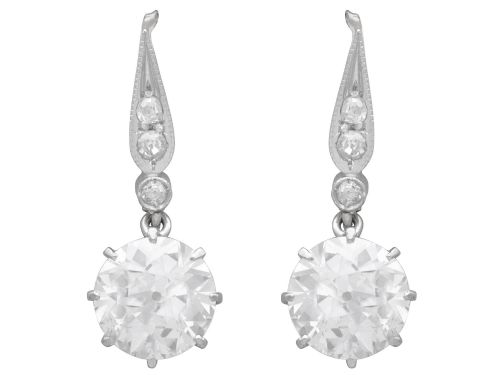
- A jewellery setting featuring a single prominent gemstone. In these listings, they appear as diamond drop earrings.
Antique Motif Earrings: Frequently Asked Questions
How do I care for antique earrings?
Store them individually in soft pouches to prevent metal scratching and stone abrasion.
Clean them gently with a soft cloth, avoiding harsh chemical dips that can damage turquoise, pearls, or malachite.
Are these earrings for pierced ears?
Many examples feature standard posts or hooks suitable for modern pierced ears. Some period pieces utilise screwback mechanisms designed for unpierced lobes.
Check the specific description of each pair to confirm the fastening type before purchase.
What do snake motifs mean?
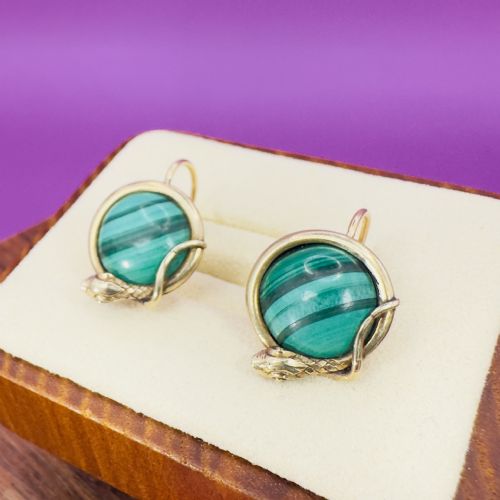
Snakes in nineteenth-century jewellery symbolised eternal love and wisdom. Queen Victoria popularised the serpent motif after receiving a snake engagement ring featuring an emerald-set head.
Victorian makers frequently rendered these creatures in gold with textured scales and gemstone eyes.
How do I date antique earrings?
Dating relies on stylistic clues, metal types, and gemstone cuts characteristic of specific periods like the Victorian, Edwardian, or Art Deco eras.
Examining the fixings, hallmarks, and overall construction methods provides further evidence of a piece's period of origin.