

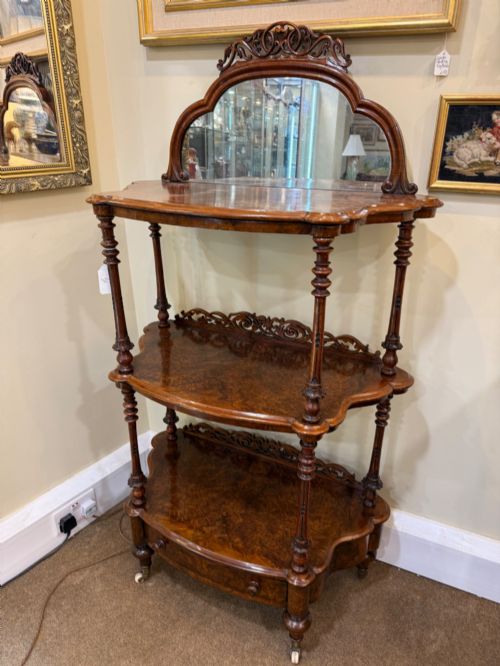
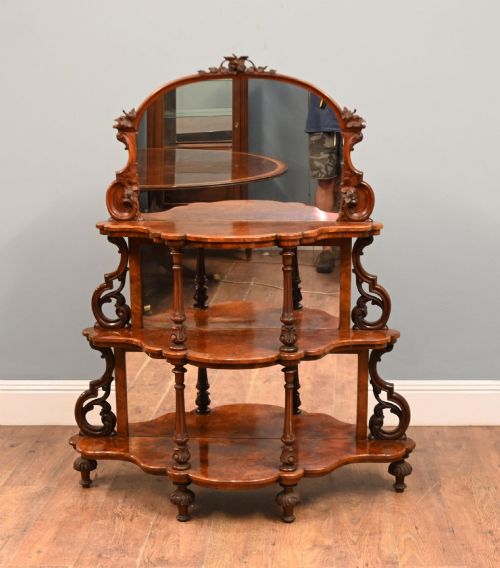
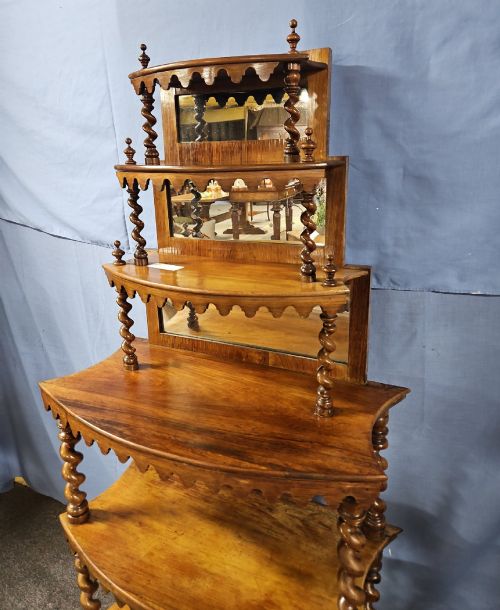
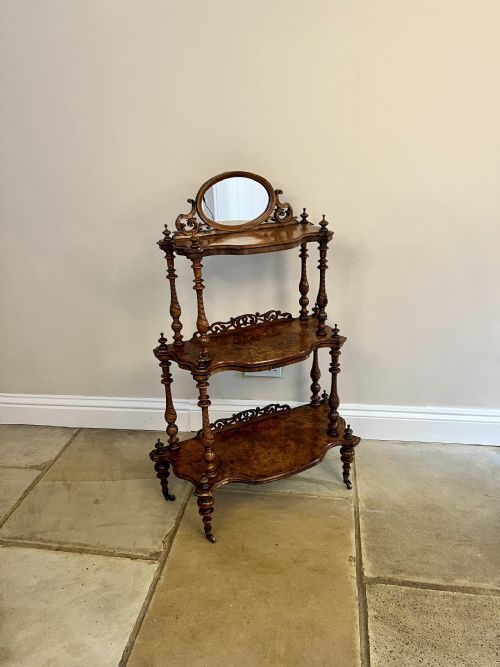


Antique Mirror Whatnot
These antique mirror whatnots combine open display shelves with reflective glass backs, offering a practical way to show small treasures.
Antique Mirror Whatnot
An antique mirror whatnot is a multi-tiered piece of furniture designed for display, featuring an integrated mirror back that bounces light around a room. The versions most commonly encountered on this page date from the Victorian period, spanning the mid to late nineteenth century.
Makers constructed these pieces in forms such as etageres, chiffoniers, and multi-tiered shelving units. They combine timber frames with glass plates to serve as both decorative furniture and functional storage for ornaments.
How they were made
Craftsmen built these pieces using timbers like burr walnut, rosewood, and mahogany, often applying marquetry inlay and carved details to the wood surfaces. Turned supports such as hollow barley twists hold the tiers apart.
Glass panels form the mirror backs, while brass fixtures occasionally appear in the hardware. These materials were combined using traditional nineteenth-century cabinet-making techniques.
Antique Mirror Whatnot Retail Price Guide 2026
Typical asking prices for mirror whatnot among the pieces listed under this phrase on Sellingantiques today, from the lower quarter to the upper quarter. They describe what is for sale here now, not the wider market.
What varies in quality
The choice of timber dictates much of the visual character, with figured burr walnut and rich rosewood sitting at the higher end compared to standard mahogany. Finer examples display intricate marquetry inlay and careful carving on the frame.
The integration of the mirror and drawers affects the complexity of the piece. More ambitious designs incorporate multiple tiers, such as six-tier shelving, alongside custom drawer compartments.
The Antique Mirror Whatnot Glossary
- Whatnot
- A piece of furniture consisting of open shelves for displaying small objects or books. They became popular in the nineteenth century.
- Etagere
- A piece of furniture with a set of open shelves for displaying ornaments. It shares similarities with the traditional whatnot.
- Burr walnut
- Timber taken from the growth on a walnut tree, prized for its swirling grain patterns. It was frequently utilised on high-end Victorian cabinetry.
- Barley twist
- A type of furniture leg or support carved to resemble a twisted rope. It appears frequently on nineteenth-century pieces.
- Chiffonier
- A low sideboard or cabinet, sometimes combined with shelving tiers on top. Examples in the evidence merge this form with the whatnot.
Antique Mirror Whatnot: Frequently Asked Questions
What is an antique mirror whatnot used for?
These pieces were originally designed to display porcelain, silver, and small decorative objects in Victorian parlours. The mirrored glass backing reflects the room and illuminates the items placed on the shelves.
Today, they function well in living rooms or hallways as display shelving that takes up minimal floor space while adding period character to an interior.
How do I date an antique whatnot?
Dating relies on identifying the timber choices, construction methods, and stylistic cues present in the piece. The majority of these items date from the Victorian era between eighteen-sixty and eighteen-eighty.
Examine the secondary woods, screw types, and the silvering on the mirror glass for clues regarding its nineteenth-century origins.
Where should I place a whatnot in my home?
Because they feature open shelves and reflective mirror backs, these units suit spaces that benefit from extra light and vertical display areas. Corners and narrow wall spaces work well for freestanding multi-tiered examples.
Keep them away from direct sunlight to protect the polished wood surfaces and the antique mirror glass from degradation over time.
How do I care for the wood and glass?
Maintain the timber by dusting regularly with a soft cloth and occasionally applying a suitable wax polish to nourish the walnut, rosewood, or mahogany. Avoid silicone-based sprays that can damage antique finishes.
Clean the mirror glass gently with a dry or barely damp cloth, taking care not to let moisture seep behind the glass plate into the wooden frame.