

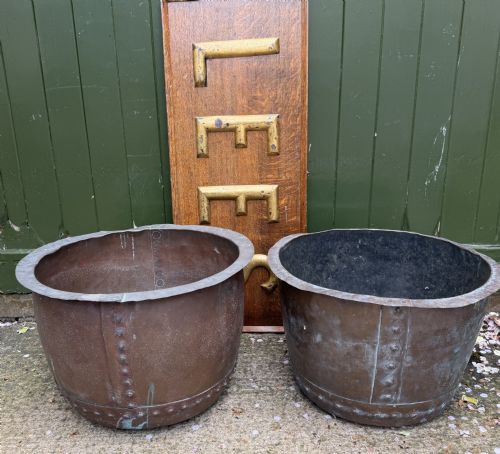


Antique Metal Wash Bin
These heavy metal containers handle water, wood, and garden plantings with the same sturdy grace they brought to nineteenth-century domestic work.
Antique Metal Wash Bin
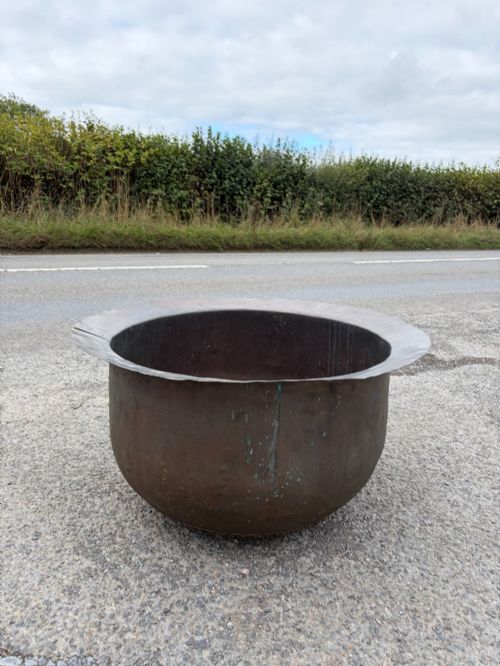
An antique metal wash bin brings robust utilitarian design into modern rooms, serving as a deep planter, wood store, or hearthside vessel. The pieces gathered under this search phrase span the nineteenth century, including Georgian examples through to the nineteen-twenties.
Most items you encounter are forged from heavy copper, though galvanised iron and zinc also appear among the working vessels. These domestic items originally served as boilers, wash tubs, cooking pots, and grain measures before finding a second life in gardens and living rooms.
Forms range from large cauldrons and lidded log bins to matched pairs of weathered coppers and low planters. Their proportions are generous, designed for heavy daily labour rather than ornamental display.
Materials and construction methods
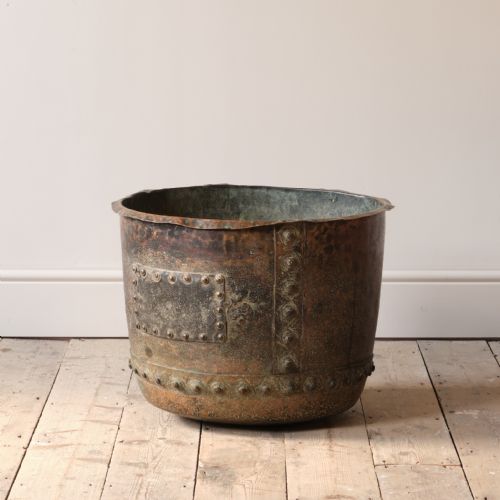
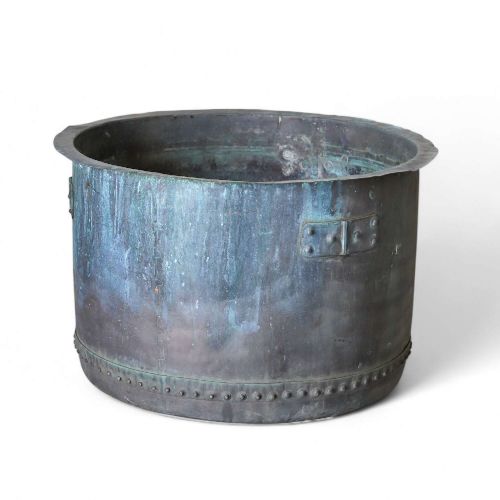
Coppersmiths shaped these vessels primarily from sheet copper, hammering the metal over forms and joining overlapping seams with hand-driven rivets. This construction method provided the structural strength required to contain boiling water and heavy wet laundry without failing.
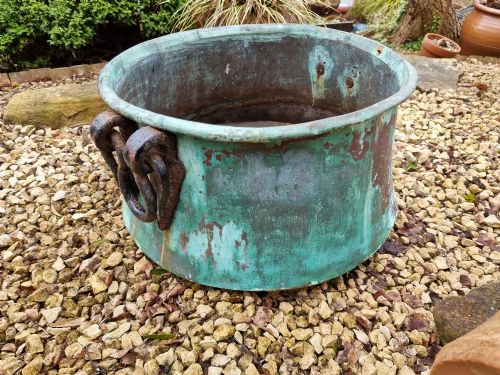
Wrought iron handles and swing Bails were securely attached to the main body to allow lifting when laden. Surfaces display the natural marks of the anvil and hammer, showing the direct touch of nineteenth-century metalworkers.
Secondary materials include galvanised metal and zinc, treated to resist rust in damp scullery environments. Iron fixings provide robust contrast to the warmer tones of the copper bodies.
Antique Metal Wash Bin Retail Price Guide 2026
Typical asking prices for metal wash bin among the pieces listed under this phrase on Sellingantiques today, from the lower quarter to the upper quarter. They describe what is for sale here now, not the wider market.
Assessing character and construction
Quality in these utilitarian objects rests on the integrity of the original construction and the character of the surface wear. Rivets should be secure and evenly spaced along the seams, holding the heavy metal plates together without looseness.
The visual appeal depends heavily on the natural patina developed over decades of service. Surfaces showing rich oxidation, verdigris, and organic weathering carry greater aesthetic depth than polished or stripped metal.
The Antique Metal Wash Bin Glossary
- Patina
- The surface texture and coloration developed through age, handling, and environmental exposure. A natural patina on copper often includes shades of green verdigris and deep brown oxidation.
- Verdigris
- The green crust or patina formed naturally on copper, brass, or bronze surfaces when exposed to weather or moisture over long periods. It is prized by decorators for its colour.
- Riveted
- Joined together using metal bolts or pins hammered flat at the ends. Hand-riveted seams indicate traditional nineteenth-century manufacturing methods before machine pressing became common.
- Cauldron
- A large metal pot with a wide top and often a swing handle, designed for boiling over an open fire. These vessels form a distinct subset of large domestic storage containers.
- Galvanised metal
- Iron or steel coated with a protective layer of zinc to prevent rusting. This industrial material became widespread in the later nineteenth and early twentieth centuries.
Antique Metal Wash Bin: Frequently Asked Questions
How were copper wash bins used originally?
These large vessels were filled with water and heated over fires to boil laundry, dye fabrics, or warm water for household washing.
Their substantial capacity and sturdy metal construction made them indispensable in nineteenth-century sculleries and farmhouses.
Can I use an antique copper bin outside?
Copper and galvanised iron naturally withstand outdoor conditions, making these vessels durable choices for garden planters and log storage.
Weathering will continue outdoors, deepening the verdigris surface tones over time without harming the heavy metal body.
How do I clean a weathered copper surface?
Most collectors prefer to leave the original patina and verdigris untouched, as these surface layers show the true age of the piece.
If cleaning is necessary, warm soapy water removes surface dirt without stripping away the historical oxidation.
What is the difference between a log bin and a wash tub?
Wash tubs were built with waterproof seams specifically for holding liquid and wet textiles during domestic chores.
Log bins share similar heavy metal construction but are repurposed or originally formed to store dry firewood beside a hearth.