

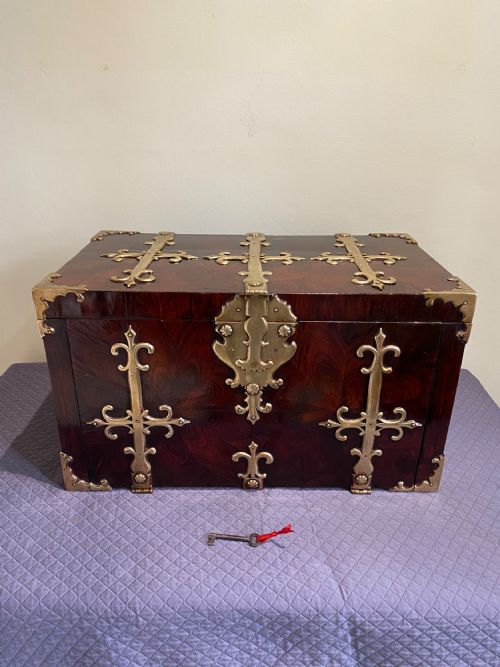


Antique Metal Mount Box
These antique metal mount box pieces range from Victorian biscuit barrels to seventeenth-century coffers, offering functional storage with decorative hardware.
Antique Metal Mount Box
An antique metal mount box encompasses diverse receptacles, from tabletop games boxes and snuff boxes to larger oak chests and coal scuttles. The selections span the eighteenth, nineteenth, and early twentieth centuries, capturing domestic and decorative containers.
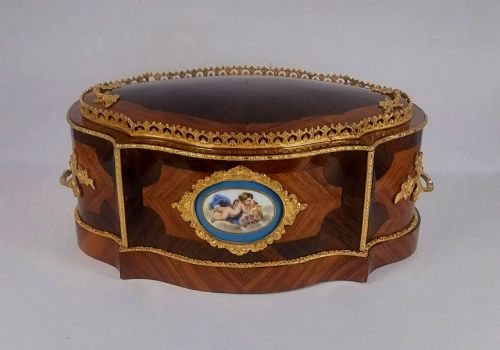
Buyers encounter forms like the Edwardian cranberry glass biscuit barrel with silver-plated mounts alongside seventeenth-century oak coffers and nineteenth-century French glass caskets with ormolu mounts. Each piece integrates metal fixtures directly into the container's construction or decorative scheme.
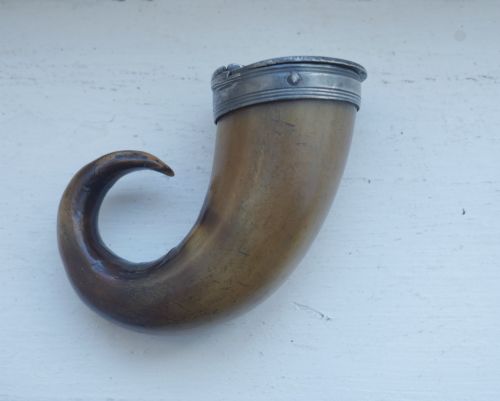
Origins vary widely across these items, featuring English oak, Scottish horn, Iberian baroque influences, Amsterdam School woodwork, and Indian Kashmir craftsmanship. This variety reflects global trade and diverse regional utility across multiple historical periods.
Materials and construction
Makers utilised timber substrates including oak, kingwood, madagascar ebony veneer, and faux tortoiseshell, reinforced with structural and decorative metals. Brass, copper, white metal, iron, and silver plate appear frequently as mounts, hinges, straps, and lids.
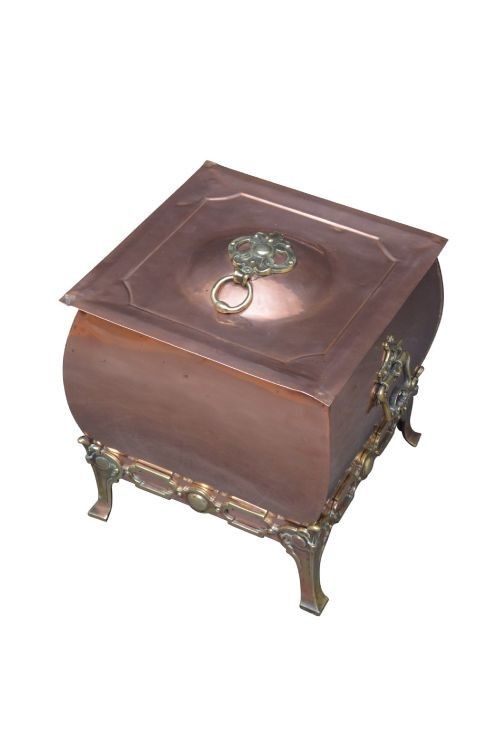
Construction techniques combine traditional joinery with specialised metalworking, such as ormolu casting on glass caskets and hand-hammered copper on coal scuttles. Surface treatments range from painted finishes and horn carving to polished wood veneers.
Antique Metal Mount Box Retail Price Guide 2026
Typical asking prices for metal mount box among the pieces listed under this phrase on Sellingantiques today, from the lower quarter to the upper quarter. They describe what is for sale here now, not the wider market.
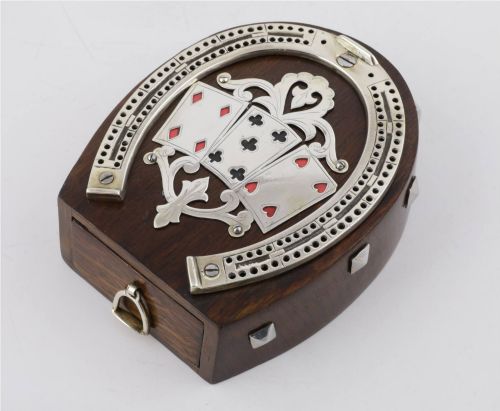
Some containers doubled as horseshoe cribbage boards, proving that nineteenth-century Victorians loved to gamble right beside the playing cards.
Distinctions in quality
Quality reveals itself in the integration between the primary material and the metal mountings, where precision in hand-fitting hinges and clasps distinguishes superior work. The crispness of chased or cast metalwork, such as ormolu or brass fittings, indicates the maker's investment in detail.
The choice and preservation of materials also define the grade of a piece, from solid oak and exotic veneers to standard timber and basic plated metals. Intricate embellishments, like painted caskets or specialised glass bodies, elevate the sophistication of the container.
Hawkes and Co·John Grinsell and Sons
The Antique Metal Mount Box Glossary
- Ormolu
- Gilded bronze or brass mounts applied to furniture, glass, or caskets, popular in nineteenth-century decorative pieces. This technique provides a rich golden finish that enhances the visual weight of the container.
- Biscuit Barrel
- A ceramic, glass, or wooden container used for storing biscuits, often fitted with silver-plated or metal mounts and a hinged lid. These accessories gained popularity for formal dining during the Victorian and Edwardian eras.
- Coffer
- A heavy wooden chest, often reinforced with metal bands or mounts, traditionally used for storing valuables or documents. Earlier examples display robust joinery and utilitarian ironwork.
- Amsterdam School
- An early twentieth-century architectural and design movement characterised by expressive forms, traditional craftsmanship, and distinctive use of materials like ebony veneer and white metal.
Antique Metal Mount Box: Frequently Asked Questions
What were metal mount boxes used for?
These containers served varied domestic purposes, holding biscuits, playing cards, matches, snuff, or valuable documents. The metal mounts provided structural reinforcement to wooden or glass bodies while adding decorative contrast.
Smaller versions functioned as personal pocket items or tabletop novelties, whereas larger coffers and chests secured household goods in period interiors.
How do I identify a Victorian metal mount box?
Victorian examples frequently combine dense woods like oak with brass, copper, or silver-plated mounts, reflecting nineteenth-century revival styles and industrial production methods. Look for characteristic design motifs of the period, such as late Victorian coal scuttles or games boxes.
Maker details, registration marks, or specific mount styles often help narrow down the production decade within the Victorian era.
Are metal mounts original to the boxes?
Original mounts align with the construction techniques and patina of the box body, showing consistent age across the fixings and the wood or glass. Makers integrated brass, iron, or ormolu mounts as structural elements during the initial manufacture.
Evaluating the screws, pins, or rivets helps determine whether the metalwork has remained undisturbed since its creation.
How do I care for antique wood and metal boxes?
Maintain these pieces in stable indoor environments away from direct sunlight and excessive humidity to protect vulnerable wood veneers, horn, and glass bodies. Regular dusting with a soft, dry cloth preserves the finish without damaging delicate metal mounts.
Avoid harsh chemical cleaners on silver plate, brass, or ormolu, as appropriate conservation maintains the historical surface character.