


Antique Metal Book Supports
Antique metal book supports hold a shelf together with weight and character, turning plain rows of volumes into a studied display.
Antique Metal Book Supports
When you search for antique metal book supports, you encounter heavy pairs designed to keep upright volumes on a desk or shelf. The selection spans the Victorian period through to the 1930s, taking in Edwardian examples and later modernist creations.
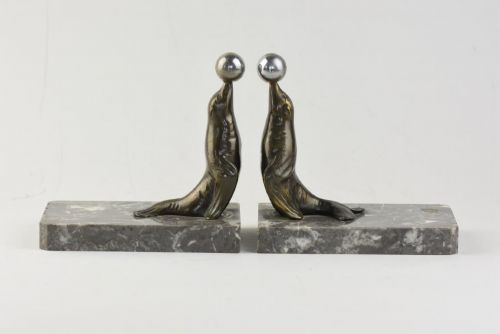
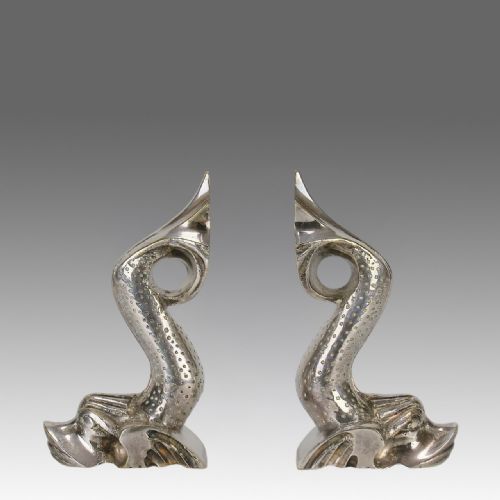
You meet a variety of figural and decorative forms across these decades. Animal subjects appear frequently, including owls, elephants, sea lions, dogs, and fish, alongside literary figures like William Shakespeare.
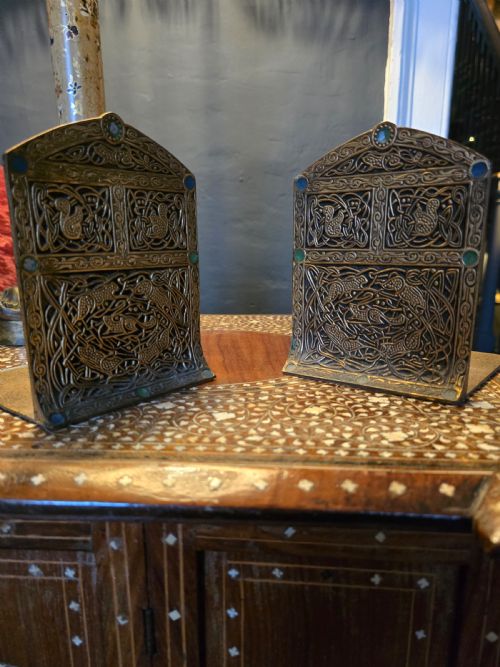
French makers dominate the Art Deco group, often pairing cast metal with marble, alabaster, or glass bases. British and American pieces from the Arts and Crafts and Edwardian eras rely on solid bronze, brass, or silvered metal to achieve their presence.
How they were made
Foundry work defines these objects, with metal cast in bronze, spelter, brass, or chrome. Spelter offers a lighter, more economical alternative to bronze, while cold painting adds naturalistic colour to surfaces.
Heavy stone components such as marble and alabaster provide the necessary ballast to anchor the book supports securely. These materials combine through mechanical fastening or mounting, uniting metal figures with substantial plinths.
Materials range from traditional bronze and brass to modernist chrome, alongside marble, alabaster, and glass bases.
What varies in quality
The choice of secondary materials dictates the overall substance of the piece. Dense marble bases and genuine gilt or cold-painted bronze elevate a pair above simple utilitarian items.
Tiffany Studios New York·F Abella And Sons·C Omin·Herzig
The Antique Metal Book Supports Glossary
- Spelter
- A zinc alloy frequently used as a substitute for bronze in decorative figures. It takes patination and paint well while remaining cost-effective.
- Cold painted
- A method where paint is applied to metal without subsequent firing or heat treatment. It produces matte, detailed finishes on bronze and spelter objects.
- Art Deco
- A design style flourishing in the 1920s and 1930s characterised by stylised geometry and streamlined forms. It appears often in French bookends.
- Gilt bronze
- Bronze that has been coated with a thin layer of gold or gold-coloured alloy. This treatment gives a rich, warm lustre to the metal surface.
- Plinth
- The heavy base block, often marble or alabaster, upon which the metal book support figure rests. It supplies the physical mass needed to hold books upright.
Antique Metal Book Supports: Frequently Asked Questions
How heavy are antique book supports?
These pieces possess substantial weight, often combining cast metals with dense stone bases like marble or alabaster.
This heft ensures they can hold up rows of heavy hardback books without slipping on the shelf.
Are bookends and book supports the same thing?
Yes, the terms are interchangeable for these heavy paired objects.
Some older listings specifically use the designation of book rests alongside bookends.
How do I identify Art Deco pieces?
Art Deco examples from the 1920s and 1930s feature stylised animal or human figures and geometric lines.
French workshops during this period frequently paired chromed or spelter metal with contrasting stone plinths.
What metals were used in the Victorian era?
Victorian and Edwardian versions often utilise solid brass, bronze, or cast iron.
These earlier items tend towards traditional decorative motifs rather than the stylised modernism of the 1930s.