


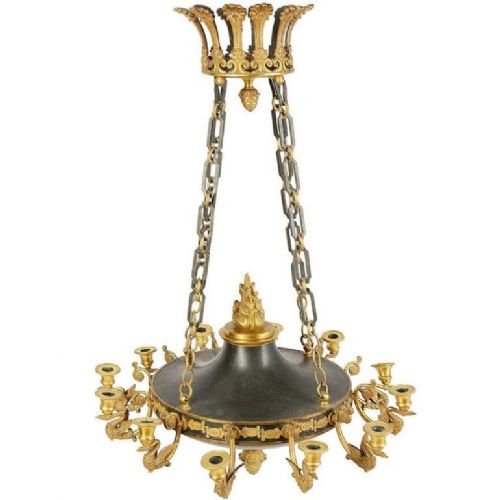


Antique Lustre Pendant
An antique lustre pendant carries the unmistakable shimmer of cut glass and crystal, bringing warmth and character to any ceiling it graces.
Antique Lustre Pendant
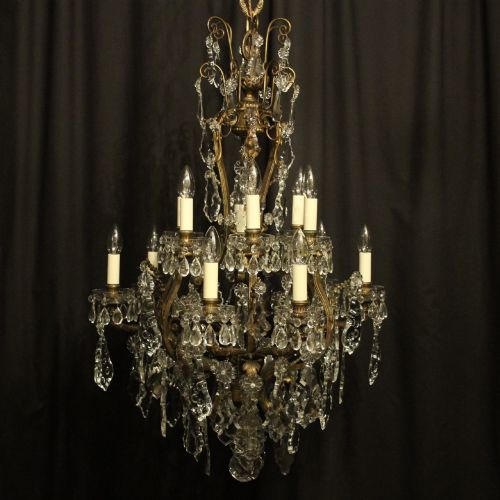
An antique lustre pendant encompasses ceiling fixtures and chandeliers adorned with hanging glass prisms or beads. These pieces primarily date from the nineteenth century through the early twentieth century, spanning Edwardian and Victorian eras.
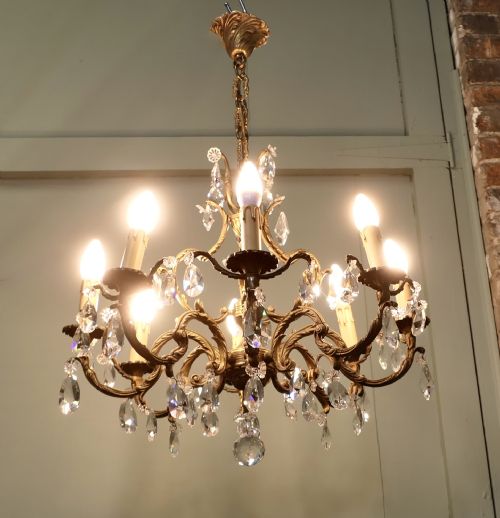
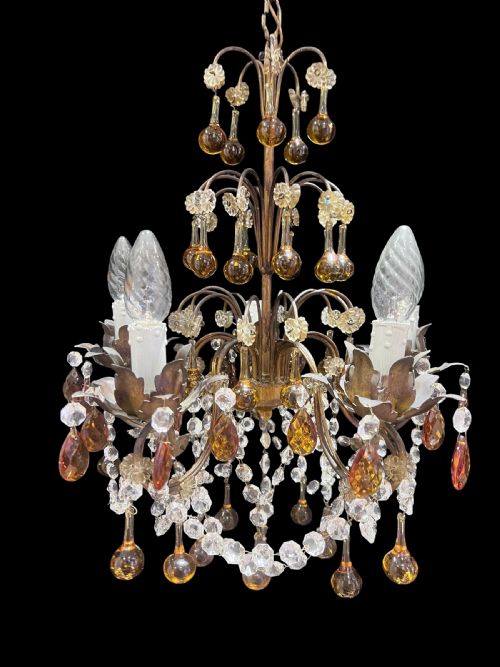
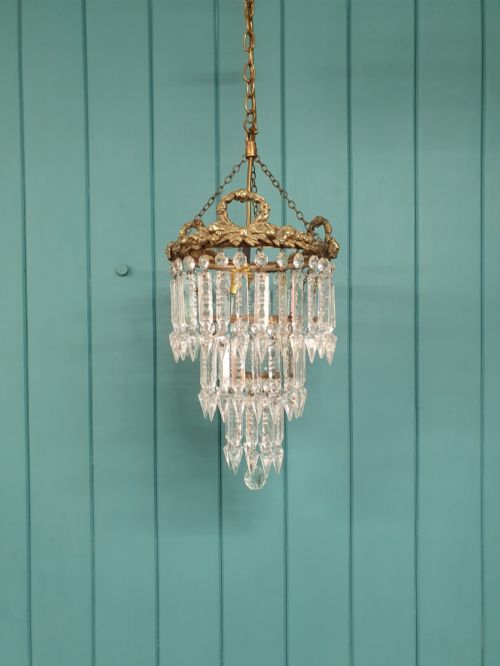
Buyers will most frequently encounter French and Italian examples on this page, often styled in French Empire, Rococo, or Florentine traditions. Forms range from compact nine-inch fixtures to large multi-arm chandeliers.
Materials span brass, gilded bronze, ormolu, and nickel-plated brass, all richly dressed with cut glass and crystal drops. They serve as primary overhead lighting that transforms a room through reflected candlelight or electricity.
How they were made
Maker's workshops cast frames in brass, bronze, or gilt metal, sometimes applying silver gilt or ormolu finishes to catch the light. Frames accommodate multiple candle-style arms or central lights designed to illuminate the surrounding room.
Artisans hand-cut crystal glass to form the characteristic lustres and pendants suspended from the metalwork. Wire or metal pins link each glass drop to the frame, allowing the prisms to sway and scatter illumination.
Antique Lustre Pendant Retail Price Guide 2026
Typical asking prices for lustre pendant among the pieces listed under this phrase on Sellingantiques today, from the lower quarter to the upper quarter. They describe what is for sale here now, not the wider market.
Object types include compact nine-inch ceiling lights alongside grand eighteen-light chandeliers.
What varies in quality
The density and clarity of the crystal components distinguish finer examples from simpler production. Superior fixtures employ hand-cut glass with sharp facets that refract light intensely, compared to moulded glass with softer edges.
The underlying metalwork reveals the maker's hand through chased detailing on gilded bronze or ormolu mounts. Robust casting and substantial arm counts denote higher status, whereas simpler nickel-plated brass or standard brass frames occupy the everyday tier.
The Antique Lustre Pendant Glossary
- Lustre pendant
- A hanging ceiling light decorated with cut glass or crystal drops designed to reflect and refract light.
- Ormolu
- Gilded bronze produced by applying a mercury and gold amalgam to a bronze base, creating a rich golden surface.
- Crystal glass
- High-clarity glass containing lead oxide, which increases brilliance and allows for crisp, sharp facet cutting.
- French Empire
- A neoclassical design style characterised by symmetry, military motifs, and classical architectural restraint.
- Gilt metal
- Base metal treated with a thin layer of gold leaf or gilt wash to simulate solid gold.
Antique Lustre Pendant: Frequently Asked Questions
How do I hang a heavy antique chandelier?
These fixtures require secure anchoring into ceiling joists using appropriate hooks and weight-rated fixings to support the combined mass of metal and crystal.
Professional installation by an electrician ensures the wiring safely accommodates the load and meets modern safety standards.
Can I clean the crystal lustres myself?
Individual glass drops can be washed gently in warm soapy water while still attached or removed for a thorough clean. Thorough drying prevents water spots from dulling the facets before re-hanging them on the frame.
Harsh chemical cleaners should be avoided to protect the aged patinas on bronze, brass, and gilt metal components.
How do I date an antique lustre pendant?
Dating relies on examining the casting methods of the metal frame, the style of the glass cutting, and construction techniques. Edwardian and nineteenth-century pieces display distinct decorative idioms aligned with French or English design periods.
Wiring methods and socket types offer further clues, though many fixtures have been re-wired for modern use.
Where should I hang a lustre pendant?
These fixtures suit dining rooms, hallways, or living spaces where overhead illumination highlights their decorative glass elements. Ceiling height dictates the appropriate drop, ensuring clearance below while maintaining visual balance in the room.
Placing them centrally allows the hanging crystals to disperse light evenly across the walls and furniture.