


Antique Low Seat
These antique low seat options span centuries of cabinet-making, offering compact forms designed for comfort and dressing rooms.
Antique Low Seat
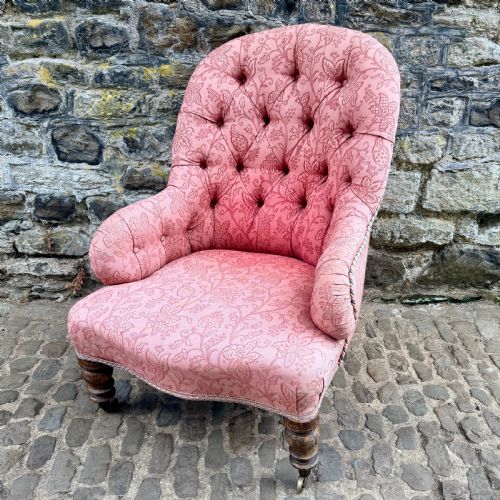
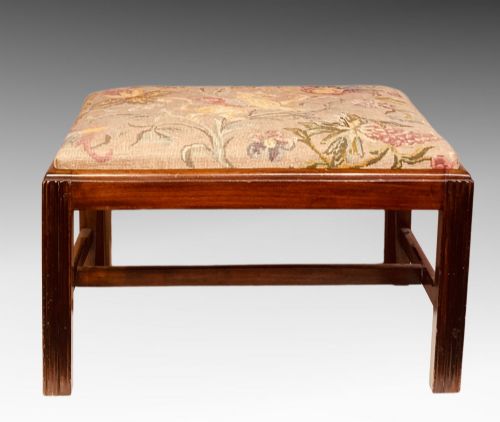
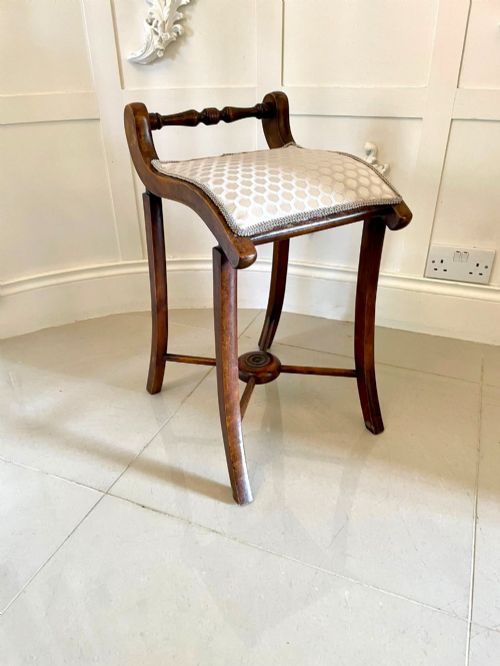
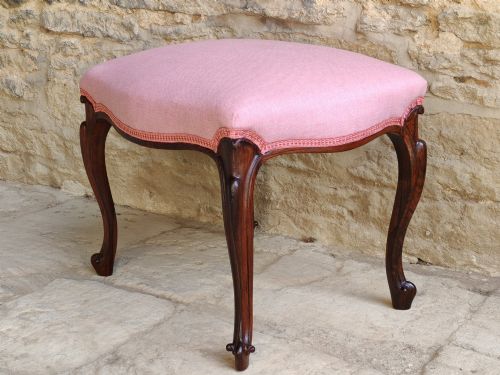
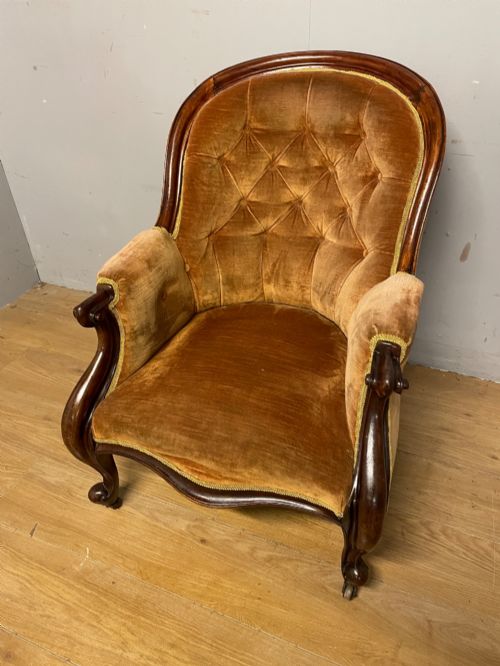
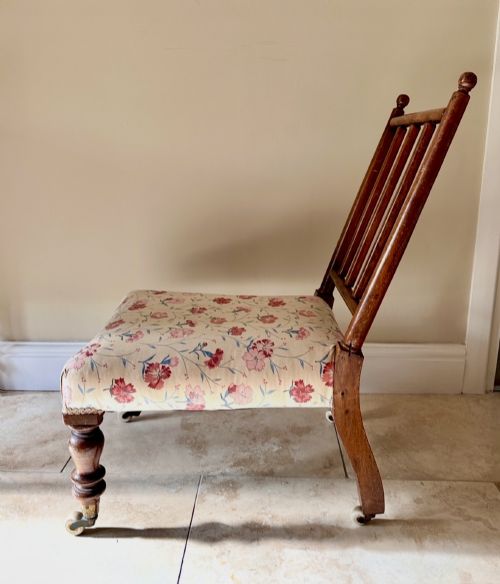
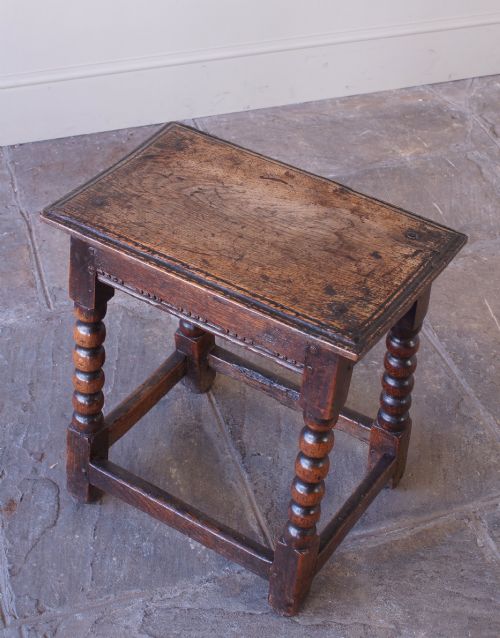
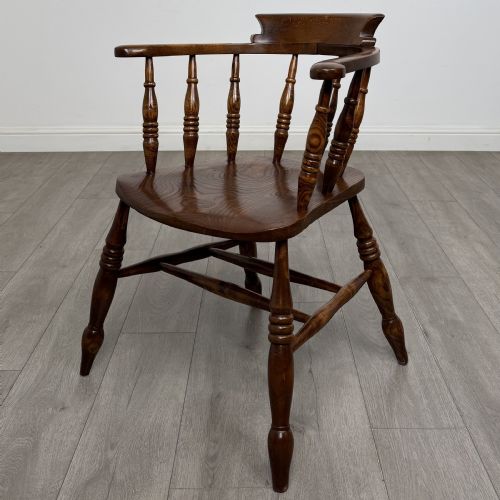
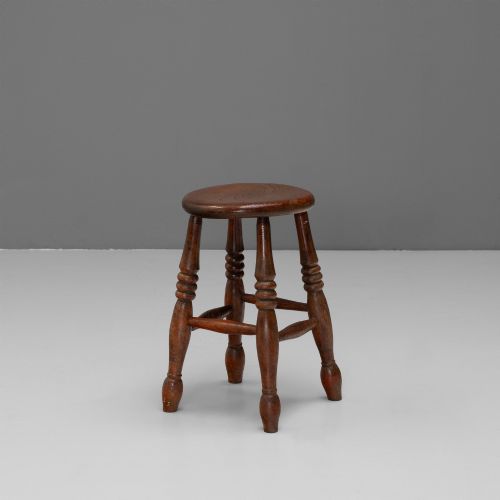
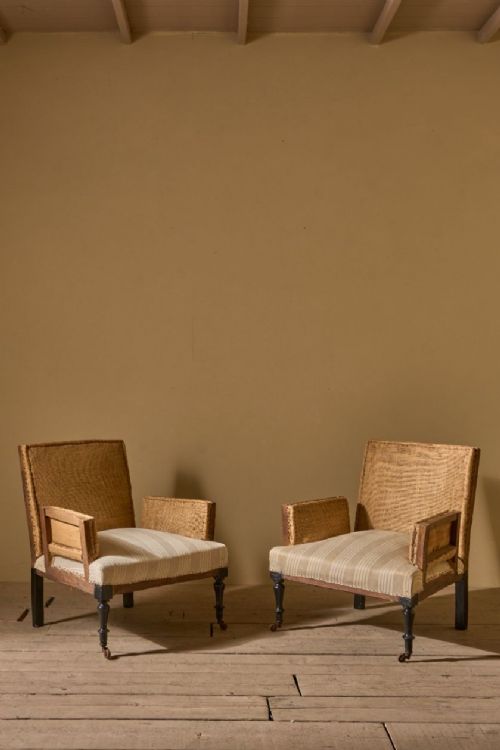
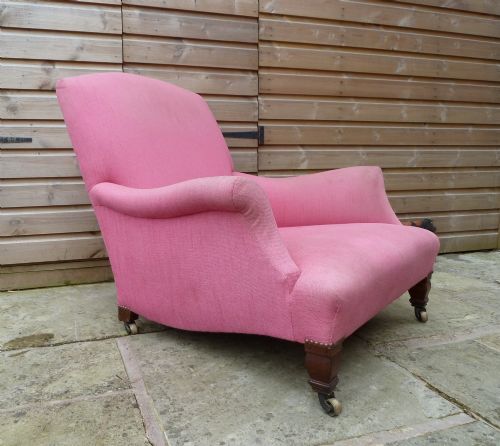
Forms vary considerably from upholstered bedroom chairs and slipper chairs to wooden joint stools and spindle-back designs. You will find seating framed in mahogany, walnut, oak, and rosewood, often upholstered in velvet, fabric, or textile. These pieces serve well in bedrooms, dressing areas, and low-ceilinged period rooms where standard furniture feels too imposing.
Materials and construction methods
Cabinet-makers utilised dense hardwoods such as mahogany, walnut, oak, and rosewood for the structural frames of these low seats. Softer woods like elm, sycamore, ash, and yew appear in vernacular and country pieces, shaped into spindles, legs, and Windsor backs. Joinery relied on traditional methods including mortise and tenon joints for sturdy construction.
Upholstered variants incorporated textiles such as velvet and woven fabric over supportive internal stuffing and webbing. Decorative touches involved turned legs, square tapering legs, cross stretchers, button-backing, and carved details aligned with styles from Regency to the Aesthetic Movement.
Object types span nursing chairs, joint stools, slipper chairs, and Windsor armchairs in various regional styles.
Distinguishing quality in low seating
Quality rests in the integrity of the timber framing and the precision of the joinery. Superior pieces display refined carving, well-turned legs, and harmonious proportions that reflect their specific period, whether Queen Anne style or late Victorian.
The selection of primary and secondary woods dictates durability, with dense hardwoods holding structural stability better over centuries. Original upholstery remains scarce, so the standard of subsequent re-upholstery and the preservation of underlying frames heavily influence the desirability of a piece.
Charles Hindley and Sons·Howard and Sons·Liberty Morris and Co
The Antique Low Seat Glossary
- Nursing chair
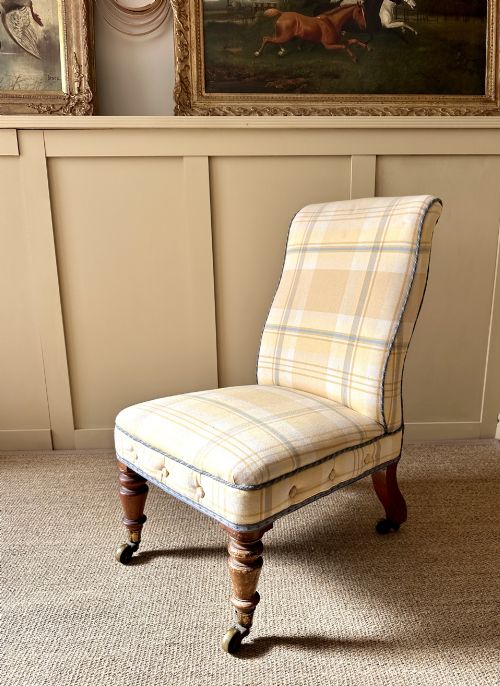
- A low-seated upholstered chair originally designed in the Victorian era to assist mothers with infant feeding. These chairs typically feature low centres of gravity and padded backs.
- Joint stool
- A sturdy wooden stool constructed with mortise and tenon joints, commonly originating from the seventeenth and eighteenth centuries. They served multiple household functions including seating and small tables.
- Slipper chair
- An upholstered bedroom chair characterised by its very low seat, historically used while putting on shoes or slippers. They often lack arms to accommodate voluminous nineteenth-century garments.
- Windsor chair
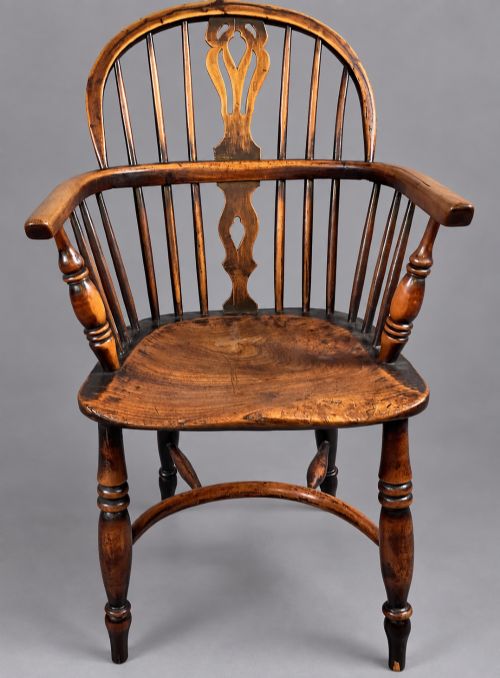
- A wooden chair featuring a solid carved seat into which the legs and back spindles are wedged directly. Regional variations include low-back and spindle-back forms.
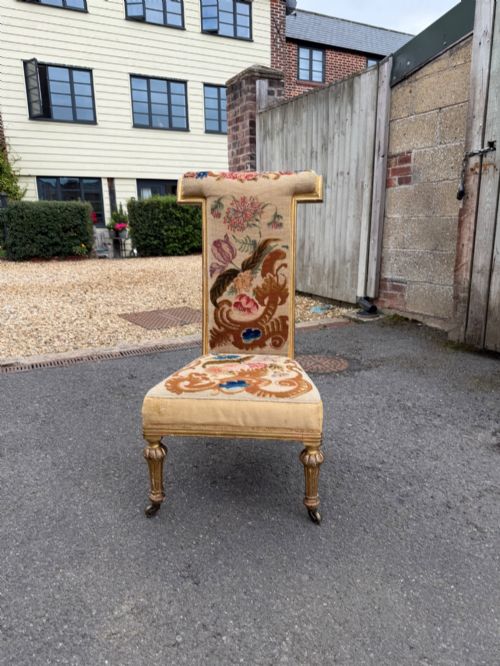
- Prie Dieu
- A devotional chair featuring a low seat and an upper rest designed for kneeling and prayer during the nineteenth century. These items frequently incorporate upholstered surfaces and turned wooden supports.
Antique Low Seat: Frequently Asked Questions
What is an antique low seat used for?
These pieces served practical domestic roles in bedrooms, dressing rooms, and parlours. Their low profile made them suitable for tasks requiring a seated position close to the floor.
Today, buyers place them in bedrooms or corners where space is limited. Their compact dimensions allow them to function as accent seating without dominating a room.
Are these chairs comfortable for daily use?
Many upholstered Victorian nursing chairs and slipper chairs offer surprisingly supportive seating due to their generous padding. Their low height provides a relaxed posture suited to reading or resting.
Wooden stools and Windsor chairs provide firmer seating without squab cushions. Adding a loose pad can increase comfort for contemporary living.
How do I care for antique wood and upholstery?
Protect wooden frames by applying beeswax periodically to nourish the timber and maintain its natural lustre. Avoid placing furniture in direct sunlight or near heat sources to prevent cracking.
Vacuum upholstered surfaces gently using a soft brush attachment to remove dust. Professional cleaning is recommended for antique textiles and delicate fabrics.