

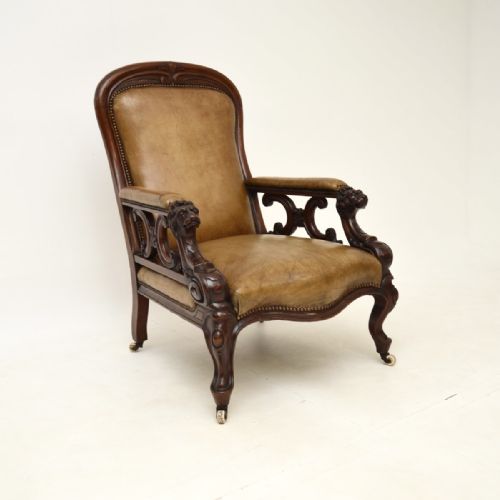


Antique Lion Chairs
These antique lion chairs bring sculptural force and carved majesty into a room, uniting classical design with the weight of mahogany, oak, and walnut.
Antique Lion Chairs
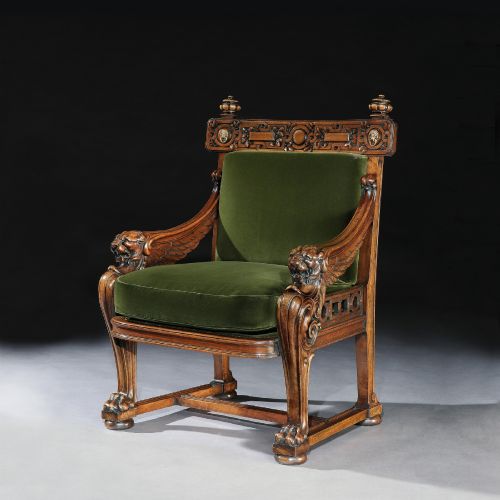
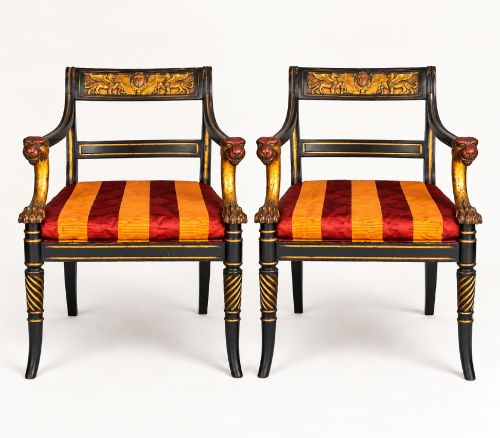
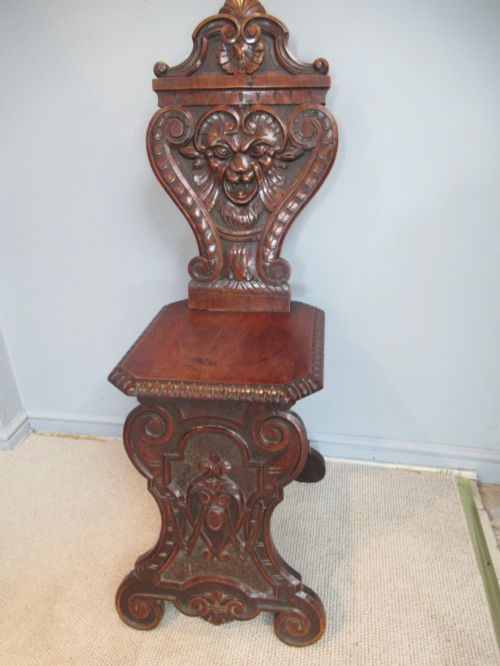
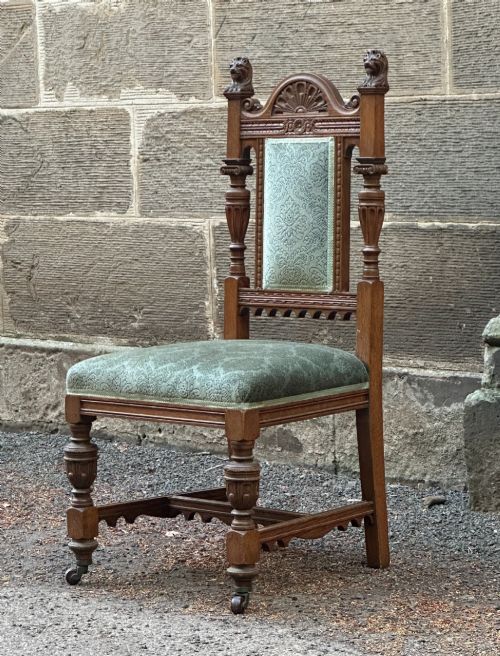
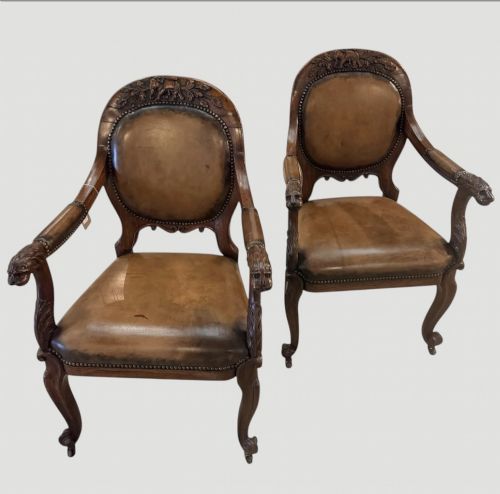
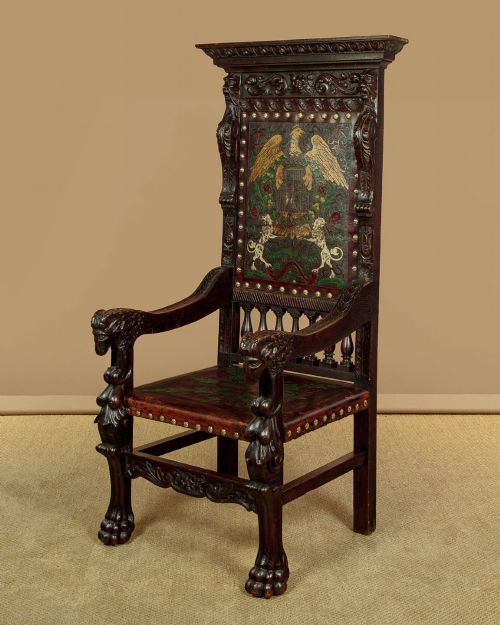
When you search for antique lion chairs, you encounter seating distinguished by carved lion heads, paw feet, or monopodia supports. The selection spans the Georgian period through the Victorian era, drawing on Renaissance, Gothic, and Empire revivals.
Armchairs, library chairs, and throne chairs dominate the forms. Oak and mahogany serve as the primary timbers, frequently paired with leather or velvet upholstery.
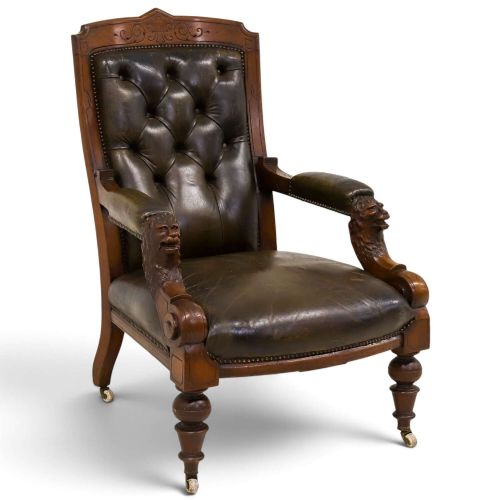
The Victorian period yields the highest concentration of examples, particularly carved oak library chairs and leather chesterfield armchairs featuring distinct feline motifs.
How they were made
Cabinetmakers and carvers utilised solid hardwoods such as oak, mahogany, and walnut to construct the heavy frames. Figures and terminals like lion masks and paw feet emerged through hand carving, often supplemented by brass details or cast iron components.
Upholstery relied on traditional stuffing methods finished with leather, velvet, or woven fabric, secured with brass tacking. Structural joints depended on mortise and tenon construction to support the substantial weight of the timber.
Antique Lion Chairs Retail Price Guide 2026
Typical asking prices for lion chairs among the pieces listed under this phrase on Sellingantiques today, from the lower quarter to the upper quarter. They describe what is for sale here now, not the wider market.
Victorian craftsmen carved hundreds of fierce lion mouths that ended up holding nothing more intimidating than a brass library bell pull.
What varies in quality
Selection of timber density and grain figure dictates the baseline quality of the frame. Sound joinery and original upholstery foundations preserve the structural integrity of the piece over centuries.
Thomas Hope·Bruce Talbert·Gillows·George Smith·C Hindley & Sons
The Antique Lion Chairs Glossary
- Monopodia
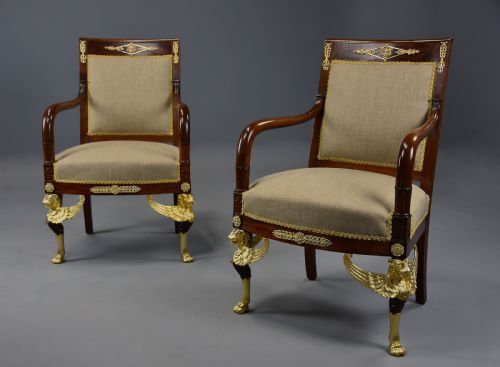
- Support member featuring a single animal leg and foot, commonly terminating in a lion paw. This classical form appears frequently in Regency and Empire designs.
- Fauteuil
- French open-arm armchair with upholstered back and seat, exposed wooden arms, and carved framework. Examples span the Empire and revival styles.
- Curule stool
- Ancient Roman magistrate seat design featuring intersecting curved legs forming an X shape. These appear in walnut and giltwood forms.
- Throne chair
- High-backed, heavily carved ceremonial seating intended to dominate a room. They emerge in oak with upholstered leather inserts during the Victorian revival periods.
Antique Lion Chairs: Frequently Asked Questions
How do I identify a Victorian lion chair?
Victorian examples rely heavily on dark carved oak and incorporate deep relief lion masks on the arm terminals or crest rails. They frequently feature brown leather upholstery paired with substantial frame construction.
Earlier Georgian and Regency pieces show refined mahogany surfaces and classical proportions, whereas Victorian variants prioritise dramatic, heavy carving and imposing presence.
Where were lion chairs placed historically?
These chairs served as principal seating in libraries, studies, morning rooms, and formal halls where their commanding presence projected authority. Throne chairs and heavy library armchairs anchored the room as central focal points.
Smaller side chairs and hall chairs lined the perimeter of large entrance spaces, utilising the carved lion motif to impress arriving visitors.
What woods were used for these chairs?
Oak and mahogany form the vast majority of the frames, chosen for their strength and suitability for deep carving. Walnut appears regularly in French and continental pieces as well as English revival items.
Rosewood and exotic hardwoods emerge in Anglo-Indian colonial pieces, bringing dense grain patterns and intricate floral and animal carving to the surface.
How do I care for leather and wood?
Maintain the timber by applying appropriate natural waxes to nourish the grain and prevent drying. Protect carved surfaces from direct sunlight and rapid temperature shifts.
Condition leather upholstery periodically using specialised balms to preserve suppleness and prevent cracking across the high-wear areas of the seat and arms.