

Antique Library Bookstand
An antique library bookstand brings order and proportion to a room, offering a revolving or stationary home for cherished volumes.
Antique Library Bookstand
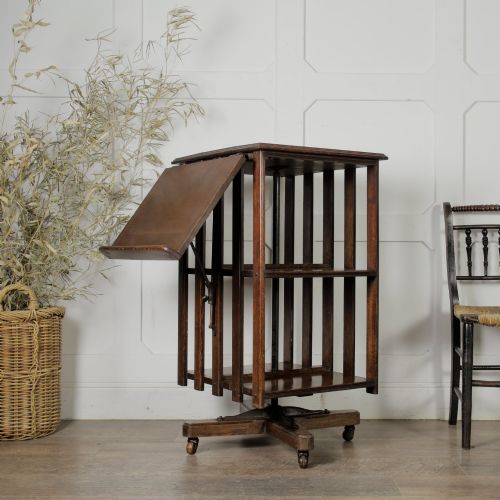
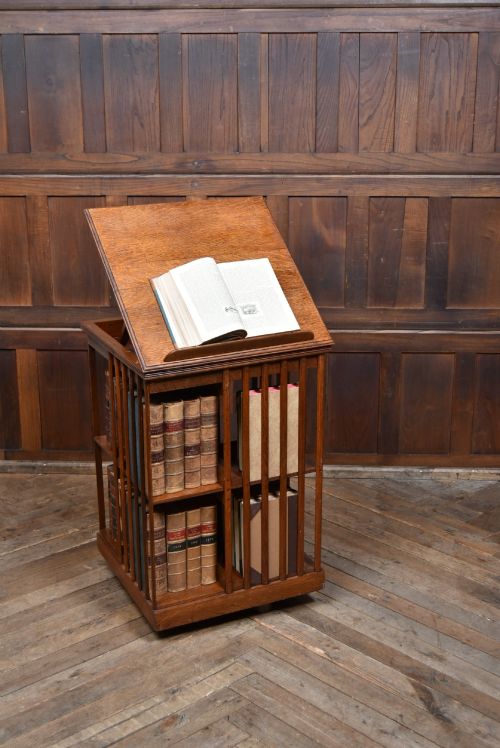
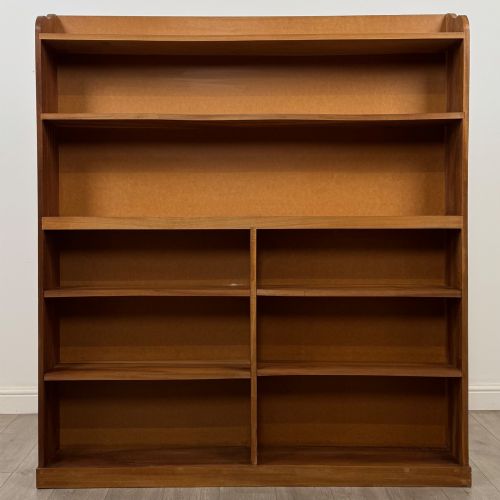
When searching for an antique library bookstand, a buyer looks at a variety of practical furniture forms designed to keep texts accessible in studies, drawing rooms and libraries. These pieces range from rotating desk-top book rests to tall open bookcases, revolving floor models, and low book troughs.
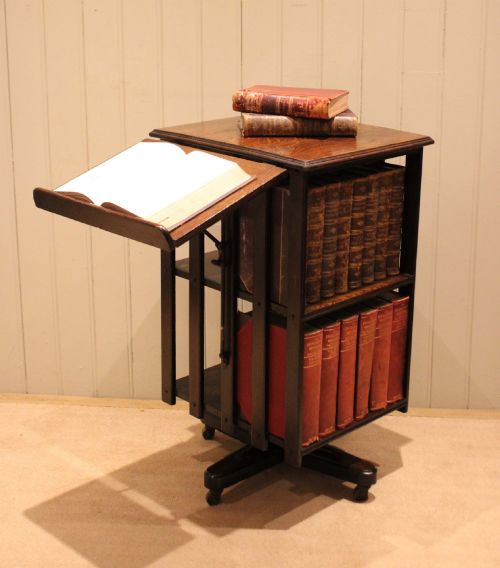
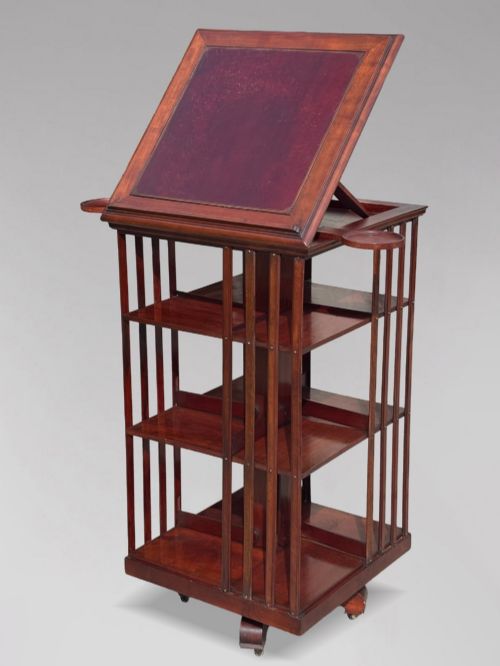
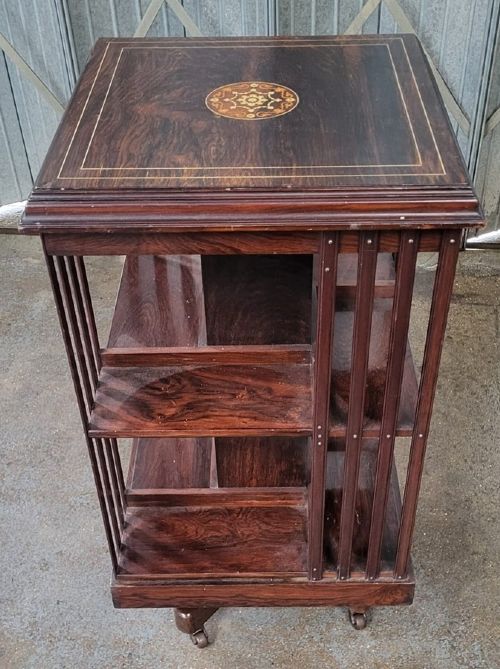
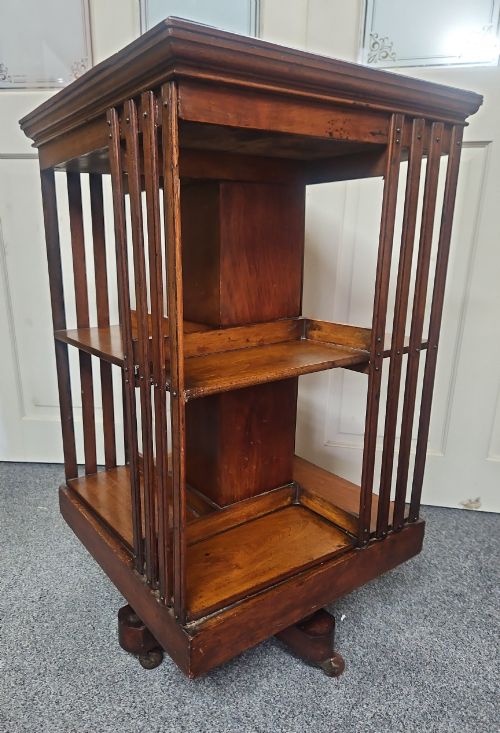
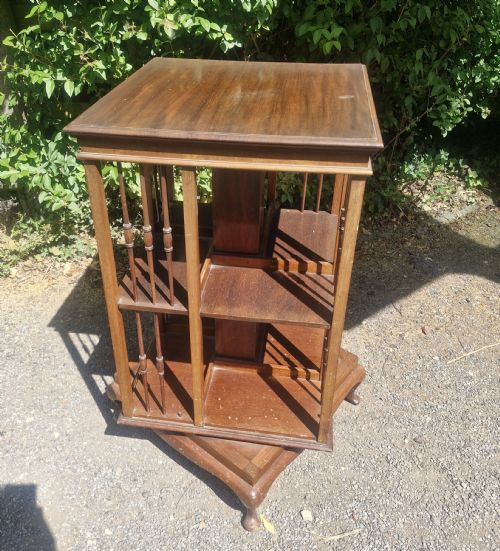
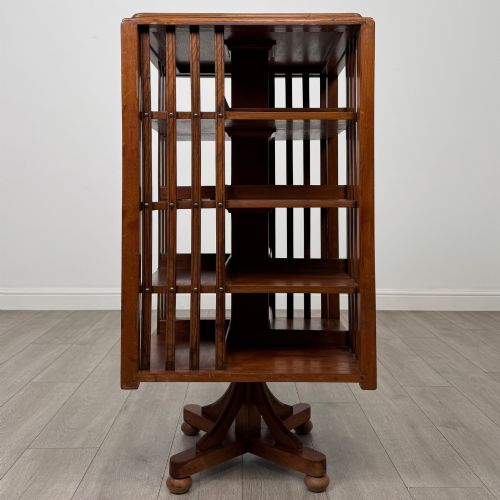
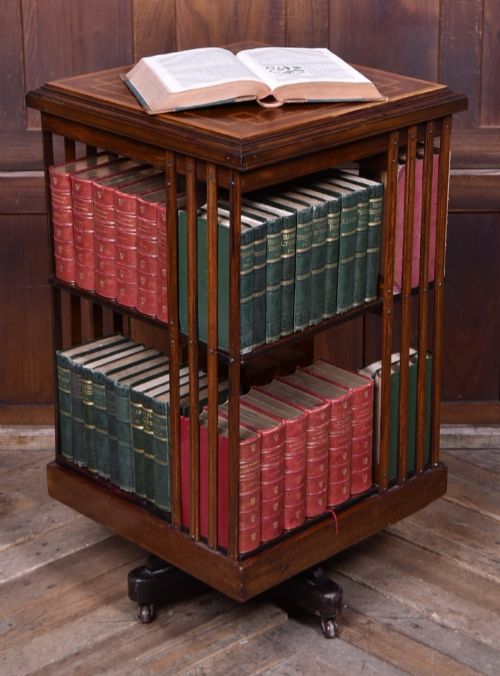
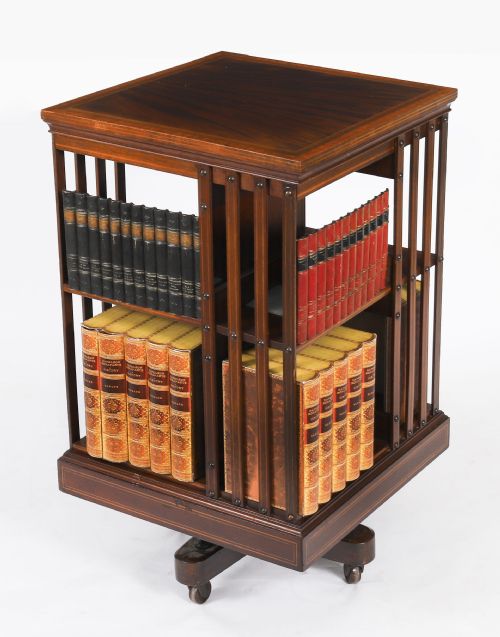
The version most frequently met on this page is the revolving bookcase, usually standing on a cruciform base with castors and dating from the Edwardian period or the late nineteenth century. These revolving pieces allowed readers to access an entire section of reference books without leaving their seat.
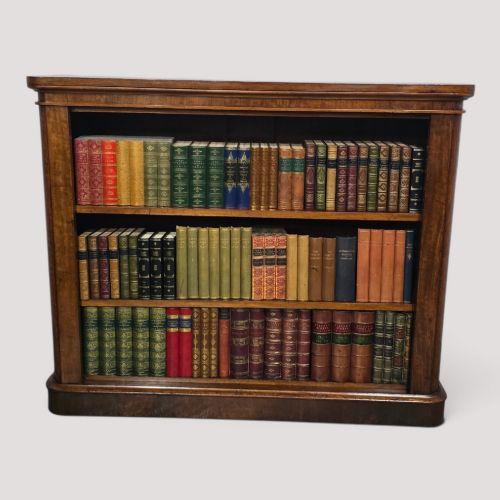
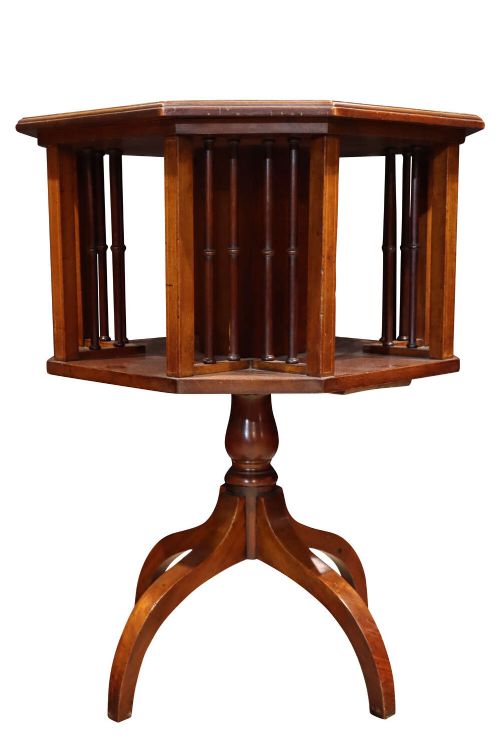
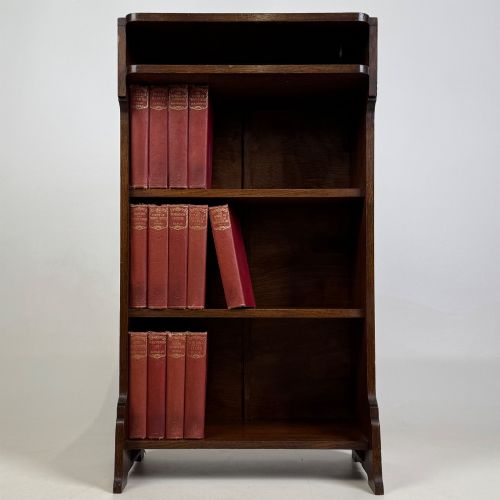
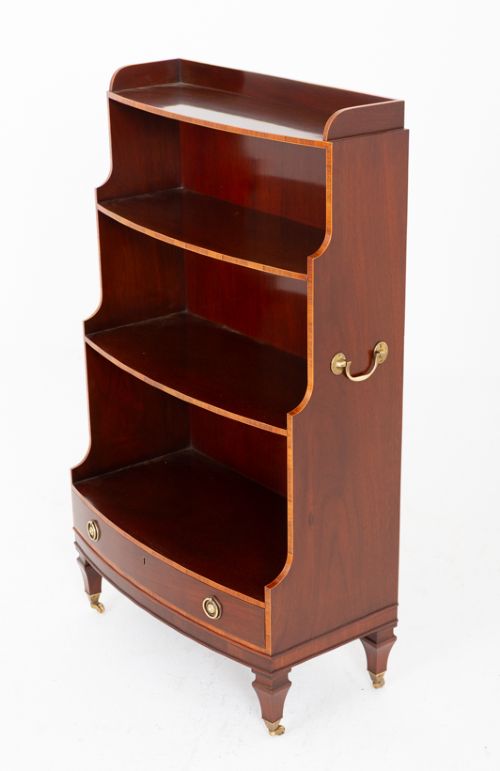
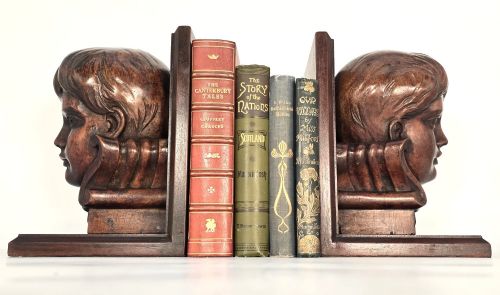
Alongside revolving designs, the selection includes open front bookcases, reading tables, and pairs of heavy library bookends. Woods span from traditional mahogany and oak to rosewood, walnut, and satinwood, reflecting the tastes of Victorian and Edwardian cabinet makers.
How they were made
Cabinet makers utilised solid timbers such as oak, walnut, and mahogany for structural integrity, often pairing them with decorative veneers like flame mahogany, burr walnut, and satinwood on visible surfaces. Inlaid details in contrasting woods and brass fittings add refined decorative touches to many revolving and stationary models.
Revolving mechanisms rely on internal wooden or cast iron pivots and ball bearings to ensure smooth rotation under the weight of heavy volumes. Joinery methods of the nineteenth and early twentieth centuries involved sturdy dovetailing and mortise-and-tenon construction to support the heavy load of packed bookshelves.
Antique Library Bookstand Retail Price Guide 2026
Typical asking prices for library bookstand among the pieces listed under this phrase on Sellingantiques today, from the lower quarter to the upper quarter. They describe what is for sale here now, not the wider market.
Listings feature solid oak, mahogany, walnut, and rosewood forms spanning the Victorian and Edwardian eras.
What varies in quality
The distinction between standard utility furniture and the finest output rests in the choice of timber and the crispness of decorative detail. Superior pieces employ figured veneers, delicate marquetry inlay, and carved elements such as ecclesiastical motifs or Sheraton-style crossbanding.
Mechanical performance dictates the standing of revolving bookstands. A high-quality mechanism turns effortlessly and silently on its original castors, while lesser examples may wobble, stick, or sit unevenly on an unlevel floor.
Maple and Co
The Antique Library Bookstand Glossary
- Revolving bookcase
- A freestanding tiered bookcase built on a rotating mechanism that turns on a fixed base. This design allowed users to store numerous volumes in a compact footprint.
- Book trough
- An open-topped wooden trough designed to hold a small selection of books upright on a desk or table. They frequently appear in Edwardian mahogany.
- Flame mahogany
- A veneer cut from the fork of a mahogany tree where the branch joins the trunk, producing a distinctive rippled pattern resembling flickering flames. Cabinet makers utilised this timber on prominent surfaces.
- Sheraton Revival
- A late nineteenth and early twentieth-century style inspired by the lightweight, neoclassical designs of George Sheraton. Pieces often feature satinwood, delicate inlay, and tapered legs.
- Reading stand
- An adjustable wooden stand designed to hold a book at a comfortable angle for reading. Some examples sit upon desks while others incorporate independent floor-standing supports.
Antique Library Bookstand: Frequently Asked Questions
How do revolving bookstands work?
A concealed central pivot and metal or wooden bearing system allows the upper tiers to rotate independently of the weighted cruciform base. This keeps the entire structure stable while giving the user easy access to all four sides.
Most revolving models incorporate small castors beneath the base for effortless repositioning across a carpeted library floor.
What is the difference between a bookstand and a bookcase?
Bookstands generally refer to compact, portable, or revolving pieces intended to hold a working selection of volumes near a desk or armchair. Bookcases are larger, stationary pieces designed for permanent wall placement and extensive storage.
Both forms utilise period timbers such as mahogany and oak, but bookstands prioritise accessibility and floor-space economy.
How do I date an antique bookstand?
Dating relies on examining the primary timbers, secondary woods, construction techniques, and prevailing decorative styles. Edwardian pieces often display lighter satinwood inlays and Sheraton-style motifs, whereas Victorian pieces tend toward heavier carved oak or solid mahogany.
Hardware such as castors and internal pivot mechanisms also provide clear chronological markers for nineteenth and early twentieth-century manufacturing.
Are these pieces suitable for modern homes?
These functional nineteenth and early twentieth-century designs fit naturally into contemporary living spaces, serving as bedside tables, end tables, or compact display units. Their traditional proportions make them practical for storing modern hardbacks and paperbacks alike.
Placing them away from direct heat sources and sunlight protects the polished mahogany, walnut, and oak surfaces from drying out.