


Antique Letter Sorter
An antique letter sorter brings order to correspondence, offering a practical desktop accessory that collectors prize for period materials and craftsmanship.
Antique Letter Sorter
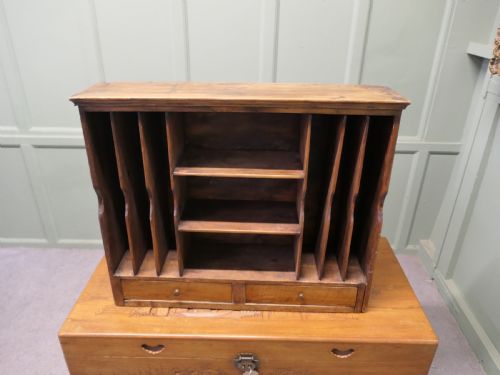
An antique letter sorter serves to organise correspondence upon a desk or writing table. When you search for an antique letter sorter, you encounter a variety of forms designed for sorting mail, including pigeon holes, filing shelves, stationary cabinets, and desk tidies.
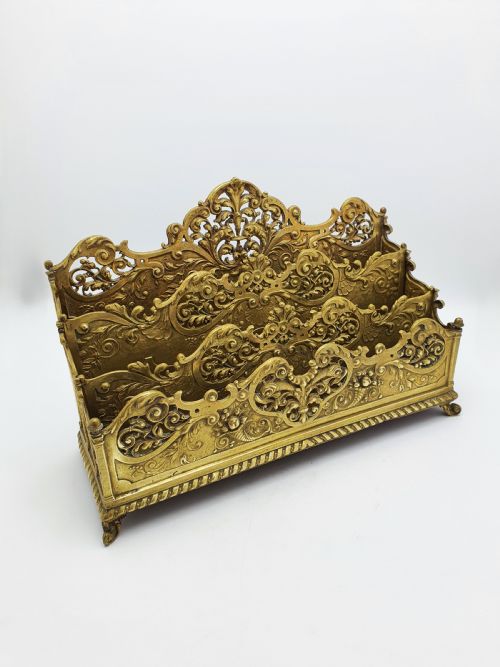
The pieces listed on this page span several eras, originating from the Georgian period through the 19th Century, Victorian era, Edwardian period, and up to the 1930s. Forms range from simple wooden desktop shelves to novelty cricket pieces and elaborate brass rococo revival racks.
You are most likely to meet wooden varieties fashioned from oak and mahogany, alongside brass letter racks and occasional novelty items. These accessories reflect the administrative needs of past offices and country houses.
Materials and construction
Makers utilised timber such as oak, mahogany, and pine to build the structural bodies of stationary cabinets and pigeon holes. Joinery techniques suited to each period ensured durable desktop organisers for daily clerical use.
Metalwork plays a prominent role, with brass utilised for cast rococo revival letter racks and novelty cricket designs. Gilding, glass, and pink guilloche enamel appear on finer examples to add decorative surface detail.
Listings feature pieces spanning the Georgian period, 19th Century, Victorian era, Edwardian period, and 1930s.
Assessing quality
Quality rests upon the selection of materials and the refinement of decorative embellishments. Solid hardwoods like mahogany and oak demonstrate superior construction compared to simpler pine alternatives.
The presence of specialised decorative work, such as intricate brass casting, silver components, or enamel finish, elevates a piece above standard utilitarian office accessories.
The Antique Letter Sorter Glossary
- Pigeon holes
- Compartments arranged in rows for sorting incoming and outgoing letters. They form a central feature of desktop organisers.
- Stationary cabinet
- An enclosed wooden box with internal shelving designed to hold writing paper and envelopes. These cabinets often feature panelled doors.
- Guilloche enamel
- A decorative technique involving precise mechanical engraving beneath a translucent enamel layer. It appears on luxury accessories from the Art Deco era.
- Rococo revival
- A 19th-century stylistic movement reviving asymmetrical scrolls, foliage, and shell motifs. This style frequently manifests in cast brass letter racks.
Antique Letter Sorter: Frequently Asked Questions
What is an antique letter sorter?
An antique letter sorter is a desk accessory designed to hold and organise mail, papers, and envelopes. These pieces include pigeon holes, filing shelves, and letter boxes.
They were essential desk equipment in offices, studies, and country houses during the 19th and early 20th centuries.
How were letter sorters used?
Users placed incoming correspondence into vertical slots or compartments to keep desks tidy and manageable. Different sections allowed individuals to sort mail by priority or recipient.
Stationary cabinets provided enclosed storage for blank paper, nibs, and envelopes away from dust and ink.
How do I date a letter sorter?
Dating relies on identifying period styles, such as Arts and Crafts simplicity, Art Deco enamel work, or Rococo Revival brass casting. Materials like mahogany, oak, and sterling silver also offer clues to the era of manufacture.
Construction methods and hardware assist in distinguishing Georgian and Victorian items from later Edwardian and 1930s pieces.
How do I live with a letter sorter?
You can place a letter sorter on a modern desk, mantelpiece, or console table to hold daily post, cards, or notebooks. They function effectively as desktop storage while adding historic character to a room.
Maintenance involves dusting wooden surfaces and handling brass or silver components with care to preserve the finish.