
Antique Kingwood Commode
When you want an antique kingwood commode, you are looking at substantial French and continental drawer chests built for display and storage.
Antique Kingwood Commode
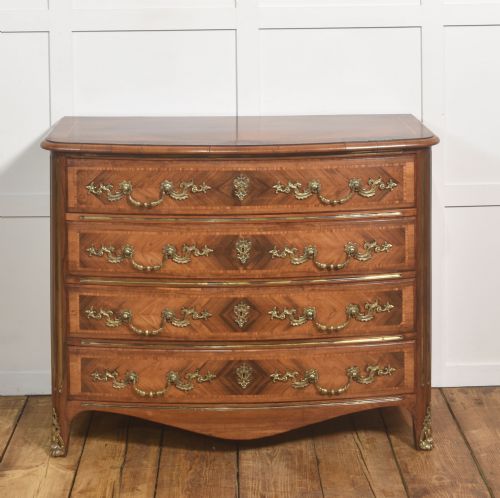
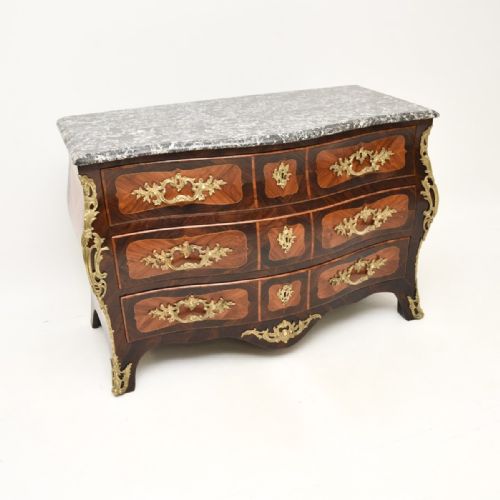
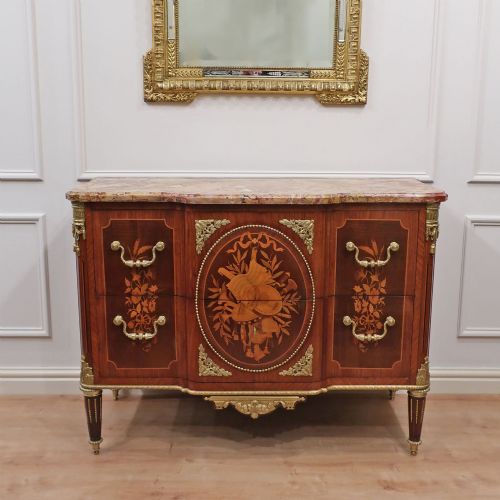
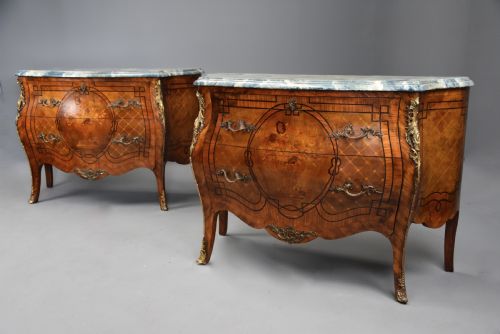
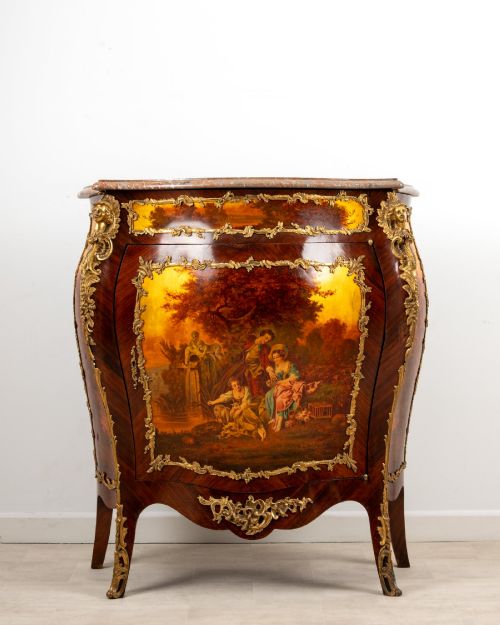
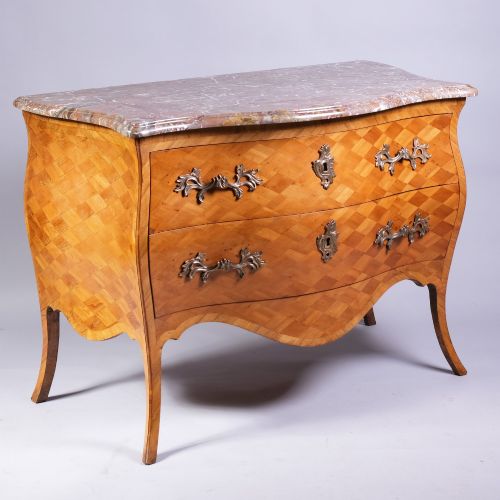
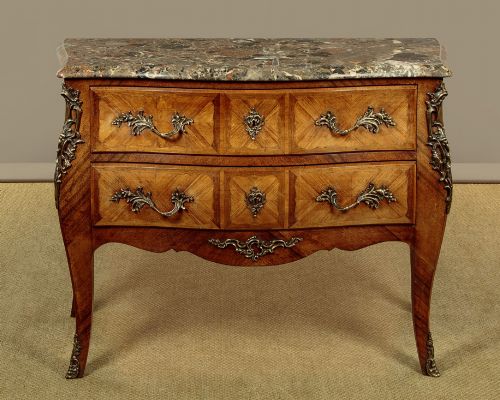
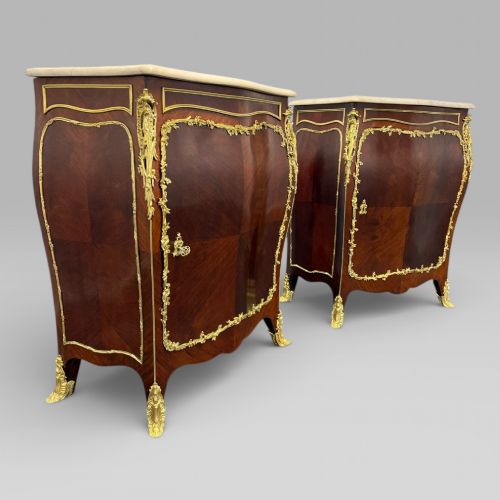
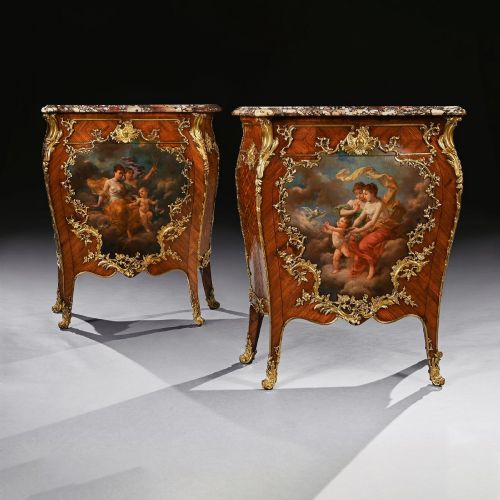
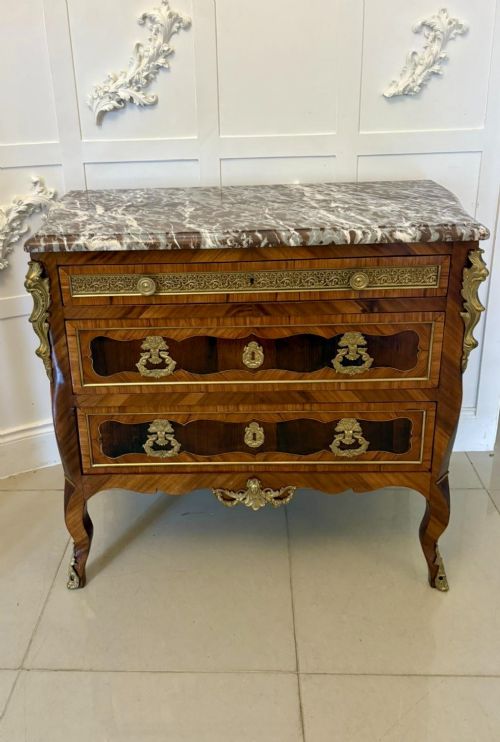
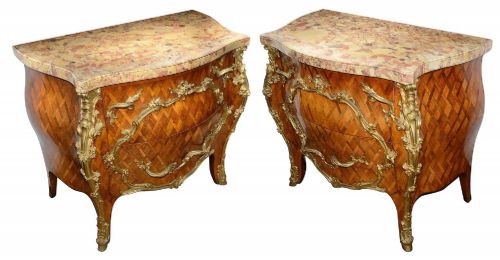
An antique kingwood commode is a low chest of drawers or cabinet designed primarily for the formal principal rooms of a grand interior. These pieces frequently feature serpentine or bombe profiles, displaying curved fronts and swelling sides that demand considerable cabinet-making skill.
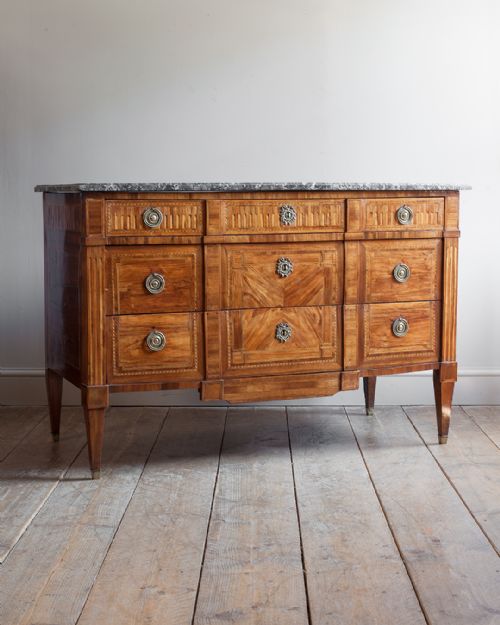
The selections on this page span from eighteenth-century originals to nineteenth-century revivals and twentieth-century interpretations. French Louis XV and Louis XVI styles predominate, alongside occasional Italian and Swedish examples.
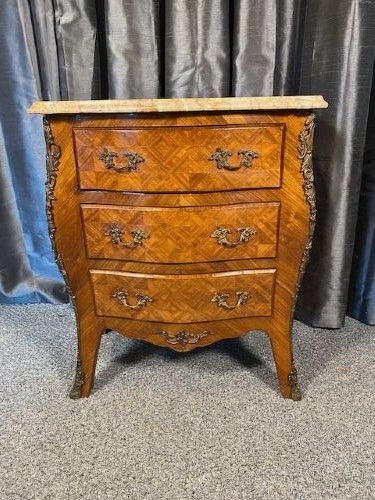
Forms range from full-sized commodes and side cabinets down to petite bedside tables and chests. Marble tops, often shaped to follow the contours of the timber carcase below, appear frequently across the periods.
What varies in quality
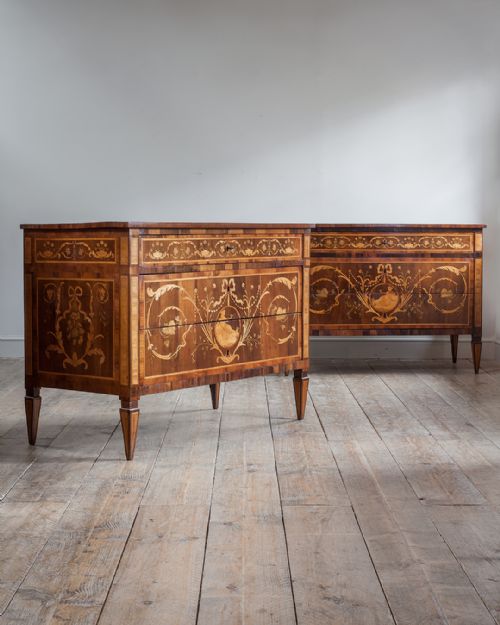
The precision of the parquetry layout and the crispness of the floral marquetry determine the initial visual success of the surface. Finer examples maintain exact grain alignment across moving drawers and curved surfaces without lifting.
The weight, depth of chasing, and gilding quality of the ormolu mounts separate standard production from exceptional cabinet-making. Substantial marble tops with complex moulded edges also indicate a higher tier of commission.
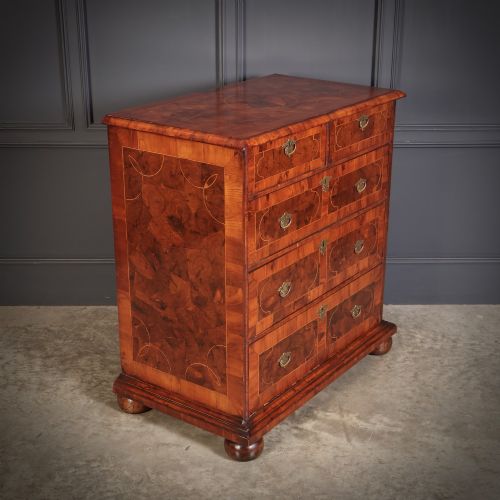
The inventory spans the seventeenth century through to the 1930s, highlighting Louis XV and Louis XVI revival styles.
Jacques Bircklé·E. Kahn·Sormani·Maison Millet·Bruneau
The Antique Kingwood Commode Glossary
- Kingwood
- A dense Brazilian timber featuring rich dark violet-brown tones with lighter golden streaks. It was widely used for fine veneering in eighteenth- and nineteenth-century cabinet-making.
- Ormolu
- Gilded bronze applied as decorative mounts to furniture edges and feet. The technique involves coating cast bronze with a mercury-gold amalgam and firing it.
- Bombe
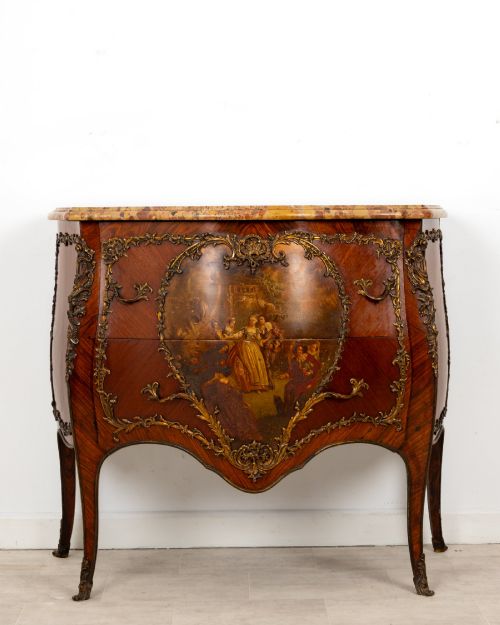
- A swelling, outward-curving furniture shape associated with continental rococo design. This profile requires specialised shaping of both the wooden carcase and its matching marble top.
- Marquetry
- Inlaid wood veneers assembled to create pictorial or decorative patterns. Artisans cut various tinted woods and fit them together before gluing the sheet to the furniture structure.
- Vernis Martin
- A European lacquer technique developed in the eighteenth century to imitate Asian lacquer finishes. It utilises multiple layers of polished varnish, sometimes over painted scenes.
Antique Kingwood Commode: Frequently Asked Questions
What is an antique kingwood commode?
An antique kingwood commode is a decorative chest of drawers or low cabinet veneered in distinctive Brazilian timber. These pieces originated primarily in France and continental Europe as fashionable storage furniture.
They are characterised by curved serpentine or bombe silhouettes, polished marble tops, and cast ormolu mounts. Makers utilised intricate parquetry and marquetry to enhance the visual depth of the wood.
Where were these commodes placed?
Historically, these commodes stood in principal reception rooms, salons, and formal bedchambers of grand residences. Their finished backs and sides often allowed them to sit freestanding against walls or between windows.
Smaller bedside versions served private quarters, holding personal items while matching the aesthetic of the main case furniture.
How do I care for kingwood furniture?
Kingwood requires a stable environment away from direct sunlight and excessive heat sources to prevent veneer cracking or fading. Gentle dusting with a dry, soft cloth maintains the polished surface without stripping historic finishes.
Liquid polishes and harsh modern cleaning agents should be avoided entirely in favour of traditional microcrystalline waxes when feeding the timber.
How do I distinguish revival periods from original pieces?
Distinguishing eighteenth-century originals from nineteenth-century revival pieces involves examining construction methods, secondary woods, and tool marks inside the carcase and drawer linings. Revival pieces often display nineteenth- or twentieth-century mechanical fastening systems and standardised timber preparation.
Stylistic cues also help, as nineteenth-century interpretations frequently exaggerate the ormolu mounts and incorporate heavier proportions than their eighteenth-century predecessors.