


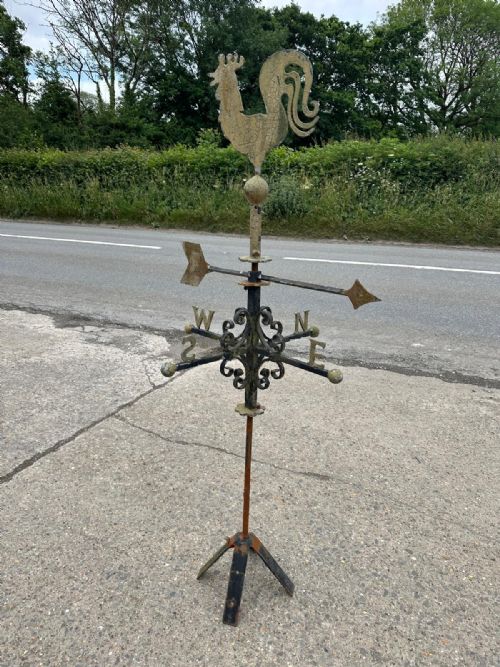
Antique Iron Weather Vane
These antique iron weather vane pieces bring historic folk art character to a garden or roof, built from durable metal to catch the prevailing wind.
Antique Iron Weather Vane
When searching for an antique iron weather vane, a buyer is looking at directional wind indicators and sculptural silhouettes shaped by hand. These objects translate animal forms and rural figures into striking architectural silhouettes.
The versions most likely to be met on this page span the Georgian period, the nineteenth century, and the early twentieth century. Common forms include cockerels, horses, and foxes created within English folk art and American folk art traditions.
Alongside standard directional arrows and vanes, the selection occasionally incorporates related vernacular items such as whirligigs and folk art sculptures. These rural works serve primarily as decorative focal points rather than precise meteorological instruments.
Materials and construction methods
Makers shaped these pieces predominantly from wrought iron and sheet iron, hammering and cutting the metal to form distinct animal silhouettes. Sheet metal also appears in the construction of twentieth century examples.
Many surviving surfaces retain traces of old paint applied to protect the metal from the elements and enhance the visual impact of the silhouette. Supporting elements occasionally integrate wood or stone mounts to anchor the ironwork.
Antique Iron Weather Vane Retail Price Guide 2026
Typical asking prices for iron weather vane among the pieces listed under this phrase on Sellingantiques today, from the lower quarter to the upper quarter. They describe what is for sale here now, not the wider market.
One cheerful piece in the archive captures a teeter totter frozen mid-play in nineteenth-century ironwork.
Judging quality and character
Quality in an antique iron weather vane rests on the crispness of the silhouette and the expressive strength of the folk art carving or cutting. Stronger examples display confident proportions and dynamic movement in figures like galloping horses or strutting cockerels.
The condition of any remaining historic paint layers significantly influences the visual appeal of a piece. Retaining honest, weathered surfaces with layers of old paint elevates a work above plain rusted metal stripped of its history.
The Antique Iron Weather Vane Glossary
- Weather Vane
- A movable device attached to an elevated structure to indicate the direction of the wind. Most feature a directional arrow paired with a decorative silhouette.
- Folk Art
- Artistic work created within a traditional culture by self-taught makers. These objects prioritize utilitarian function and expressive regional style over academic academic rules.
- Wrought Iron
- Tough, malleable iron produced by hammering heated metal. This material resists rust better than cast iron and allows for detailed hand cutting.
- Whirligig
- A wooden or metal toy or garden ornament featuring rotating parts driven by the wind. These kinetic pieces share construction methods with traditional weathervanes.
- Silhouette
- A two-dimensional representation of the outline of an object, filled in with a solid colour. Iron weather vanes rely heavily on strong silhouettes to remain visible against the sky.
Antique Iron Weather Vane: Frequently Asked Questions
How were weather vanes originally mounted?
Makers designed these iron pieces to sit on the highest points of buildings, such as church steeples, barns, and estate roofs. A vertical spindle allowed the entire sculpture to pivot freely with the shifting wind.
Modern collectors often mount them indoors on custom stands or display them as wall art to protect delicate historic metalwork from harsh outdoor weather.
Can I still install these outdoors?
While these pieces originally served outdoors for decades, historic iron and old paint are vulnerable to modern pollution and continuous moisture. Placing an antique vane outside accelerates surface degradation and paint loss.
Most buyers choose to display fragile nineteenth and early twentieth century examples inside homes or sheltered garden rooms to preserve their remaining character.
What do different animal shapes mean?
Animals chosen for weather vanes often held symbolic meaning or reflected the rural surroundings of the maker. Cockerels represented vigilance and protection, while foxes and horses nodded to local hunting traditions.
These subjects also provided familiar, dynamic shapes that remained easily recognizable from the ground when mounted high against the sky.
How do I date an iron weather vane?
Dating relies on examining the fabrication techniques, material thickness, and style of the metalwork. Hand-wrought iron and early sheet iron cutting techniques generally point toward Georgian or nineteenth-century origins.
Paint analysis and stylistic comparisons with dated folk art sculptures further help narrow down whether a piece originates from the nineteenth or early twentieth century.