
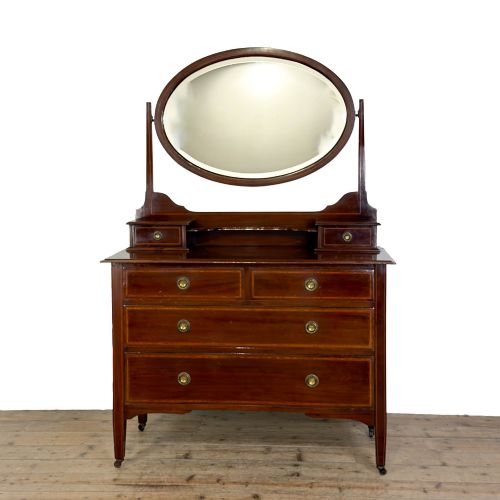


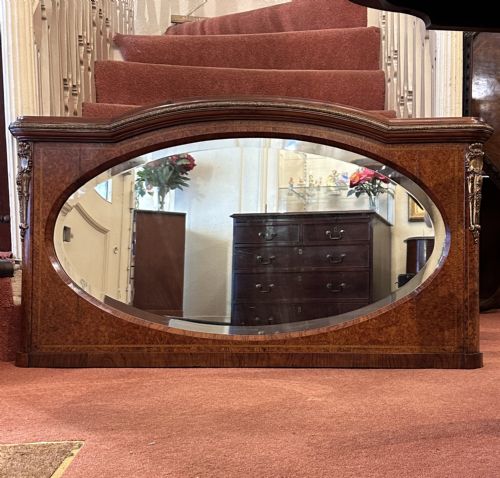


Antique Inlaid Oval Mirror
An antique inlaid oval mirror brings warmth and reflective light to a room through balanced proportions and delicate woodwork.
Antique Inlaid Oval Mirror
The antique inlaid oval mirror is a domestic glass form typically designed for hanging on a wall or resting upon a dressing table. These pieces bridge decorative arts and everyday utility, originating across the Georgian, Victorian, and Edwardian eras.
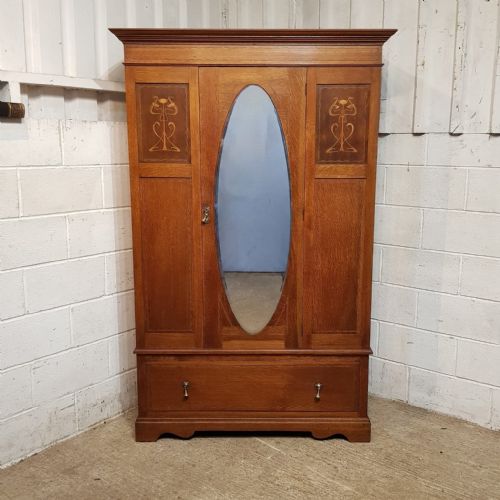
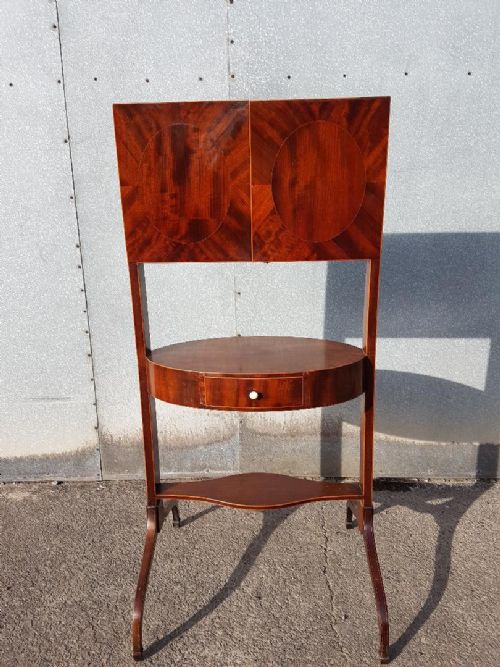
Most examples encountered here date from the Edwardian period or the late nineteenth century, frequently constructed with mahogany or satinwood frames. They range from simple wall-hung ovals to adjustable toilet mirrors meant for a dressing chest.
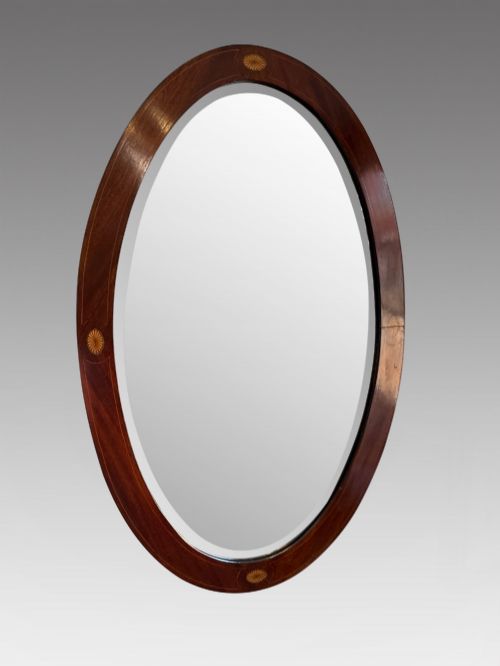
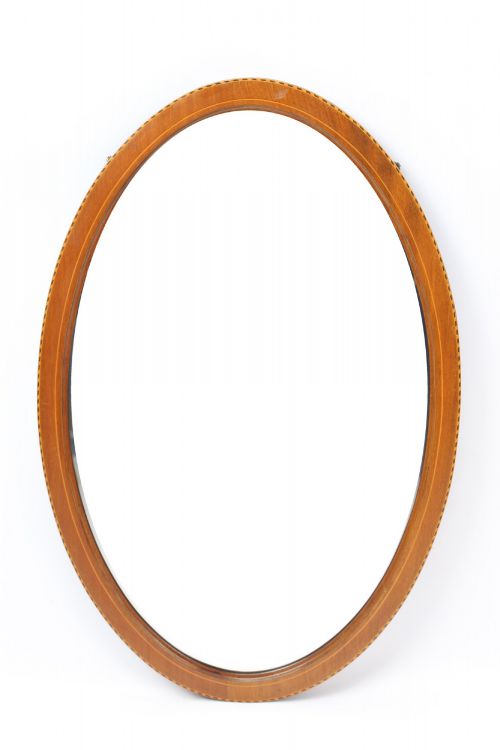
Makers often drew upon eighteenth-century Sheraton and George III traditions, incorporating contrasting wood veneers and delicate stringing around the curved perimeter. Such mirrors suit entrance halls, bedrooms, and drawing rooms where a softer vertical line is preferred over harsh rectangles.
Materials and construction
Frames are built primarily from cabinet timbers such as mahogany, satinwood, and occasionally oak or beech, shaped into continuous curves using steam bending or segmented joinery. Artisans applied contrasting veneers like boxwood inlay or marquetry details to create geometric borders and floral motifs.
Mirror glass is hand-bevelled or flat-set into a rebated back frame, held securely with wooden slips or traditional glaziers' points. Brass pivots, hanging rings, and small support brackets provide the mechanical hardware necessary for table-top and wall-mounted versions.
Current listings demonstrate a strong presence of Edwardian mahogany and satinwood frames alongside eighteenth-century Georgian influences.
Markers of quality
Quality rests upon the crispness of the inlay work and the harmonious grain of the primary timber, whether ribbon mahogany or figured satinwood. Superior examples display neat, tight mitres around the curved frame and hand-cut marquetry rather than stamped decoration.
The clarity and depth of the mirror glass contribute significantly to the piece, alongside original brass fittings that show appropriate age and weight. Lesser pieces rely on heavier, clumsy frames that obscure the elegant oval silhouette.
The Antique Inlaid Oval Mirror Glossary
- Inlay
- A decorative technique where pieces of contrasting wood or other materials are inserted into recessed portions of a base timber to form a pattern.
- Satinwood
- A durable, yellow-toned timber prized for its lustrous grain, frequently utilised in fine cabinet-making and decorative stringing during the Georgian and Edwardian periods.
- Cheval mirror
- A full-length dressing mirror suspended on a vertical frame with side pivots, allowing the glass to tilt freely.
- Bevel
- An angled edge cut along the perimeter of the mirror glass to catch the light and add depth to the reflection.
- Serpentine
- A gently undulating line or curve shaping the front or base of a piece, characteristic of refined eighteenth-century cabinet design.
Antique Inlaid Oval Mirror: Frequently Asked Questions
How do I hang a wall oval mirror?
Wall-hung oval mirrors generally utilise sturdy brass loops or cords attached to the rear wooden frame. Ensure the fixing matches the weight of the timber and glass.
Position the mirror at eye level to reflect natural light and create a sense of depth in smaller spaces like hallways or bedrooms.
Are dressing table mirrors adjustable?
Many table mirrors feature brass thumbscrews or pivot pins set into upright arms. These allow the oval glass to tilt forward or backward.
Original hardware should move smoothly while holding the desired angle firmly without slipping during daily use.
How do I distinguish Edwardian from Georgian mirrors?
Georgian pieces often display heavier mahogany construction with hand-carved details and specific eighteenth-century proportions. Edwardian revivals tend to use lighter satinwood inlay and machine-assisted precision.
Examining the backboards, screws, and secondary timbers helps clarify the actual period of manufacture.
Can I clean the original mirror glass?
Original mirror glass often exhibits light foxing or grey spots from age, which collectors value as a sign of authenticity. Clean the surface gently with a soft cloth and mild glass cleaner.
Avoid spraying liquid directly onto the edges where moisture might seep beneath the silvering behind the glass.