


Antique Indian Chair
An antique indian chair brings dense tropical hardwoods and intricate regional carving directly into a room, offering both history and deep seating comfort.
Antique Indian Chair
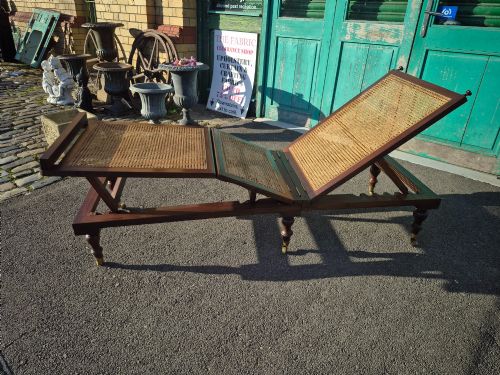
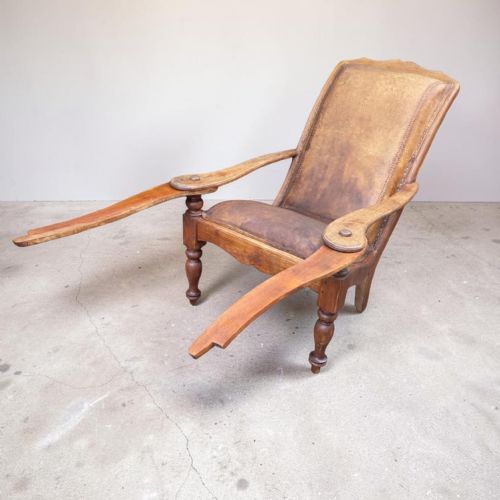
When searching for an antique indian chair, a buyer encounters forms ranging from library side chairs to massive reclining planter's chairs with extending arms. The selections span the seventeenth century through to the early decades of the twentieth, encompassing styles formed through British colonial influence and traditional regional craft.
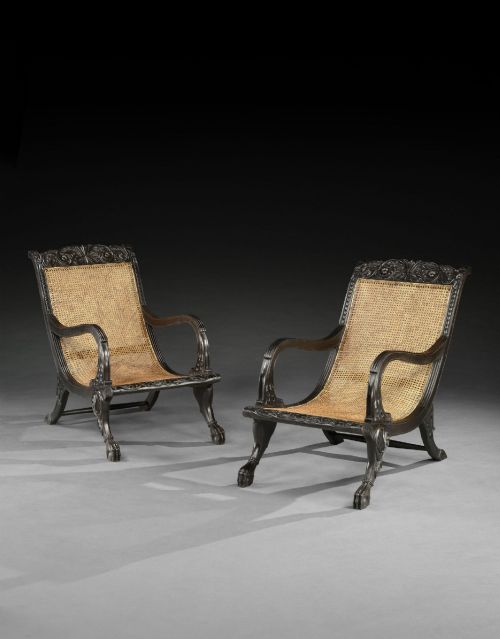
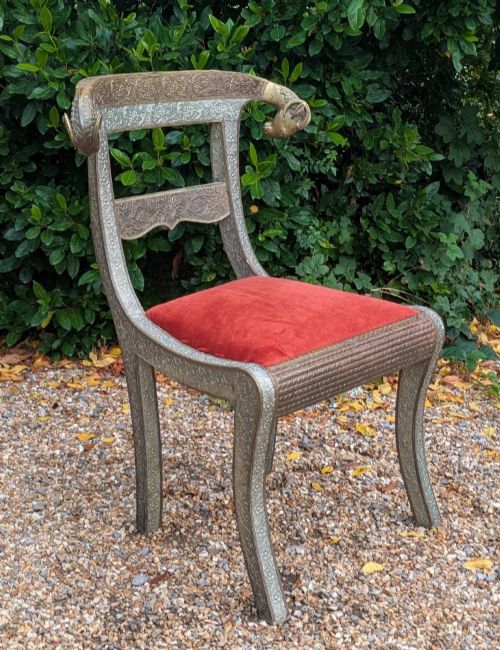
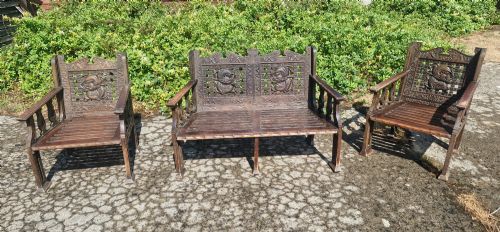
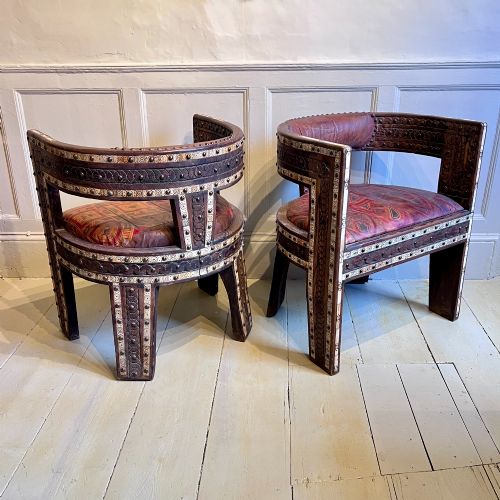
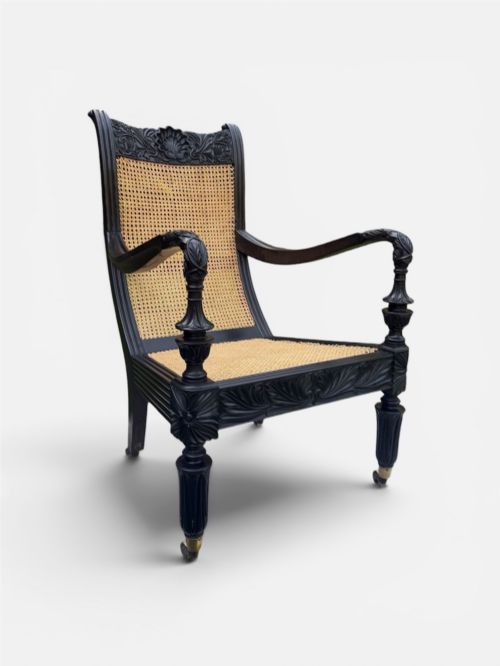
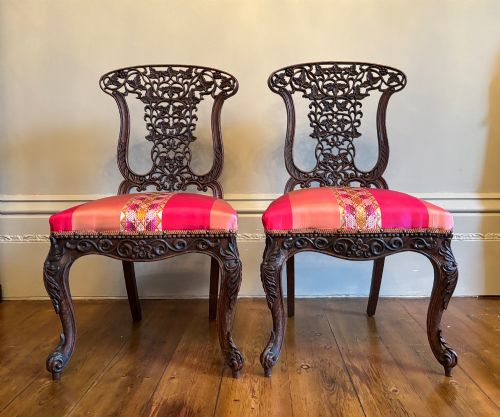
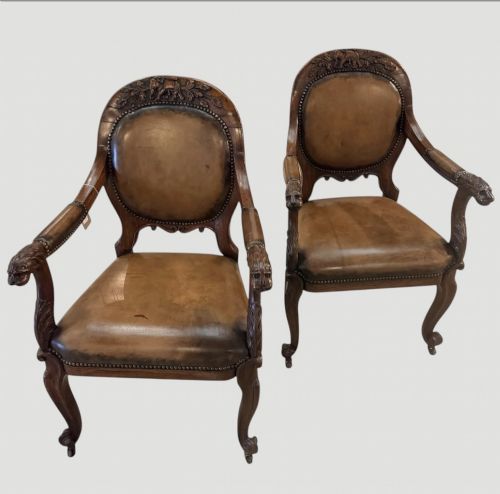
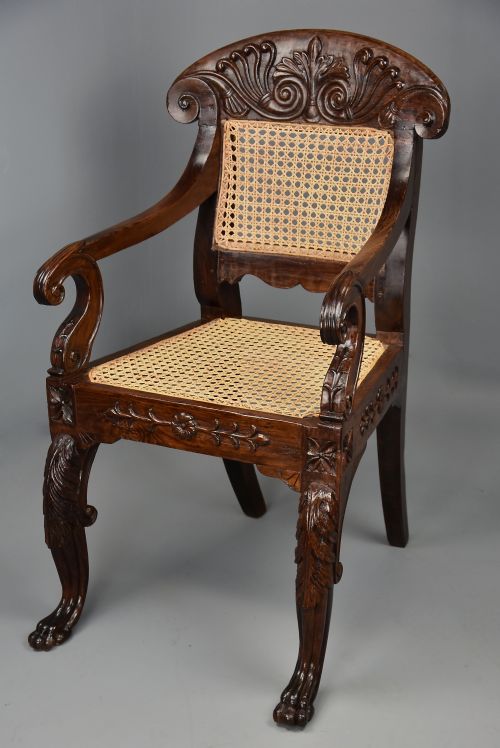
The most common examples on this page are nineteenth-century armchairs and side chairs, often grouped in pairs or larger dining sets. These pieces frequently integrate British Regency or Victorian structural lines with deeply carved local motifs.
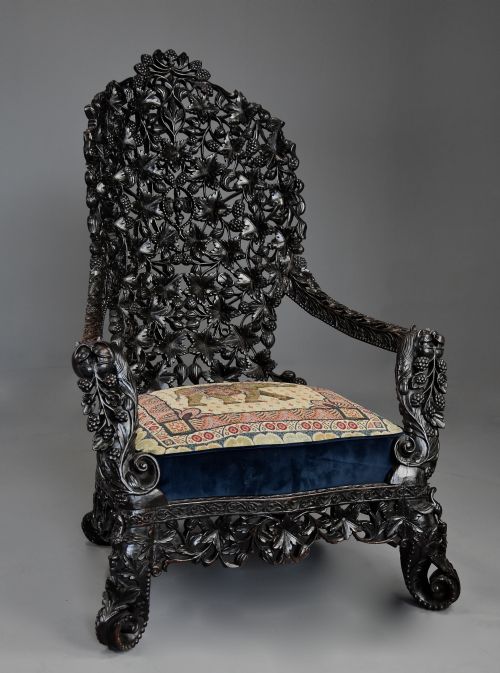
Origin points vary across the Indian subcontinent and neighbouring regions, including Ceylon and Burma, producing distinct regional variations in wood choice and ornamental carving.
Materials and construction methods
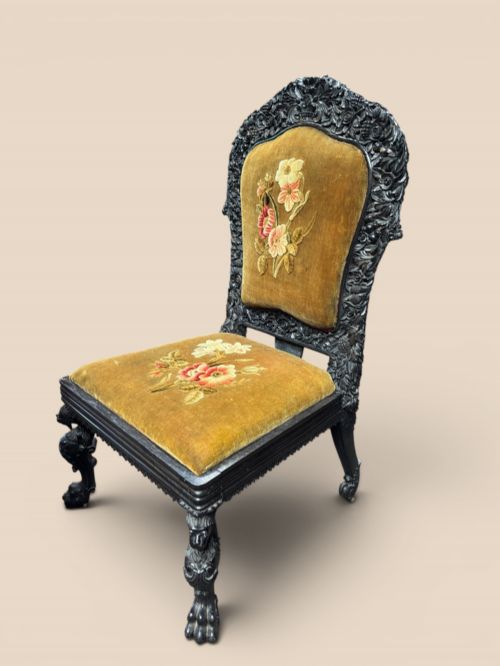
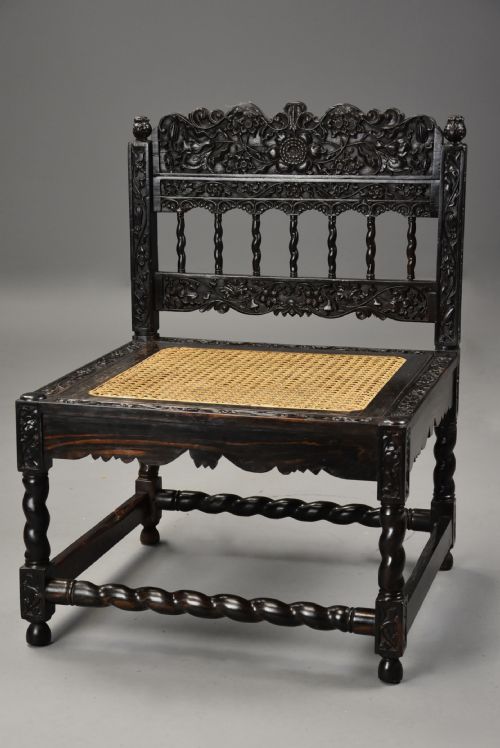
The construction relies heavily on dense exotic timbers such as solid ebony, padauk, teak, rosewood, and satinwood, chosen for their ability to hold minute, sharp detail under the chisel. Artisans carved these heavy tropical hardwoods by hand, producing elaborate floral, animal, and geometric reliefs across the frames.
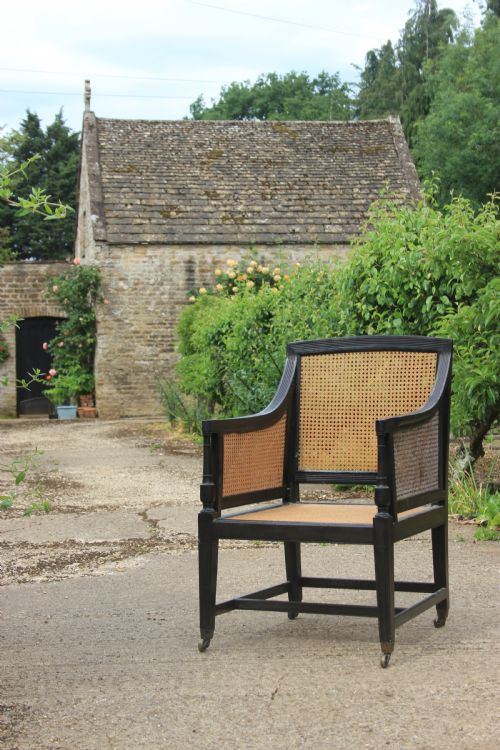
Many seating forms incorporate woven cane panels or rush for seat bases, paired alongside upholstered elements in leather, velvet, or brass detailing. Structural joinery combines traditional framing techniques with the specific physical demands of dense imported and native timbers.
Factors determining quality
The distinction between standard examples and the finest work lies in the depth, crispness, and complexity of the hand carving across the hardwood frame. Superior pieces display sculptural fluidity in motifs such as animal heads or foliage, whereas lesser examples show shallow or mechanical incision.
Material selection also dictates overall merit, with solid ebony or finely figured padauk and rosewood commanding greater visual weight than secondary mixed hardwoods. The integrity of original cane work, leather upholstery, and extending mechanical parts on reclining chairs further separates ordinary seating from exceptional survival specimens.
The Antique Indian Chair Glossary
- Padauk
- A heavy, dense tropical hardwood with a reddish-brown tone that darkens with age. It was frequently utilised for carved colonial seating due to its stability and fine grain.
- Planter's chair
- A specialised colonial armchair featuring extended, flat arms designed for resting legs. These chairs were built for climate adaptation in British India and Burma.
- Bergere
- An upholstered armchair with an enclosed cane back and sides. The style appears frequently within nineteenth-century colonial furniture production.
- Cane
- Woven rattan peel used to form breathable seat and back panels. It requires skilled manual labour to thread through drilled frame perimeters.
- Anglo-Indian
- A descriptive term for furniture made in India during the British period, combining local cabinet-making traditions with European furniture forms.
Antique Indian Chair: Frequently Asked Questions
What is a planter's chair?
A planter's chair is a large seating form created for British colonial residences in hot climates, featuring wide, extending arms that double as footrests.
These pieces allowed occupants to recline comfortably on verandas, utilising woven cane or open wooden slats for ventilation.
How do I care for tropical hardwood?
Maintain stable indoor humidity levels to prevent the dense timbers, such as ebony and padauk, from splitting or cracking.
Apply a microcrystalline wax sparingly to nourish the wood surface without clogging deep hand-carved recesses.
Are these chairs comfortable for daily use?
Many models offer generous proportions and deep seats, though their suitability depends on the specific form.
Library chairs and upholstered armchairs provide supportive seating, whereas ceremonial or rigid hall chairs serve primarily as decorative or occasional accents.
How do I identify the wood type?
Examine the weight, colour, and grain pattern beneath any polish or wax finish, noting the distinct darkness of ebony or the reddish hue of padauk.
Consulting the listed material descriptions helps confirm whether a piece is constructed from teak, rosewood, satinwood, or standard hardwood.