





Antique Horse Plaque
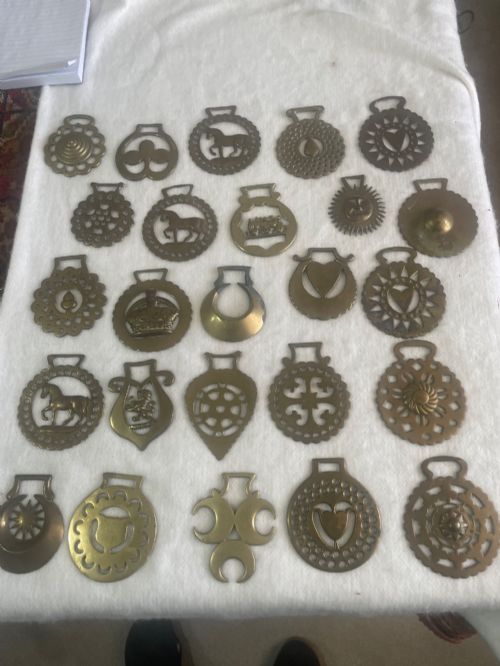
These antique horse plaque pieces bring sculptural equestrian art straight to your walls, crafted in wood, metal and porcelain from the nineteenth and early twentieth centuries.
Antique Horse Plaque
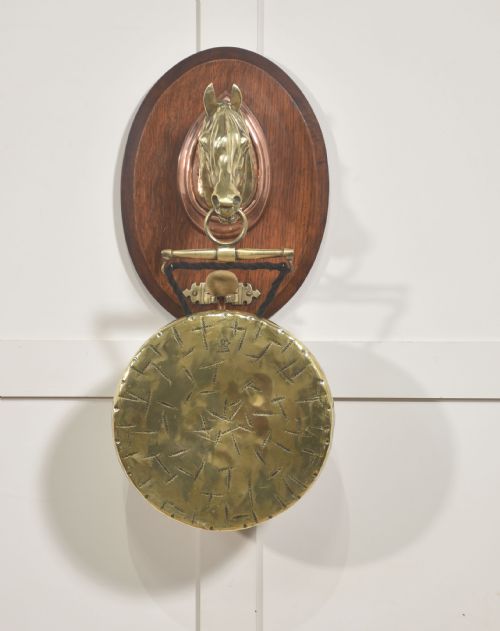
An antique horse plaque spans diverse forms from the nineteenth century onward, including wall-hanging oak dinner gongs, coat hooks, and carved relief panels. You are most likely to encounter Edwardian and Victorian equestrian pieces that combine functional utility with animalier sculpture.
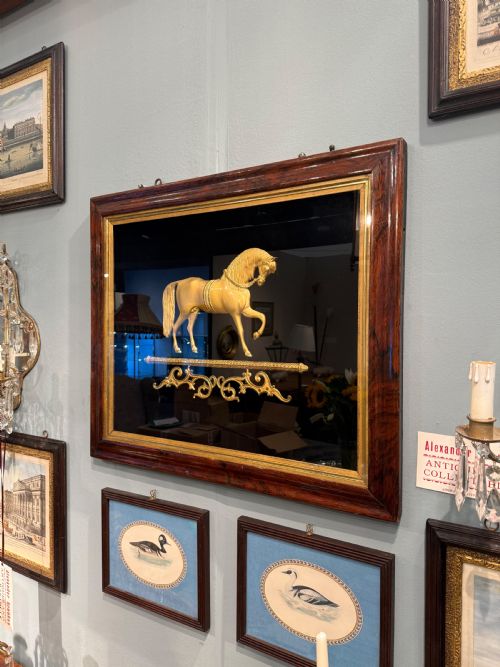
Makers utilised various surfaces for these displays, ranging from rosewood frames enclosing gilt bronze to sheet metal silhouettes. German Black Forest carvers and English metalworkers both contributed distinct regional traditions to this category.
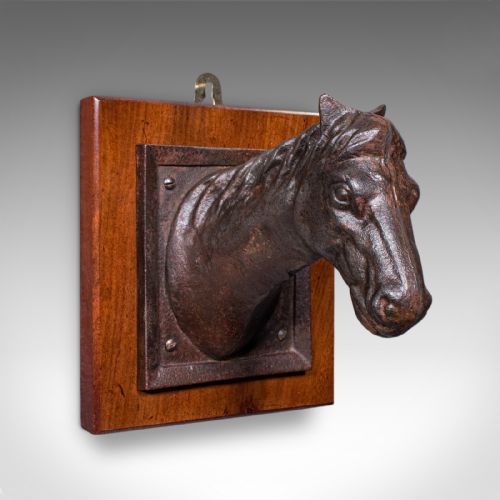
Domestic settings during the late Victorian and Edwardian periods accommodated these wall reliefs in hallways and antechambers. The selection on this page demonstrates how practical items like crop hooks integrated horseshoes and equine heads into everyday ironmongery.
Materials and construction methods
Makers shaped these pieces using traditional casting and carving techniques, evident in the gilt bronze, cast iron, and solid oak panels seen across the listings. Woodcarvers worked in deep relief to create realistic muscle definition on animal subjects.
Metal components involved both heavy cast brass and lighter sheet metal work, often mounted onto wooden backings such as rosewood or polished oak. Marble dust compositions also appear, cast to capture classical Hellenistic details with precision.
Antique Horse Plaque Retail Price Guide 2026
Typical asking prices for horse plaque among the pieces listed under this phrase on Sellingantiques today, from the lower quarter to the upper quarter. They describe what is for sale here now, not the wider market.
Some horses on these walls gallop entirely in sheet metal while others strike heavy brass dinner gongs for supper.
Markers of quality
Quality rests on the depth of the carving and the fidelity of the metal casting, where sharper anatomical lines distinguish finer artisan work from simpler production. Pieces featuring integrated functional elements, such as dinner gongs or harness hooks, rely heavily on the robustness of their foundational mountings.
Material pairing influences the overall standard, with dense hardwoods like rosewood and oak providing a more substantial backdrop than lesser modern substitutes. Signed works and distinct regional schools, such as Black Forest carving, carry greater artistic cohesion.
The Antique Horse Plaque Glossary
- Black Forest carving
- Wooden sculpture originating from central Europe, typically featuring naturalistic animal and foliage motifs rendered in deep relief.
- Gilt bronze
- Metalwork finished with a thin layer of gold applied to a bronze base, creating a durable metallic sheen.
- Equestrian tack
- Equipment used in horse riding, which frequently inspired the decorative metal mounts and hooks found on wall plaques.
- Relief plaque
- A wall-mounted artwork where the sculpted figures project from a flat background rather than standing in the round.
- Dinner gong
- A hanging metal disc struck with a mallet, often suspended from a decorative wooden bracket featuring animal carvings.
Antique Horse Plaque: Frequently Asked Questions
How were these plaques originally displayed?
These items hung predominantly in hallways, hunting lodges, and stable entrances to serve both decorative and practical purposes.
Many incorporated hooks for riding crops or acted as dinner gongs for household summons.
What materials are most common?
Wood and metal dominate the category, utilising oak, rosewood, cast iron, brass, and gilt bronze.
Porcelain and marble dust compositions also appear occasionally in more classical wall reliefs.
How do I date an antique horse plaque?
Dating relies on examining the mounting hardware, wood species, and stylistic markers associated with Victorian, Edwardian, or early twentieth-century manufacture.
Signatures, framing styles, and manufacturing techniques like sheet metal cutting offer further chronological clues.
Are these pieces purely decorative?
While many function strictly as wall art or relief carvings, several examples combine decoration with utility.
Coat hooks and dinner gongs integrate equestrian imagery into functional household items.