
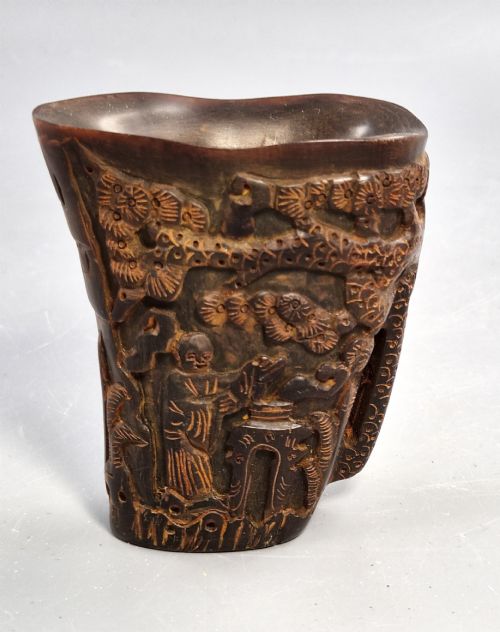


Antique Horn Vessel
These antique horn vessel examples bring tactile warmth to a room, formed from natural organic materials shaped across the nineteenth century.
Antique Horn Vessel
An antique horn vessel encompasses practical containers and decorative objects shaped from natural organic matter, predominantly water buffalo horn and bovine horn. When you search for an antique horn vessel, you meet nineteenth-century beakers, powder flasks, and scholarly brush washers shaped by diverse hands.
The evidence shows forms ranging from naive folk art beakers and nineteenth-century shaker cups to intricate Qing Dynasty carved libation cups. Victorian brass-mounted horn pairs and coconut bug bear flasks sit alongside these utilitarian drinking vessels.
Originating across Victorian, Georgian, and Qing Dynasty periods, these pieces bridge daily utility and decorative artistry. Most examples on this page date from the nineteenth century, reflecting robust trade and domestic utility.
How they were made
Makers utilised natural horn, bone, and coconut shell, frequently pairing organic substances with brass mountings and silver plate. The inherent fibrous structure of horn required careful boiling and pressing to reshape the material into stable vessels.
Carvers applied intricate relief work directly to the surface, depicting figures like immortals and pine trees on water buffalo horn. Folk art traditions relied on naive incision techniques, leaving direct marks of the craftsman's knife on beakers and flasks.
Some nineteenth-century makers turned humble cow horns into sophisticated shakers, proving that livestock could double as fine dining accessories.
What varies in quality
The refinement of the carving separates standard utilitarian containers from elevated scholar's objects. Deep relief work depicting complex scenes like immortals demonstrates superior artistic control compared to plain surfaces.
The integration of metal mounts, such as brass or silver plate, defines the structural ambition of the piece. Clean joins and balanced proportions between the organic horn and metal components indicate higher execution standards.
The Antique Horn Vessel Glossary
- Horn vessel
- A hollow container formed from animal keratin, utilised for drinking, holding powder, or scholarly pursuits. These objects survive from Georgian and Victorian periods.
- Libation cup
- A ceremonial cup traditionally carved from rhinoceros or water buffalo horn for ritual pouring. The examples here feature detailed depictions of immortals and pine.
- Bug bear flask
- A powder flask carved from coconut shell, often associated with maritime or folk art traditions. The texture of the coconut shell provides a distinct grip.
- Scholar's object
- An item created for the desk of a traditional East Asian literati, such as a brush washer carved from horn. These pieces display refined craftsmanship suited for contemplation.
Antique Horn Vessel: Frequently Asked Questions
What is an antique horn vessel used for?
These pieces served practical, military, and scholarly functions in past centuries, ranging from drinking beakers to powder flasks and brush washers. Their daily utility shaped their robust construction.
Today, collectors appreciate them as cabinet display items or sculptural accents that introduce organic texture and historical depth to interior spaces.
How do I date an antique horn vessel?
Dating relies on stylistic clues, mounting techniques, and the historical context of the carving, with many examples originating in the nineteenth century. Georgian and Victorian pieces often display distinct European folk art characteristics.
Asian pieces frequently align with Qing Dynasty aesthetics, utilising specific iconography like immortals and pine trees to help establish their period of origin.
What materials are used in these vessels?
Makers relied heavily on natural horn, water buffalo horn, and bone, occasionally incorporating coconut shell for specific flask forms. These organic materials were selected for their durability and natural lustre.
Metal components such as brass and silver plate frequently appear as mounts, rims, or decorative enhancements that stabilise and elevate the organic structure.
How do I care for antique horn?
Organic materials require stable environmental conditions away from direct sunlight and extreme humidity fluctuations to prevent drying and cracking. Gentle dusting with a dry cloth maintains the surface.
Avoid immersing horn in water or applying modern chemical cleaners, as these substances strip the natural oils and damage the historical patina.