

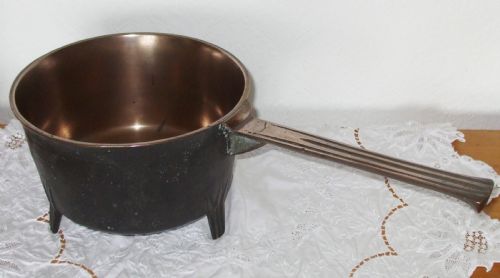


Antique Hearth Cookware
Antique hearth cookware brings heavy metal warmth to the kitchen, offering functional vessels shaped by centuries of open fire cooking.
Antique Hearth Cookware
The George III and Victorian eras provide the majority of these pieces, alongside select eighteenth-century examples. Buyers will frequently encounter copper kettles and heavy saucepans shaped for boiling, preserving, and cooking in rustic farmhouse settings.
How they were made
Smiths hammered and formed these pieces from copper, brass, bronze, and wrought iron, utilising durable metals that could withstand direct contact with flames. Heavy gauge sheets were beaten into shape for preserving pans and kettles, while skillets and posnets were cast from bronze or brass.
Handles and fittings often involved secondary materials like wood, riveted firmly to the metal bodies to allow safe lifting from the hearth. Construction relied on robust mechanical joints and hand finishing rather than modern industrial uniformity.
Antique Hearth Cookware Retail Price Guide 2026
Typical asking prices for hearth cookware among the pieces listed under this phrase on Sellingantiques today, from the lower quarter to the upper quarter. They describe what is for sale here now, not the wider market.
Current listings feature copper, brass, bronze, wrought iron, and wood across Georgian and Victorian periods.
What varies in quality
Thickness of the metal sets the better vessels apart from lighter counterparts, as heavier copper and brass retained heat more evenly and resisted warping under intense fire. Wall thickness and the heft of the base indicate the original utility and ambition of the maker.
Form and proportion dictate visual success, with well-balanced spouts, secure handle fixings, and smooth hammer marks marking out superior examples. Pieces intended for display alongside utility show careful finishing of the metal surface.
The Antique Hearth Cookware Glossary
- Posnet
- A small metal cooking pot or skillet equipped with feet and a single long handle, designed to stand directly in the embers of a hearth. These vessels date back centuries and served for simmering liquids.
- Skillet
- An open cooking pan with a handle and usually three short feet to raise it above the hearth ash. They were commonly cast in bronze or brass during the Georgian period.
- Preserving pan
- A wide, deep vessel used for boiling fruit and sugar, typically fashioned from heavy copper to ensure even heat distribution. Their open tops allowed rapid evaporation during jam making.
- Kitchenalia
- Utilitarian objects collected for their domestic history and material culture rather than strictly for modern culinary use. This category embraces old cookware, kettles, and hearth accessories.
- Wrought iron
- Iron that has been heated and hammered into shape by a smith, valued for its fibrous strength. It appears in handles and hearth fittings associated with heavy copper and brass vessels.
Antique Hearth Cookware: Frequently Asked Questions
What is antique hearth cookware?
Antique hearth cookware comprises the metal pots, kettles, and pans used for cooking over open fires before modern kitchen ranges took over. These pieces include heavy copper preserving pans, brass saucepans, and bronze posnets.
Most surviving examples date from the eighteenth and nineteenth centuries, spanning the Georgian and Victorian periods. They reflect a time when food preparation centred entirely on the hearth.
How were copper kettles used?
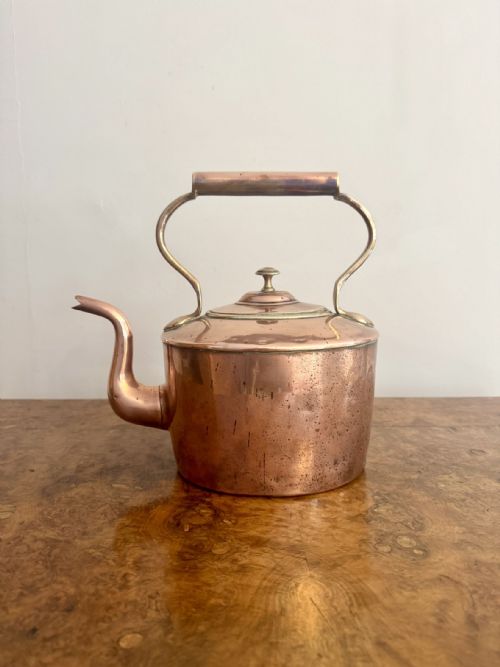
Copper kettles sat near or directly on the hearth fire to heat water for tea, washing, and general domestic chores. Their metal construction allowed the water to reach boiling point rapidly.
Because they were built for heavy daily labour, many retain thick walls and sturdy handles designed to endure intense heat and frequent lifting.
What is a bronze posnet?
A bronze posnet is a small-handled cooking pot supported by three short legs, allowing it to sit steadily amongst hot coals. It was utilised for simmering sauces, warming liquids, or cooking small portions.
These cast metal pieces belong to earlier domestic traditions, with many examples originating in the eighteenth century and earlier Georgian eras.
Can I use old copper pans for cooking?
While these vessels were originally made for food preparation, many antique copper pans require professional tinning on the interior before modern culinary use. Unlined copper can react unfavourably with certain foods.
Many collectors prefer to display them as kitchenalia or rustic farmhouse accessories rather than subjecting historical metal to daily stove use.
How do I date George III cookware?
Dating George III cookware involves looking at manufacturing techniques, handle attachment styles, and overall form typical of the period between seventeen-sixty and eighteen-twenty. Copper kettles and brass pans from this era often display distinct hand-hammered surfaces.
Makers working during the Georgian period focused on robust utility, employing heavy gauge metals and simple, functional lines that predate Victorian ornamentation.