
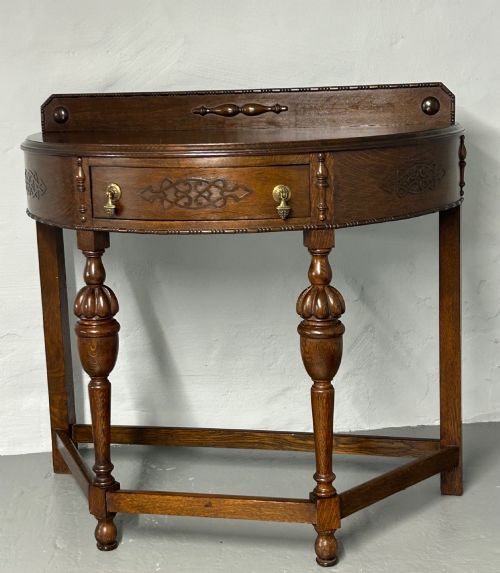


Antique Hallway Stool
These antique hallway stool examples bring practical seating and period presence to entrance spaces through varied woods and upholstered tops.
Antique Hallway Stool
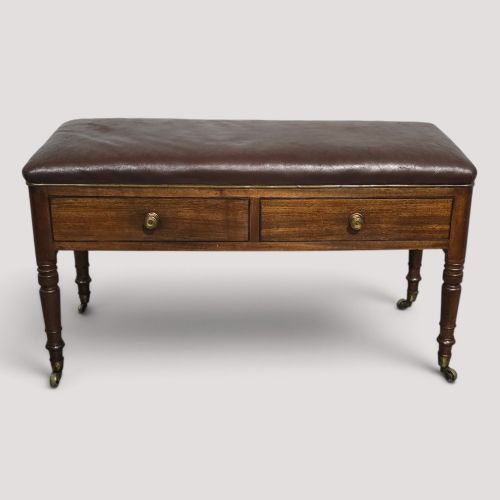
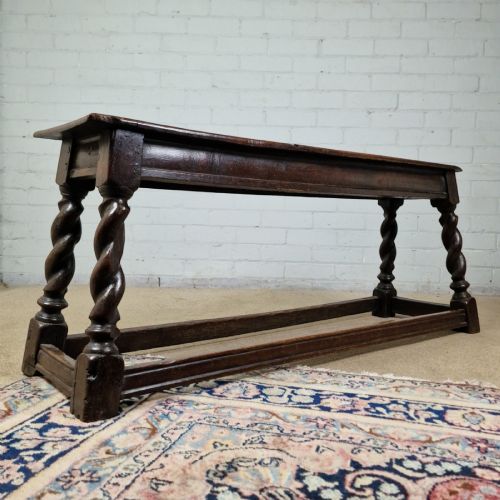
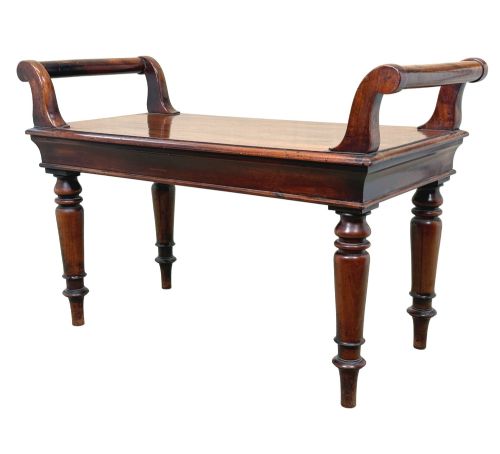
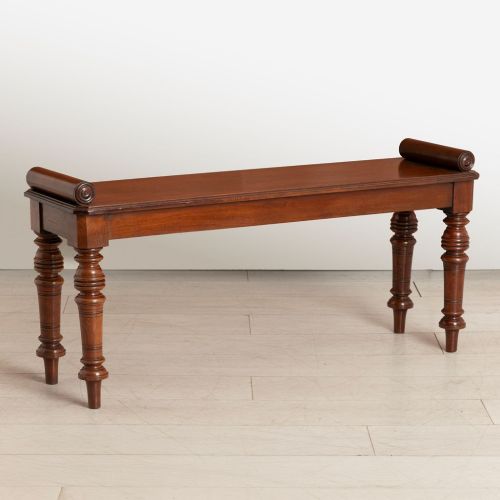
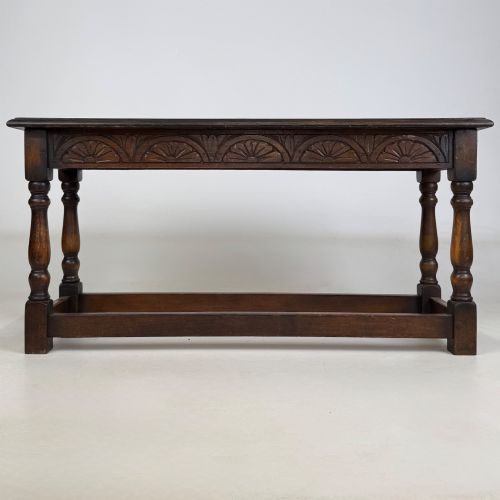
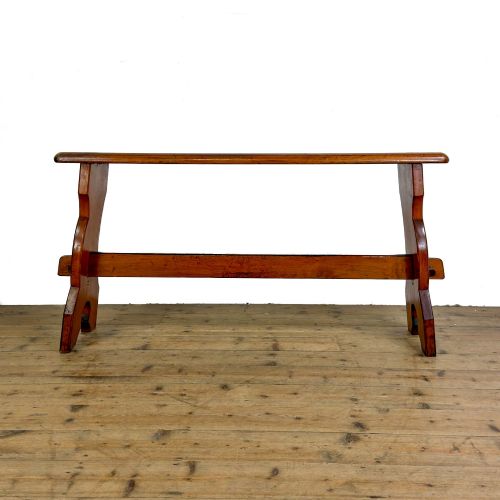
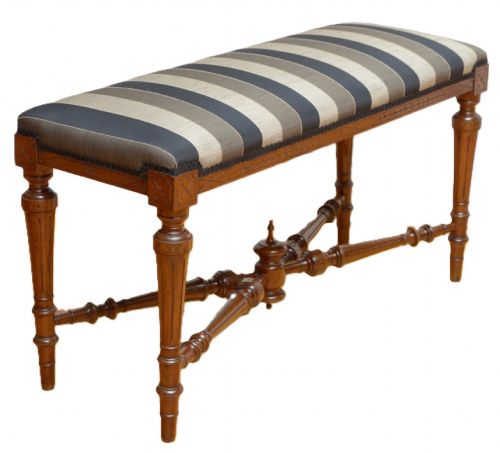
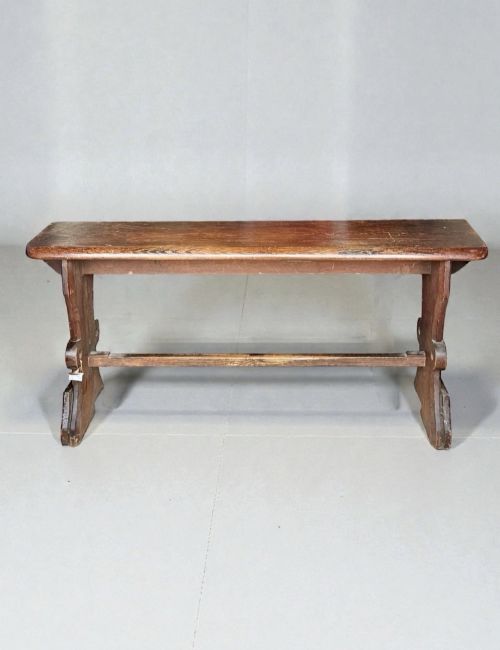
An antique hallway stool serves as a narrow bench or window seat positioned in entrance spaces and corridors for practical seating. These forms often appear as long oak benches, mahogany window seats, and walnut duet stools from the eighteenth, nineteenth, and early twentieth centuries.
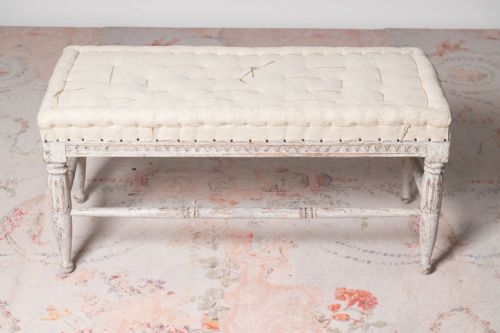
Buyers meet varied regional interpretations on this page, ranging from English oak and mahogany designs to French gilt frames and Swedish birch pieces. The selection spans straightforward organ benches and luggage racks alongside elaborately carved Victorian and Edwardian seating.
Makers and workshops of the past utilised durable hardwoods to construct sturdy frames intended for heavy use near household entrances. Surviving examples demonstrate how these items adapted from domestic window placements to functional hallway furniture over successive centuries.
How they were made
Cabinetmakers constructed the structural frames of an antique hallway stool using solid timbers such as mahogany, oak, walnut, and cherry wood. Joinery techniques relied on mortise and tenon joints to ensure stability across long spans and heavy daily use.
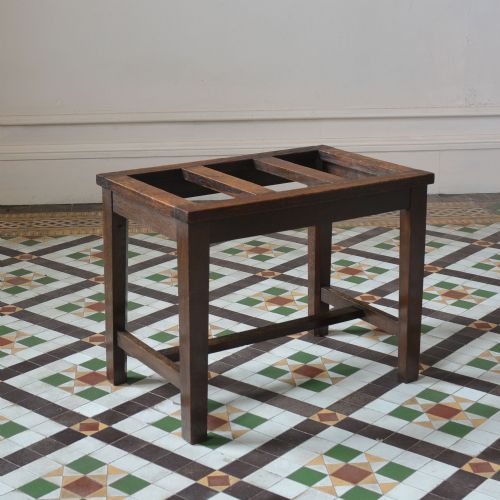
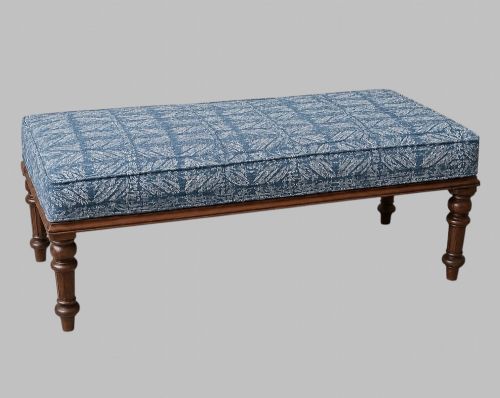
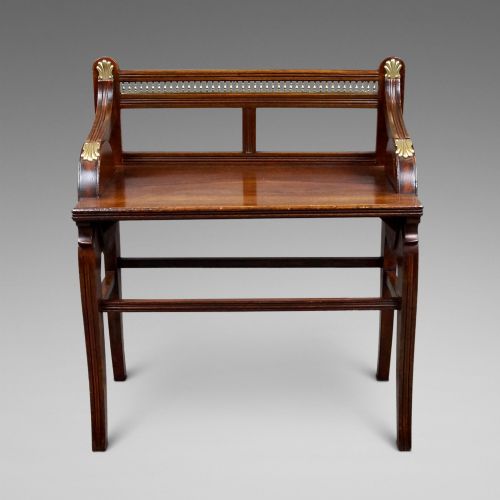
Seating surfaces involved both exposed wooden slats or cane work and padded upholstery layers covered in velvet, linen, or patterned textile fabrics. Brass mountings, carved details, and gilded finishes appeared on higher-status commissions to enhance visual richness.
Church organist pews moonlight successfully as hallway seats, proving that divine inspiration makes for surprisingly sturdy corridor furniture.
What varies in quality
Quality differences emerge in the selection and density of the primary timber, with dense old-growth mahogany and quarter-sawn oak providing superior structural integrity. The crispness of hand-carved ornamentation distinguishes standard workshop production from master carver outputs.
The standard of upholstery work and the authenticity of underlying frame construction dictate the overall merit of surviving examples. Retaining original brass hardware and untouched timber patination elevates the standing of an individual piece within its period.
James Shoolbred·Jas Shoolbred·Gillows
The Antique Hallway Stool Glossary
- Window seat
- A long narrow stool designed to fit within the recess of a window, frequently adapted for hallway use due to its slender proportions.
- Duet stool
- An extended piano or music stool offering sufficient length for two seated players, often utilised as a hallway bench.
- Luggage rack
- A low open-framed bench featuring a slatted top, originally intended for resting travel bags in entrance halls or bedrooms.
- Cane
- Plant material woven into open patterns to form resilient, breathable seating panels on wooden stool frames.
- Gilt
- A thin layer of gold leaf applied to the wooden frame to provide a decorative metallic surface finish.
Antique Hallway Stool: Frequently Asked Questions
Where did people put these stools?
These pieces sat primarily in entrance halls, corridors, and beneath windows to provide convenient seating for removing boots or waiting.
Their narrow proportions allowed them to fit into transitional domestic spaces without obstructing household movement.
How do I identify the period?
Stylistic markers such as Jacobean revival carving, Regency curves, or Edwardian lightness point toward specific manufacturing decades.
Wood types and upholstery choices also offer clues, as mahogany predominated in earlier periods while lighter birch and painted finishes emerged later.
Can I use an organ bench in a hall?
Pine organ benches and church pews serve as practical hallway seating due to their inherent length and sturdy timber construction.
Their simple ecclesiastical origins bring functional character to narrow entrance spaces.
What is a duet stool?
A duet stool provides an extended seating surface originally designed for two musicians sharing a piano or music stand.
This extra length makes them well suited as benches for long hallways.