




Antique Group Portrait Canvas
An antique group portrait canvas brings families, children, and artists together in oil paint on canvas.
Antique Group Portrait Canvas
When you search for an antique group portrait canvas, you are looking at oil paintings that capture multiple figures, from family gatherings and children to artist circles and animal groups. The examples you meet on this page span the eighteenth century, nineteenth century, Victorian era, and early twentieth century.
The forms range from framed studio works to unframed canvases, taking in styles such as Regency, Georgian, Biedermeier, Victorian genre, and the Bloomsbury Group with occasional avant-garde and cubist touches. They originate from British and European hands, depicting subjects ranging from country house grounds to domestic interiors.
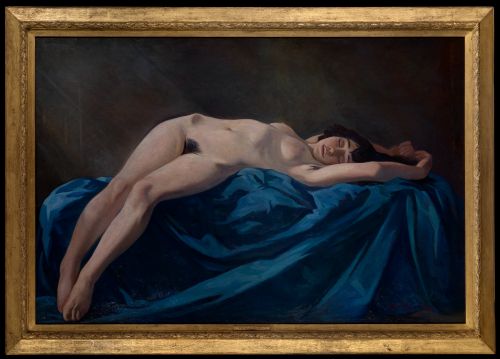
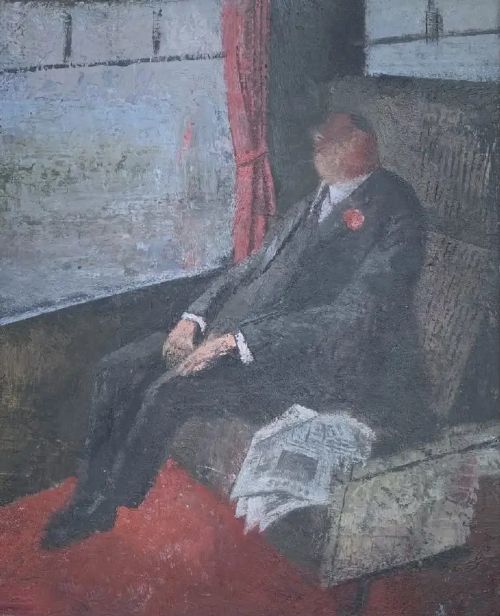
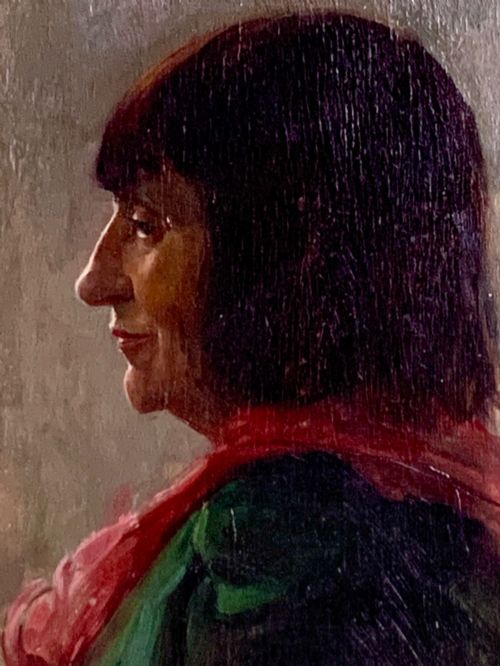
You find formal family commissions alongside intriguing genre scenes, studio studies, and animal groups rendered in oil paint. Each canvas preserves a specific social grouping, recorded through the varied lenses of academic portraiture, early twentieth-century modernism, and regional painting traditions.
How they were made
These works are built with oil paint applied to woven canvas supports, often stretched over wooden frames and housed in decorative giltwood or gilt plaster surrounds. The physical construction relies on traditional stretched canvas preparation, where artists laid priming layers before building up compositions in oils.
Framing plays a primary role in the physical survival of these works, with ornate giltwood and plaster frames protecting the canvas edges and providing structural rigidity. Pigment handling varies from precise academic glazing to the looser, expressive brushwork seen in early twentieth-century and Bloomsbury Group pieces.
Antique Group Portrait Canvas Retail Price Guide 2026
Typical asking prices for group portrait canvas among the pieces listed under this phrase on Sellingantiques today, from the lower quarter to the upper quarter. They describe what is for sale here now, not the wider market.
Subjects range from aristocratic family gatherings in country house grounds to playful groupings of Persian kittens at a tea party.
What varies in quality
Quality in an antique group portrait canvas rests on the strength of composition, the handling of multiple likenesses within a single frame, and the condition of the oil paint surface. A successful grouping maintains narrative cohesion and individual characterisation across every face and figure.
The calibre of the framing also influences the piece, as period giltwood and gilt plaster surrounds enhance the visual impact of the canvas. Academic precision, such as that seen in studio and attributed works, contrasts with the experimental brushwork of avant-garde and cubist movements, where quality is measured by stylistic conviction.
Sir Thomas Lawrence·Carl Adolf Mende·Jean Hippolyte Marchand·Agnes Augusta Tallboys·Charles Philips
The Antique Group Portrait Canvas Glossary
- Oil on Canvas
- A painting medium where pigments are bound with drying oils and applied to a woven fabric support. This method allows for rich blending and enduring colour depth.
- Giltwood
- Wood that has been coated with a thin layer of gold leaf or gilt powder. It is frequently found on the ornate frames enclosing historic paintings.
- Bloomsbury Group
- An association of English writers, intellectuals, and artists active in the early twentieth century. Their visual art style departed from strict academic realism.
- Victorian Genre
- A style of painting that depicts scenes from everyday life during the reign of Queen Victoria. These works often focus on domestic narratives and social interactions.
- Cubism
- An early twentieth-century avant-garde art movement that revolutionised European painting. It broke subjects down into geometric planes and multiple viewpoints.
Antique Group Portrait Canvas: Frequently Asked Questions
How do I date an antique group portrait canvas?
Dating relies on stylistic evidence, costume details, hair styles, and the construction of the canvas and stretcher frame. Written inscriptions, signatures, and attribution notes on the reverse also help place the work within specific centuries.
Period markers range from eighteenth-century Georgian attire to Victorian dress and the distinctive palettes of early twentieth-century modernism. Comparing the handling of the oil paint with known works by attributed artists or studios narrows the timeframe further.
Where were group portraits displayed?
Historically, large family and group portraits hung in the principal reception rooms, halls, and country houses of their commissioners. They served as statements of lineage, social standing, and domestic harmony.
Smaller studio works and informal group studies were often kept in private drawing rooms or artists' studios. Today, these canvases suit large living spaces, stairwells, and studies where their scale and narrative can be appreciated.
What is the difference between studio and attributed works?
A studio work is produced by assistants, pupils, or followers working under the supervision or within the tradition of a master painter. An attributed work is judged by an expert to be likely by a specific named artist, though absolute proof may be missing.
Both categories offer historical insight into period painting techniques and workshop practices. They provide collectors with access to major artistic traditions without the documentation of a fully signed masterwork.
How should I care for an oil on canvas portrait?
Keep the canvas away from direct sunlight, high humidity, and rapid temperature fluctuations to prevent cracking in the oil paint and warping in the wooden stretcher. Dust the surface gently with a soft, dry brush and avoid using chemical cleaners.
Inspect the giltwood frame periodically to ensure the plaster and gilding remain stable. If structural repairs or cleaning of the paint layer are required, consult a professional conservator.