
Antique Gold Link Jewellery
Antique gold link jewellery comprises substantial chains, bracelets and functional watch chains designed to hold charms, lockets or timepieces securely.
Antique Gold Link Jewellery
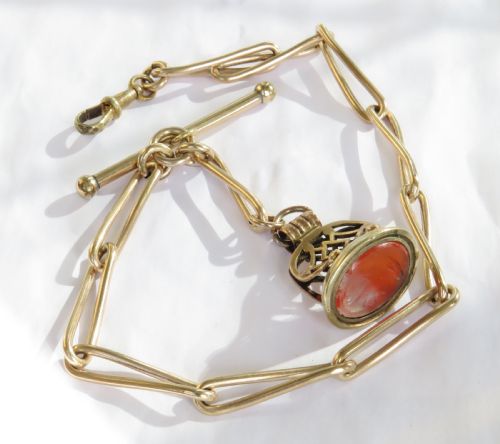
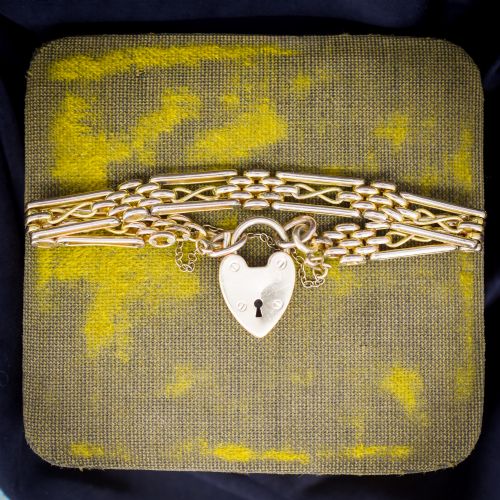
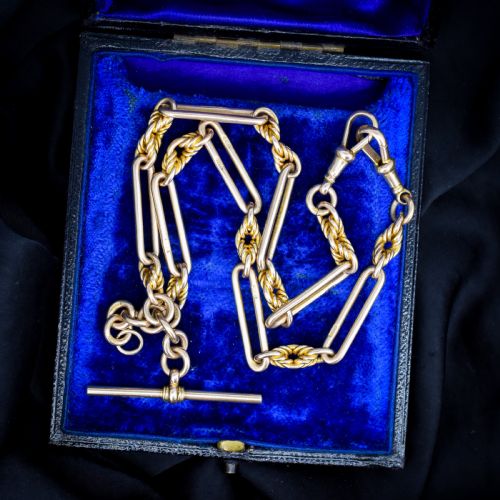
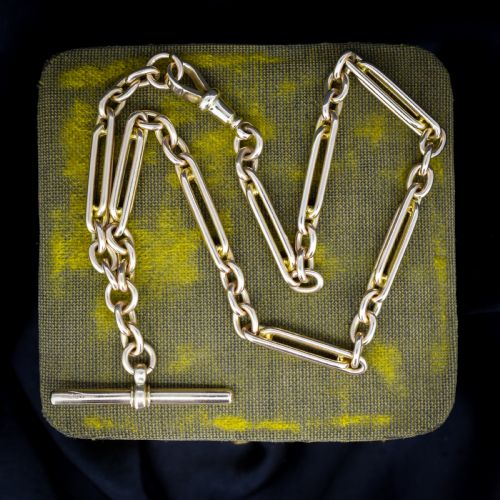
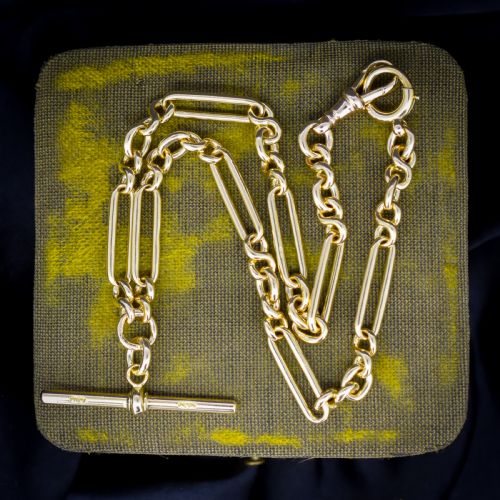
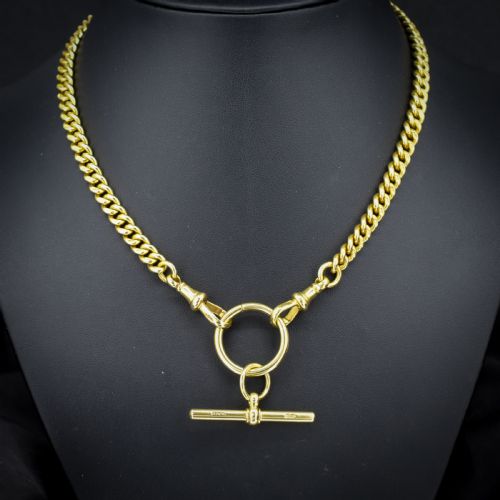
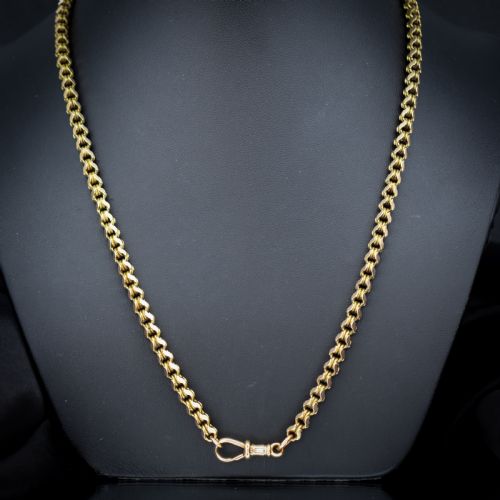
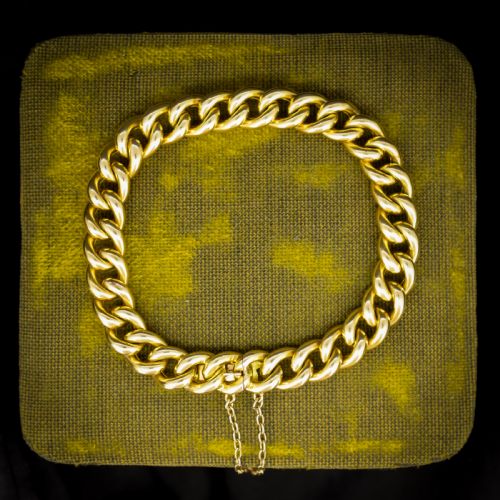
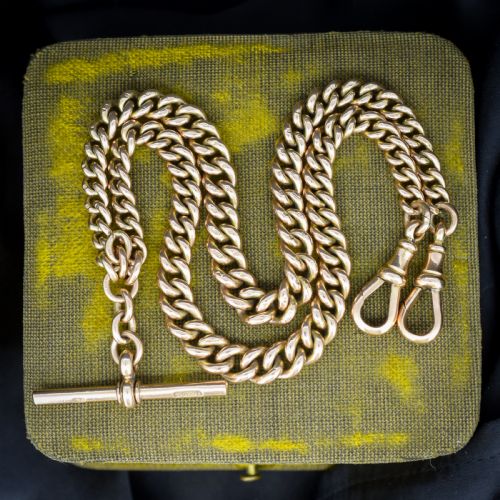
Antique gold link jewellery includes wearable pieces such as heavy gate bracelets, longuard chains and watch chains adapted for modern neckwear. These items originate predominantly from the Victorian, Edwardian and Art Deco periods, spanning the nineteenth and early twentieth centuries. Pieces frequently incorporate functional elements like dog clips, heart padlocks, swivel clasps and T-bars originally intended for pocket watches and fob attachments.
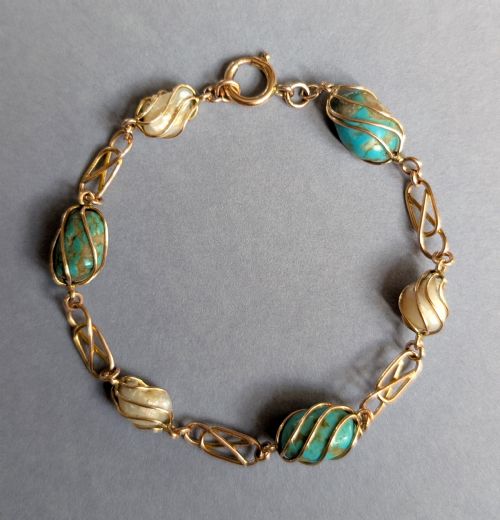
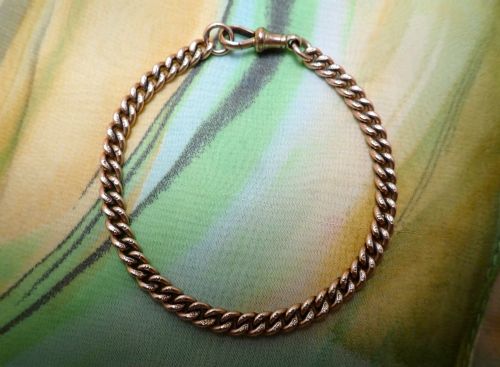
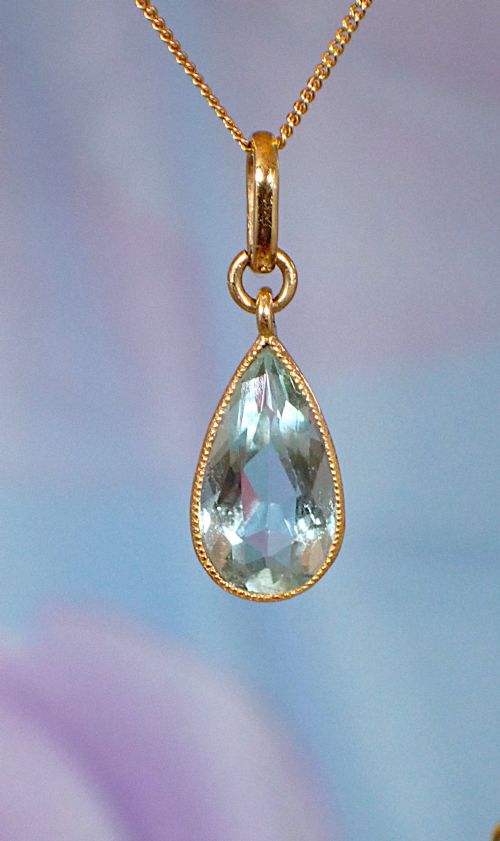
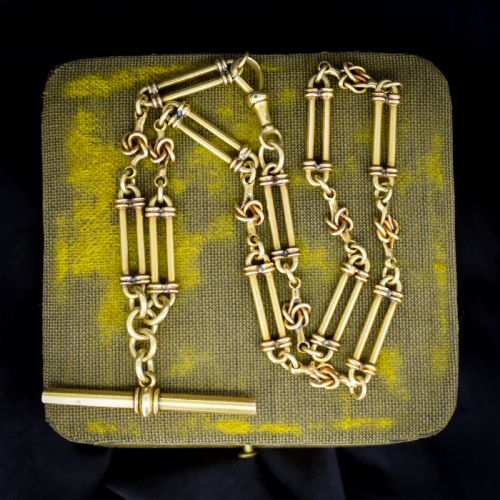
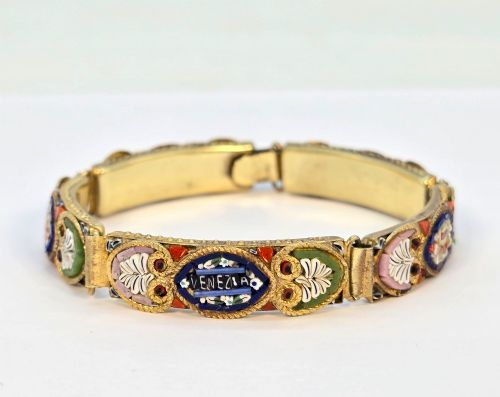
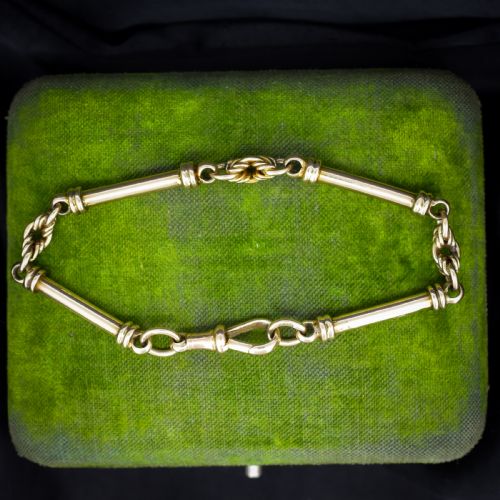
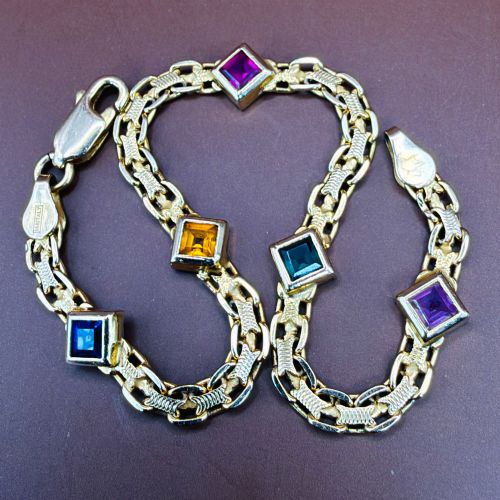
The selection here centres on distinct link configurations including curb, trombone, love knot and fancy gate patterns. Buyers encounter solid gold constructions alongside rolled gold alternatives, often formed into substantial lengths suitable for draping or wrapping. Gemstones such as turquoise, almandine garnet, aquamarine and seed pearls occasionally accent the metalwork, alongside micro mosaic panels and mother of pearl details.
Materials and construction methods
Makers utilised various purities of gold, ranging from nine carat rose and yellow gold up to fifteen and eighteen carat alloys, alongside rolled gold methods. Individual links were shaped by hand or stamped, then joined to form continuous curb, tubular bar, or trombone patterns. Many components display hallmarks, half engraved surface patterns or applied wirework details characteristic of British provincial assay offices.
Functional closures like dog clips and bolt rings were engineered with internal spring mechanisms to secure heavy watch chains and gate bracelets. Gemstones including turquoise and natural pearls were set into bezels or strung as drops, while specialised items integrated glass or niello silver alongside gold elements.
The listings span the Victorian, Edwardian, Art Nouveau and Art Deco periods, utilising nine carat rose gold, fifteen carat yellow gold, and rolled gold.
Distinctions in craftsmanship and wear
Quality rests upon the structural integrity of the individual links and the presence of complete hallmarks on every component. Items featuring solid gold construction throughout, rather than hollow or rolled alternatives, demonstrate superior weight and durability. The crispness of half engraved surface decoration and the secure tension within dog clips and heart padlocks further separate high grade items from standard production.
Subtleties in design complexity also define the upper tier, such as intricate love knot assemblies, matched graduated links, and integrated T-bars. Pieces retaining original clasps and undamaged gem settings reflect careful preservation and superior initial manufacture by period workshops.
The Antique Gold Link Jewellery Glossary
- Albert chain
- A heavy watch chain designed to be worn across a waistcoat or draped as a necklace, featuring a T-bar at one end and a swivel clasp or dog clip at the other.
- Dog clip
- A spring loaded snap hook used on watch chains and bracelets to secure pendants, charms or pocket watches.
- Gate bracelet
- A wide bracelet constructed from parallel rectangular links connected by vertical metal bars, traditionally fastened with a heart shaped padlock.
- Trombone link
- A watch chain link pattern composed of long rectangular links interspersed with smaller circular or oval connectors, resembling the shape of a musical instrument.
- Longuard chain
- An exceptionally long chain worn draped around the neck, often measuring over thirty inches and utilised for suspending pocket watches or lorgnettes.
- Rolled gold
- A material made by bonding a thin sheet of gold to a base metal core using heat and pressure, providing the appearance of solid gold at a lower weight.
Antique Gold Link Jewellery: Frequently Asked Questions
What is an albert chain used for?
An albert chain was originally manufactured to secure a pocket watch to a gentleman's waistcoat, with the T-bar sliding through a buttonhole and the watch secured by a dog clip.
Today, these substantial chains are frequently worn as necklaces, allowing the original clasps and T-bars to remain as decorative focal points at the front or side.
How do I date an antique gold chain?
Dating relies heavily upon hallmarks stamped onto the links, dog clips or T-bars, which indicate the assay office, metal purity and year letter corresponding to British hallmarking acts.
Stylistic indicators such as the heavy gate construction of the Victorian era or the geometric motifs of the 1920s also help establish the period of manufacture.
Can I wear a gate bracelet every day?
Gate bracelets possess a sturdy construction well suited to regular wear, provided the individual links and hinges remain secure and free from excessive thinning.
Checking the spring tension on the heart padlock and ensuring the safety chain remains intact will help protect the piece during daily use.
What is the difference between solid and rolled gold?
Solid gold pieces are composed entirely of gold alloy throughout their structure, giving them a consistent metal content and substantial weight measured in grams.
Rolled gold items feature a mechanical bond of gold layered over a base metal core, offering durability while containing a lower proportion of precious metal.