




Antique Glazed Armoire
An antique glazed armoire brings architectural presence and visible storage to a room, holding books and linens behind glass panels with quiet dignity.
Antique Glazed Armoire
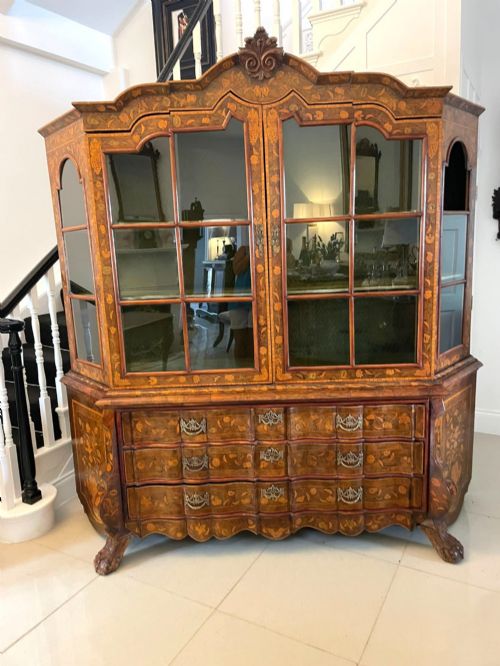
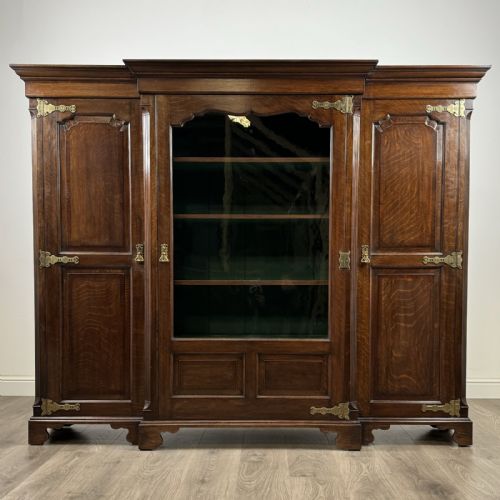
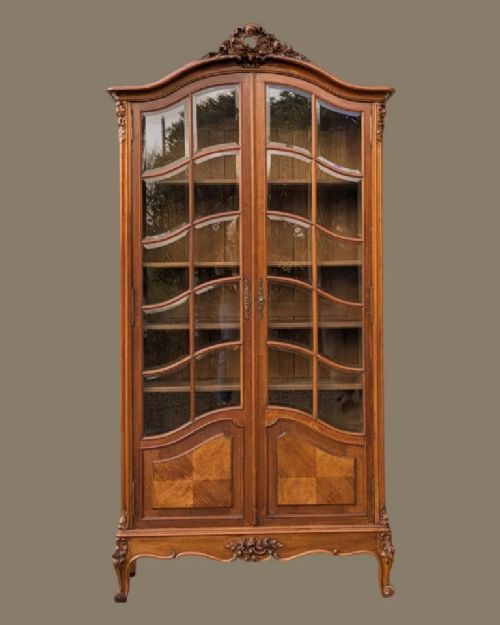
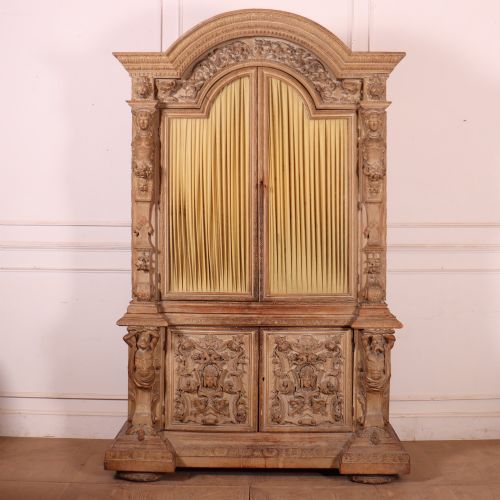
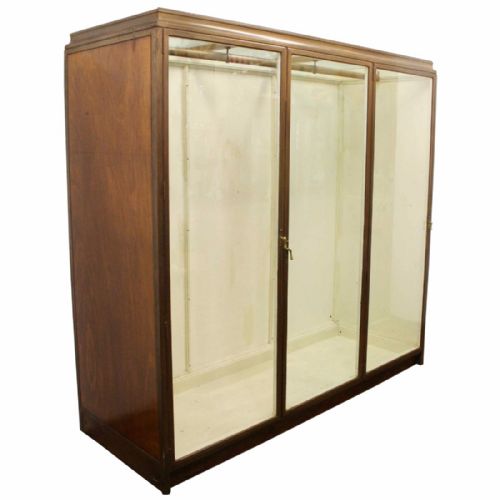
When searching for an antique glazed armoire, buyers encounter large timber storage furniture fitted with glass doors, frequently crossing paths with display cabinets, bookcases, and vitrines. These pieces span from the 18th century through to the Edwardian period, originating across Britain, France, Italy, and the Netherlands. Regional influences shape the proportions, ranging from robust provincial oak to refined French Empire mahogany.
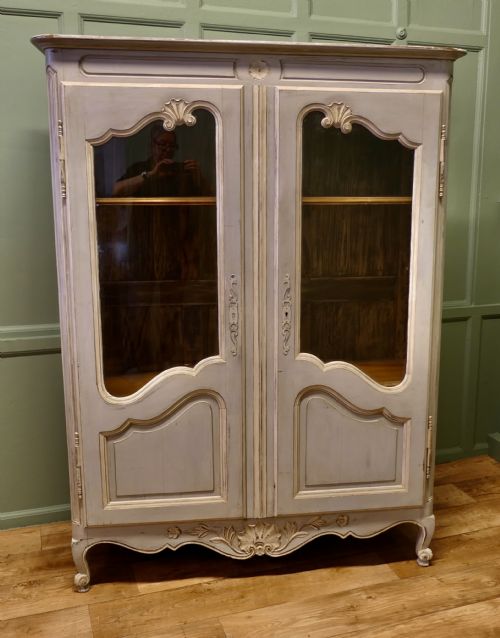
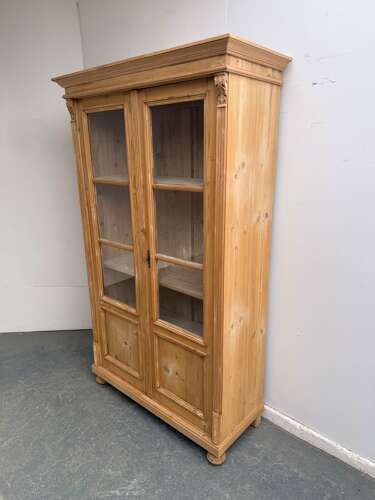
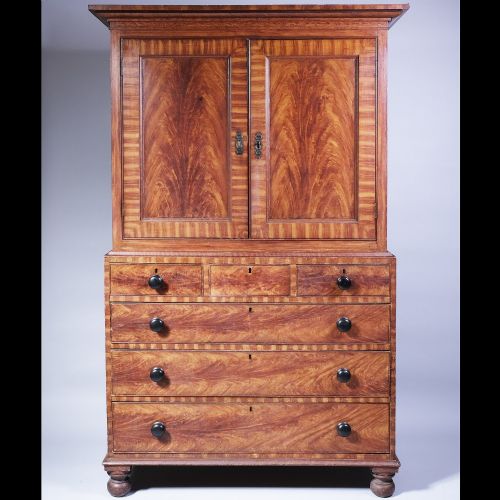
The practical forms vary considerably in construction, appearing as single door wardrobes, double door bookcases, and two-piece commodes with upper display sections. Woods such as oak, walnut, mahogany, and pine form the primary structure, often housing books, porcelain, or textiles behind glazed panels. Painted finishes and scumble effects also surface among country pieces alongside polished hardwood surfaces.
Materials and construction
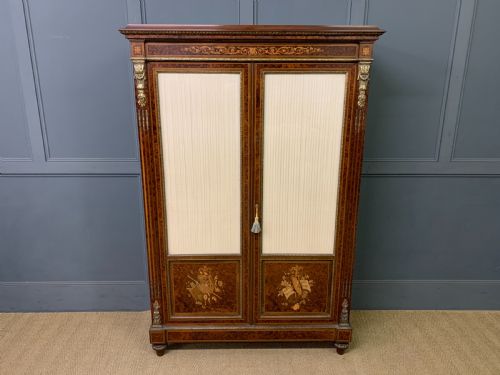
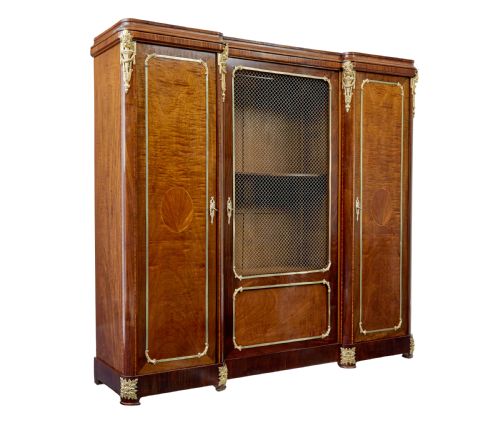
Cabinet makers utilised dense hardwoods including oak, walnut, and mahogany for structural integrity, while secondary timbers like pine appeared in carcases and internal shelving. Glass panels were secured within timber frames, sometimes accompanied by brass mounts, ormolu, and intricate floral marquetry inlay.
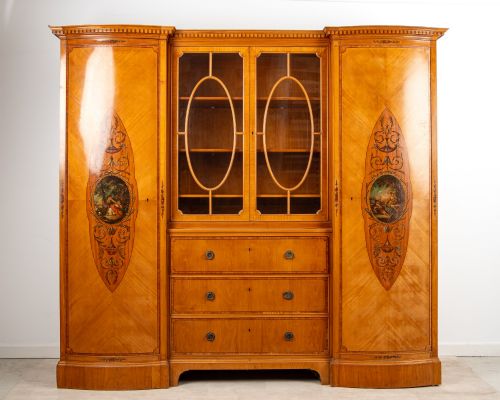
Joinery methods relied on traditional framing and panel construction to accommodate seasonal timber movement, particularly in large library bookcases and housekeepers cupboards. Surface treatments ranged from wax and polish to painted scumble effects and hand-painted panels on satinwood.
Antique Glazed Armoire Retail Price Guide 2026
Typical asking prices for glazed armoire among the pieces listed under this phrase on Sellingantiques today, from the lower quarter to the upper quarter. They describe what is for sale here now, not the wider market.
The listings span the 18th century, 19th century, and Edwardian periods, utilising oak, mahogany, walnut, pine, glass, brass, and ormolu.
Judging execution and finish
Quality reveals itself in the selection of timbers, such as burr walnut and amboyna veneer, matched symmetrically across large double doors. The crispness of carved wooden details and the integration of cast brass or ormolu mounts distinguish standard utility pieces from high decorative commissions.
Proportion and structural balance dictate the visual weight of tall display cabinets and triple wardrobes. Superior examples maintain refined sightlines through the glazed framing while ensuring internal shelving supports heavy loads without sagging.
The Antique Glazed Armoire Glossary
- Armoire
- A tall wardrobe or cupboard, traditionally used for storing clothing but frequently adapted with glass doors to serve as a bookcase or display cabinet.
- Vitrine
- A glass-fronted display cabinet designed specifically for showing porcelain, curiosities, or collections.
- Marquetry
- Decorative inlay work using various coloured woods, veneers, and sometimes other materials to create pictorial or floral patterns on cabinet doors.
- Ormolu
- Gilded bronze mounts and decorative fittings applied to furniture, common in French Empire and 19th-century luxury cabinet making.
- Compactum
- A fitted wardrobe or combination cabinet designed to provide maximum internal storage organisation within a single footprint.
Antique Glazed Armoire: Frequently Asked Questions
How do I fit a large armoire in a modern room?
Measure ceiling height and clearance carefully before choosing, as these tall cabinets command significant vertical space.
Consider knockdown versions or two-piece modular designs like commodes with upper vitrines, which simplify transport and installation in rooms with tight access.
Can I use an armoire as a bookcase?
Many glazed cupboards and display cabinets function perfectly for books, provided the internal shelving depth and weight tolerance suit the volumes.
Adjustable shelves appear in several 19th-century variants, allowing flexible arrangement for mixed libraries alongside decorative objects.
What is the difference between an armoire and a vitrine?
An armoire traditionally serves as a large clothing cupboard with solid or glazed doors, whereas a vitrine is explicitly built for display with extensive glass panelling.
In practical antique markets, the terms often overlap when makers combined wardrobe capacities with glass presentation doors.
How do I care for antique wood finishes?
Maintain polished hardwood surfaces like mahogany, walnut, and oak by keeping them away from direct sunlight and sudden temperature shifts.
Apply traditional wax sparingly and buff gently with a soft cloth to preserve the natural lustre of the timber without building up heavy residue.