


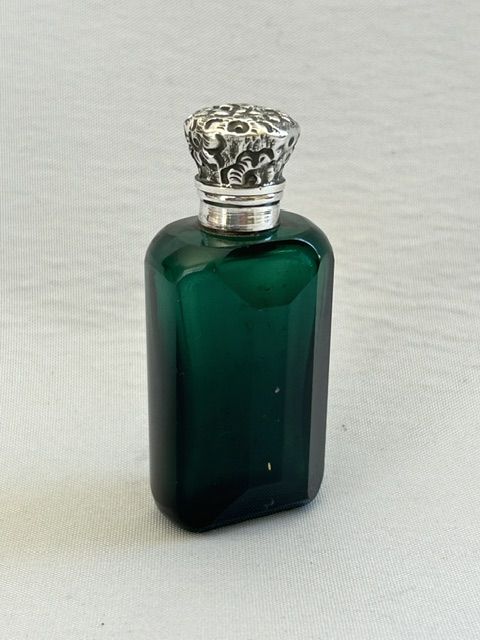


Antique Glass Smell Flask
An antique glass smell flask brings tangible Victorian and Edwardian elegance to your dressing table with rich coloured vessels and gleaming silver mounts.
Antique Glass Smell Flask
When you search for an antique glass smell flask, you are looking at small personal containers designed to hold perfumes, salts, or vinegars for refreshing the senses. These pieces span the Georgian, Victorian, and Edwardian eras, emerging in forms such as scent bottles, vinaigrettes, and miniature bottles.
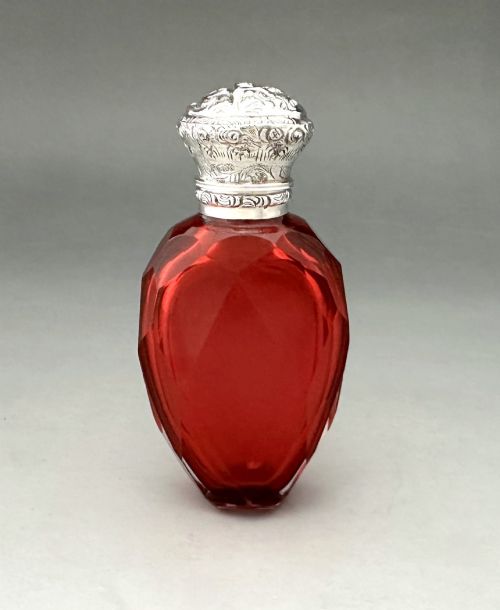
You are most likely to meet Victorian and Edwardian examples on this page, particularly those combining coloured glass bodies with silver mountings. The selection includes striking varieties in ruby, amethyst, cranberry, Bristol green, and opaline glass.
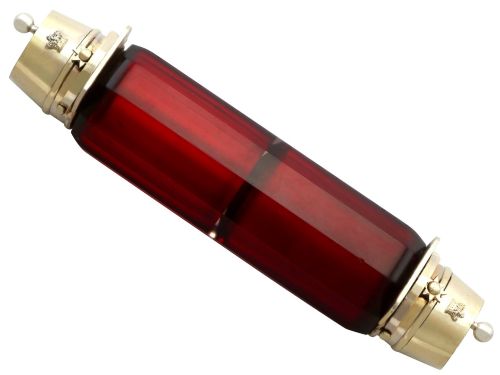
The assortment extends to double-ended bottles and silver-cased specimens, reflecting the diverse ways makers adapted these portable accessories for everyday use. Each object bridges practical utility with decorative refinement, capturing the aesthetic sensibilities of the nineteenth and early twentieth centuries.
How they were made
These flasks rely on the combination of blown or cut glass vessels fitted with metalwork components. Artisans shaped glass into coloured bodies, incorporating ruby, amethyst, cranberry, and opaline hues through specific mineral additions during production.
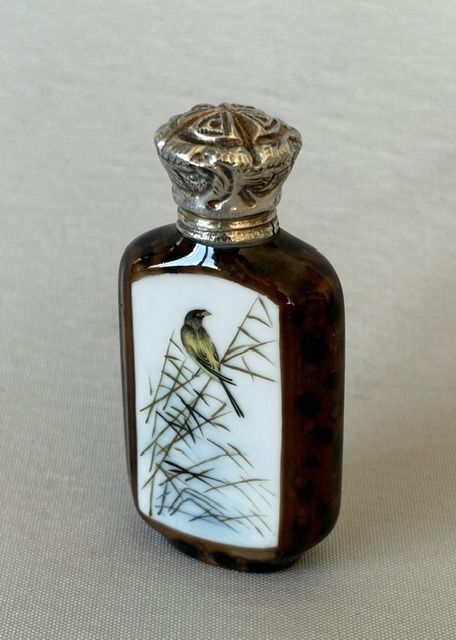
Silver, sterling silver, and silver-gilt were utilised to create protective mounts, hinged caps, and engraved detailing. Many pieces feature enamel painting, etching, or cut glass patterns that decorated the glass body before the silver mounts were secured.
Antique Glass Smell Flask Retail Price Guide 2026
Typical asking prices for glass smell flask among the pieces listed under this phrase on Sellingantiques today, from the lower quarter to the upper quarter. They describe what is for sale here now, not the wider market.
Listings feature Victorian and Edwardian periods alongside Georgian items, incorporating ruby, amethyst, cranberry, and opaline glass materials.
What varies in quality
The standard of an antique smell flask depends upon the crispness of the glass cutting and the depth of colour within the vessel. Rich, saturated tones in ruby or cranberry glass alongside finely faceted surfaces distinguish finer examples.
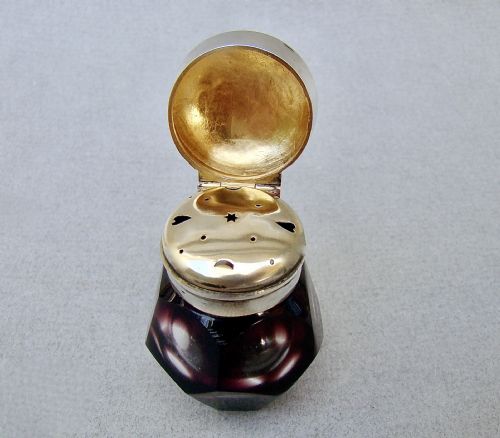
Craftsmanship in the metalwork further defines the tier of a piece, particularly where silver mounts display detailed engraving, secure hinge action, and well-preserved hallmarks.
Sampson Mordan·S. Morden and Co
The Antique Glass Smell Flask Glossary
- Vinaigrette
- A small ornamental box or bottle with an internal perforated grille, used to hold a sponge soaked in aromatic vinegar. This allowed the user to inhale refreshing scents in crowded spaces.
- Opaline glass
- An opaque or semi-translucent glass developed in soft pastel shades like blue or white. It gained popularity during the Victorian period for decorative scent containers.
- Double ended scent bottle
- A vessel featuring hinged caps at both ends, typically designed to hold two different liquids or salts simultaneously. They often showcase symmetrical cut glass bodies.
- Silver gilt
- Silver that has been coated with a thin layer of gold on its surface. This technique provided the rich appearance of solid gold while utilising a silver base.
- Cranberry glass
- A transparent pinkish-red glass produced by adding gold chloride to the molten batch. It became a hallmark of Victorian tablewares and dressing accessories.
Antique Glass Smell Flask: Frequently Asked Questions
What is an antique glass smell flask?
An antique glass smell flask is a small personal bottle used to carry liquid perfume or aromatic salts during the nineteenth and early twentieth centuries.
These portable containers allowed individuals to combat unpleasant odours or freshen the air in crowded or enclosed public spaces.
How were these flasks used historically?
Owners carried them in pockets or reticules for daily use, or displayed them upon dressing tables alongside other vanity items.
The hinged silver caps permitted quick access to the scents contained within, providing a convenient sensory refreshment.
How do I identify a Victorian piece?
Victorian examples often feature vibrant coloured glass such as ruby, cranberry, or opaline, paired with sterling silver mounts and occasionally Birmingham assay marks.
The inclusion of specific styles like the Aesthetic Movement or characteristic double-ended designs also points directly to this era.
How should I clean my smell flask?
Cleaning requires gentle handling, particularly around silver mounts and delicate glass surfaces, avoiding harsh chemical immersion.
Warm soapy water and a soft cloth generally suffice to remove dust from the exterior while preserving the original metal patina.