




Antique Glass Scent Stopper
An antique glass scent stopper completes a dressing table bottle, bringing together period glass and precious mounts.
Antique Glass Scent Stopper
When you search for an antique glass scent stopper, you find individual closures and complete perfume vessels spanning the Victorian era to the Art Deco period. These pieces originate from English, French, Chinese, and Czechoslovakian makers, showing how vanity items evolved across the nineteenth and twentieth centuries.
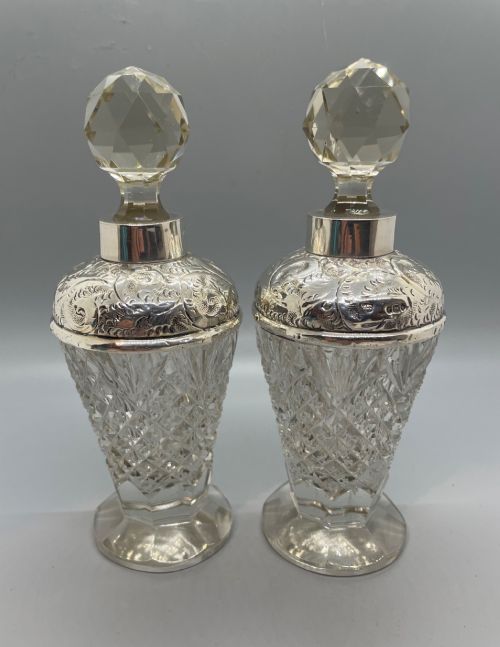
You are most likely to meet cut glass vessels with sterling silver collars, alongside moulded opalescent glass and enamel designs from the nineteen-thirties. The selection includes matched pairs and single scent bottles complete with their original stoppers.
Makers utilised various forms ranging from small pocket bottles to larger dresser decanters. Each example demonstrates the distinct decorative tastes of the Victorian, Edwardian, and George V eras.
How they were made
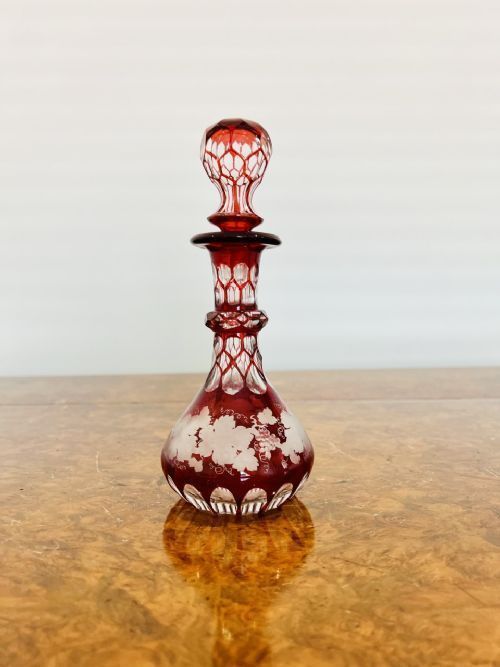
Glassmakers shaped these objects through cutting, moulding, and overlay techniques, producing clear, frosted, cranberry, and blue glass bodies. Skilled hands then fitted sterling silver collars, mounts, and enamel details to complete the vessels.
Moulded glass production allowed makers like Rene Lalique and Sabino to create sculptural stoppers with intricate opalescent relief details. Chinese snuff bottles received delicate painted decoration applied to the inside of the glass.
What varies in quality
The distinction between standard and superior pieces rests on the crispness of the glass cutting and the precision of the stopper fit. Heavier cut glass bottles and finer silver mounts indicate higher manufacturing standards.
The reputation of the maker and the complexity of moulded or enamelled decoration elevate individual pieces. Signed works and well-preserved surface finishes distinguish the finest examples.
Karl Palda·Rene Lalique·Sabino
The Antique Glass Scent Stopper Glossary
- Opalescent glass
- Glass that displays a milky, translucent quality with shifting blue or amber tones. This effect often highlights moulded relief details on French perfume bottles.
- Cranberry overlay
- A layer of deep red glass fused over a clear glass body, then cut away to reveal the contrasting colour beneath. This technique appeared frequently on nineteenth-century vessels.
- Silver collar
- A metal band fitted around the neck of a perfume bottle, frequently bearing hallmarks for sterling silver. These mounts often secure the hinge for a cap or provide a finished rim for the stopper.
- Moulded glass
- Glass shaped by being pressed into a metal or wooden form while hot. This process allowed makers to produce consistent sculptural designs and textured stoppers.
Antique Glass Scent Stopper: Frequently Asked Questions
How do I clean an antique scent bottle?
Wash the glass gently in warm soapy water using a soft brush to reach inside the vessel. Avoid submerging silver mounts or painted sections for extended periods.
Dry the pieces thoroughly with a lint-free cloth. Take care to protect any delicate enamel or old stoppers during the cleaning process.
Can I use these for perfume today?
Most buyers display these bottles rather than fill them with modern fragrances. Older bottles may have residual scents trapped in the glass or porous stoppers.
If you choose to use one, ensure the interior is clean and dry. Check that the stopper fits securely to prevent leakage.
How do I date a glass scent bottle?
Look for hallmarks on silver collars, which provide specific assay years and maker marks. Stylistic clues such as Art Deco geometric shapes or Victorian cut glass patterns also indicate the period.
Signatures or moulded marks on the base point to particular makers and production decades. Compare the manufacturing technique with known period examples.
Are stoppers original to the bottles?
Many surviving pieces retain their matched stoppers, which fit the ground glass neck precisely. Look for matching wear patterns and consistent glass colour between the bottle and closure.
Replacement stoppers occasionally appear on older pieces. A correct fit and matching style help confirm originality.