



Antique Glass Scent Set
These antique glass scent set pieces are matched vanity vessels and travel cases housing multiple perfume bottles, designed to hold precious fragrances for the dressing table.
Antique Glass Scent Set
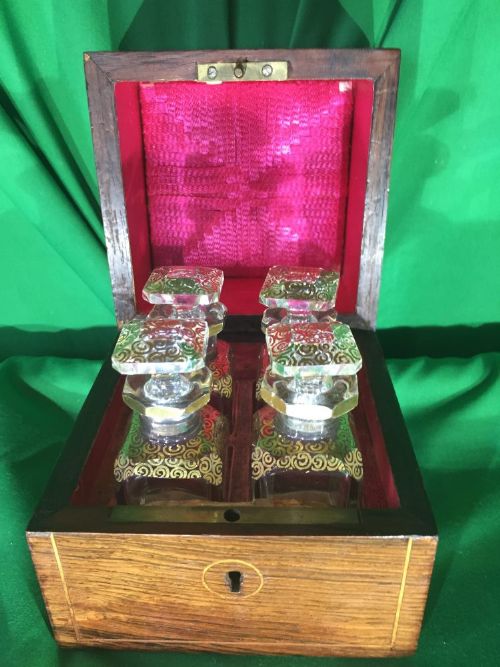
An antique glass scent set brings together multiple matching or fitted perfume bottles, frequently housed within a dedicated caddy, leather case or velvet-lined wooden box. You will encounter these structured groupings chiefly across Victorian, Edwardian and Art Deco periods, ranging from pairs to sets of five.
The objects take several distinct forms, including travelling cologne bottle trios, vanity boxes, and elaborate ormolu or rosewood-cased scent caskets. Certain pieces incorporate dressing table accessories or fitted etui tools alongside the central glass vessels.
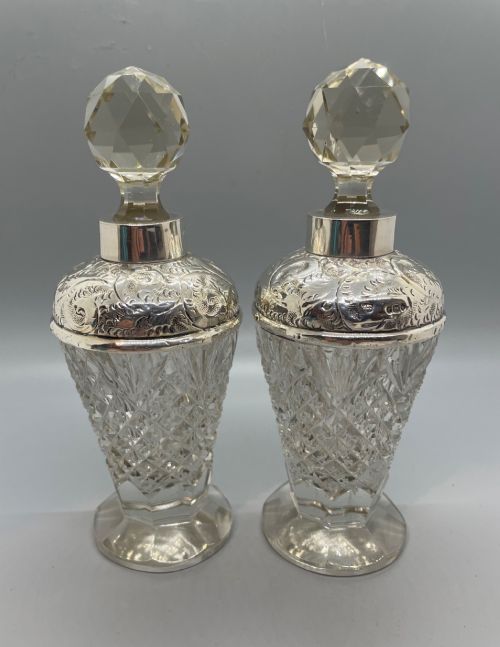
Origins span British workshops, French makers, and even ancient Roman glass unguentaria housed in early industrial boxes. The most frequent configurations on this page combine cut glass bottles with sterling silver collars, mounts or stoppers.
Materials and construction methods
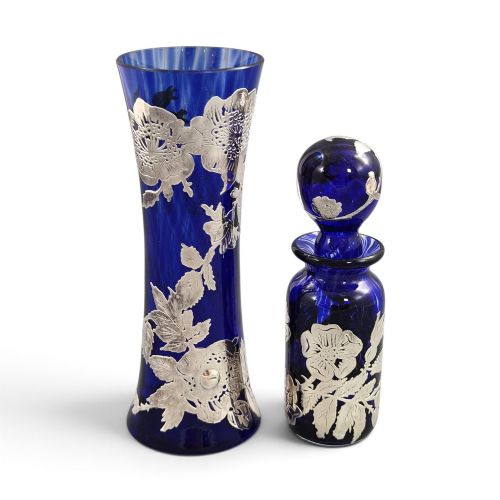
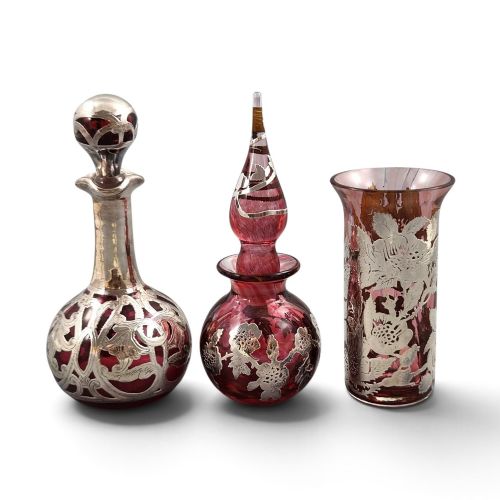
Makers shaped the primary vessels from clear or coloured glass, employing deep cutting techniques to catch the light on vanity tables. These glass bodies are regularly paired with metalwork mounts, predominantly sterling silver, silver-gilt, brass, bronze and ormolu.
Enclosure cases utilise dense cabinet timbers such as walnut, rosewood and coromandel, often lined internally with silk or velvet to cradle the delicate glass securely. Exterior surfaces frequently feature leather wrapping, tortoiseshell inlay or specialist enamel decoration.
Antique Glass Scent Set Retail Price Guide 2026
Typical asking prices for glass scent set among the pieces listed under this phrase on Sellingantiques today, from the lower quarter to the upper quarter. They describe what is for sale here now, not the wider market.
Listings feature glass scent sets spanning from ancient Roman unguentaria up to Art Deco opalescent bottles from the 1930s.
What distinguishes finer examples
The distinction between standard and superior pieces rests on the integrity of the fitted case and the craftsmanship of the metal mounts. Fully original internal linings, matching bottle sets where every stopper is present, and hallmarked precious metal collars elevate an object.
Execution of the glasswork and decorative housing determines the tier of the piece. Crisp hand-cut facets on the glass, substantial timber or tortoiseshell foundations, and works bearing recognised maker marks demonstrate superior workshop production.
George Unite·Hermanova·Sabino·Baccarat
The Antique Glass Scent Set Glossary
- Casket
- A decorative box or small chest designed to securely hold valuables or vanity bottles. These frequently feature specialised internal partitions to keep glass vessels from shifting.
- Etui
- A small ornamental case used for holding needles, tweezers, bodkins or other personal toilet implements. They appear in Georgian and Victorian dressing table sets alongside perfume bottles.
- Unguentarium
- A small ancient glass or ceramic phial or bottle used for holding oils, perfumes or unguents. Examples survive from Roman periods.
- Ormolu
- Gilded bronze or brass applied as decorative mounts to furniture and luxury boxes. This technique adds ornate metallic detail to wooden scent caskets.
- Collar
- The metal mount fitted around the neck of a scent bottle to secure the stopper or lid. These often bear silver hallmarks indicating the year and place of manufacture.
Antique Glass Scent Set: Frequently Asked Questions
What is an antique glass scent set?
An antique glass scent set is a collection of multiple perfume or cologne bottles supplied together, frequently housed in a fitted wooden box, leather case or velvet-lined vanity casket. These arrangements allowed owners to transport or display various fragrances simultaneously on a dressing table.
The containers range from simple pairs of cut glass bottles with silver collars to elaborate French ormolu caskets holding four or five matching vessels. Many include integrated accessories like atomisers or etui tools.
How were these sets used historically?
These sets served both practical and decorative roles in daily grooming rituals during the Georgian, Victorian, Edwardian and Art Deco eras. Owners used the individual bottles to hold different liquid perfumes, colognes or scented oils for personal use.
Travelling sets allowed individuals to carry their preferred fragrances securely while away from home, protected by fitted leather or wooden cases. Static dressing table sets remained displayed on vanity surfaces as markers of refinement and taste.
How can I tell the period of a set?
Dating a set involves examining the materials, casing style, glass cutting techniques and any metal hallmarks present on the mounts. Victorian pieces often feature heavy rosewood or walnut boxes, while Edwardian examples lean towards refined silver collars and cut glass.
Art Deco sets display characteristic geometric lines, opalescent glass, or specialised atomiser mechanisms dating to the early twentieth century. Hallmarks on silver mounts provide precise assay office marks and manufacturing dates.